Practical Storage Solutions for Small Homes

Discover practical storage solutions for small homes, from vertical shelving and under-bed storage to multipurpose furniture and room-by-room organization tips. Create a clutter-free, functional living space with smart storage ideas.
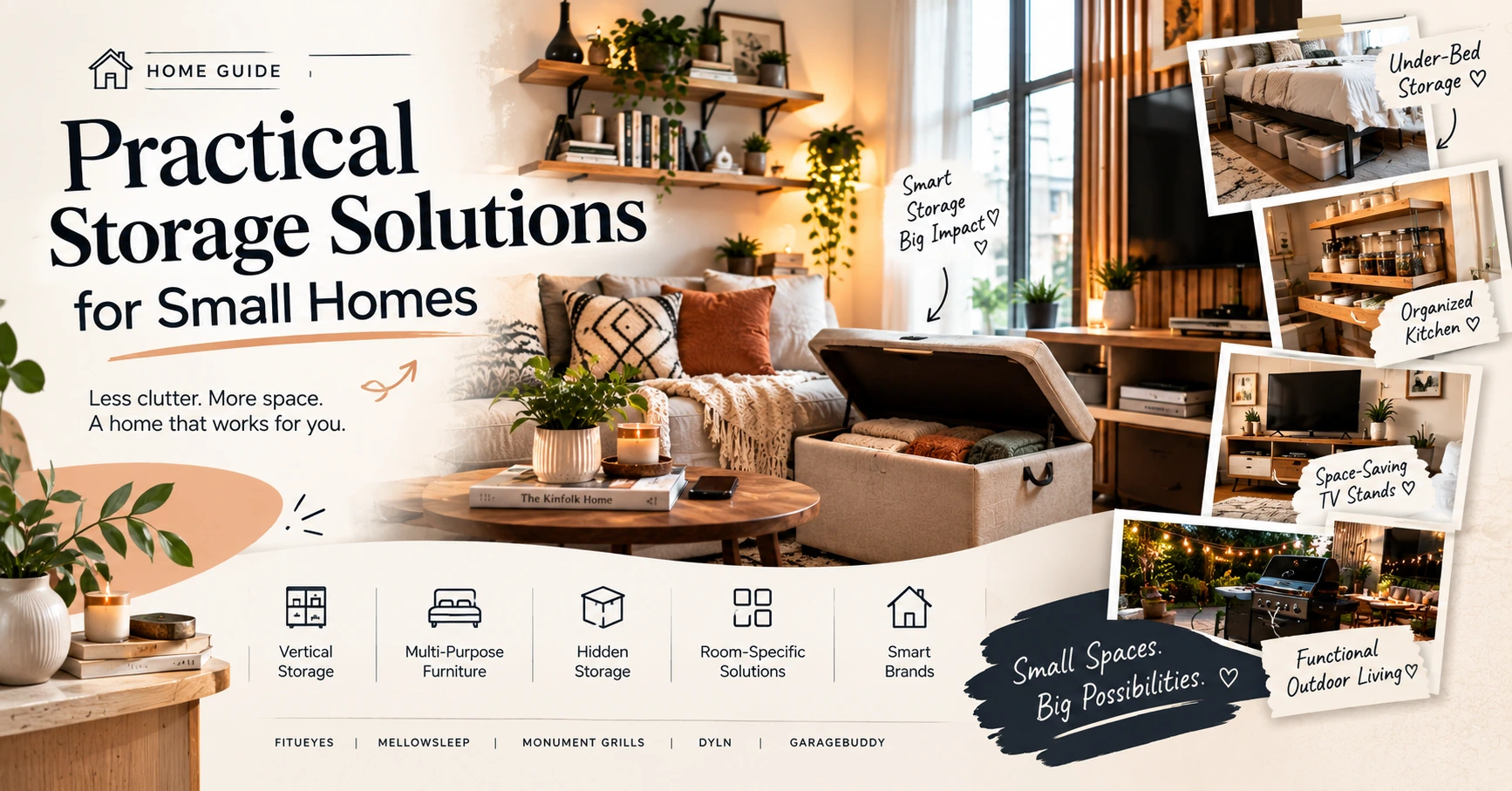
Living in a small home doesn’t automatically mean living with clutter. In many cases, the real issue is not the amount of space you have, but how that space is being used.
The best storage solutions for small homes do three things at once: they make everyday items easier to reach, reduce visual mess, and help each room serve more than one purpose. That usually means relying less on bulky furniture and more on vertical storage, hidden compartments, flexible furnishings, and better organization habits.
Affiliate Disclosure: Some links in this article are affiliate links. If you purchase through these links, Weekend Smash may earn a commission at no additional cost to you.
At a Glance: What Works Best in a Small Home
If you need a fast answer, the most effective storage solutions for small homes are:
- Wall-mounted shelves and hooks
- Furniture with built-in storage
- Under-bed storage
- Narrow or vertical cabinets
- Room-specific storage zones
- Fewer, better storage pieces instead of too many small organizers
The goal is not to cram more into your home. It is to make the space easier to use without making it feel crowded.
Why Small-Home Storage Often Fails
Small homes usually become harder to organize when storage is added without a plan. A few common mistakes cause most of the frustration:
- Buying bins before deciding what actually needs to be stored
- Using deep storage furniture that blocks movement
- Storing everyday items too far away from where they are used
- Filling visible shelves with too many small objects
- Treating every empty corner as a place for another piece of furniture
The result is a home that technically has more storage but feels tighter and harder to live in.
A better approach is to improve function first. Once you know how a room is used every day, the right storage solution becomes much easier to choose.
The Core Principles of Smart Storage in Small Homes
Use Vertical Space Before Adding More Furniture
In a compact home, floor area is the most limited resource. Before buying another cabinet or cart, look at your walls.
Good vertical storage options include:
- Floating shelves
- Tall bookcases
- Over-the-door organizers
- Wall hooks
- Peg rails
- Hanging kitchen racks
Vertical storage is especially useful for lightweight or frequently used items because it keeps surfaces clearer without eating into walking space.
Choose Furniture That Earns Its Footprint
Every larger piece in a small home should do more than one job if possible. A bench can provide seating and concealed storage. A bed can create room underneath for containers. A TV stand can help manage screens, accessories, and cables in one area instead of letting them spread across the room.
This is where multipurpose furniture matters more than decorative filler. In a small home, every item has to justify the space it takes up.
Store Items by Frequency of Use
One of the simplest organization upgrades is also one of the most overlooked: place items according to how often you use them.
A practical system looks like this:
- Daily-use items: Easy to reach, at eye level, and close to the point of use.
- Weekly-use items: Accessible but not given prime placement.
- Seasonal or rarely used items: Higher shelves, under-bed bins, or the back of a closet.
This principle works in every room, from kitchen tools to extra bedding.
Reduce Visual Clutter
Open storage can be useful, but too much of it makes a small home feel busier than it is. If everything is on display, the room often feels crowded even when it is organized.
To make storage feel calmer:
- Use matching baskets or bins.
- Keep shelf styling minimal.
- Mix open and closed storage.
- Avoid too many tiny organizers in plain sight.
- Group similar items together.
A clean visual field can make a small room feel noticeably larger.
Room-by-Room Storage Ideas That Actually Help
Living Room Storage Solutions
The living room often has to do several jobs at once: relaxing, watching TV, reading, working, and sometimes dining. That makes it one of the easiest rooms to overload.
Start with the biggest pain points:
- Tangled cables
- Remotes and small electronics
- Blankets
- Books and magazines
- Toys or hobby items with no home
Useful storage ideas include:
- A media stand that organizes TV gear vertically instead of spreading it across a long console
- A storage ottoman for blankets, chargers, or games
- Narrow shelving beside a sofa
- Baskets under a console table
- Wall shelves above low furniture
If your setup feels bulky, a floor or rolling TV stand can free up surfaces and give a small room more flexibility than a traditional media cabinet.
FITUEYES for Compact Media Furniture
FITUEYES focuses on TV stands, rolling TV carts, and record-player stands designed for compact and modern living spaces. For homes where a heavy entertainment unit feels too wide or visually dense, you can explore FITUEYES TV stands and space-saving display options to compare smaller-footprint alternatives.
This option can be especially useful if you want:
- Better cable control
- A smaller visual footprint
- More flexible furniture placement
- A setup that works in a living room, bedroom, or open-plan space
Bedroom Storage Solutions
In a small home, the bedroom should do more than hold a bed. It often has to absorb clothing overflow, spare linens, seasonal items, and personal essentials.
The most practical bedroom storage upgrades are usually:
- Under-bed containers
- Slim nightstands
- Wall-mounted bedside shelves
- Over-door hooks
- Storage benches
- Drawer dividers
- Closet risers or secondary hanging rods
Under-bed storage is one of the highest-value options because it uses space that often goes ignored. It works well for off-season clothing, spare bedding, shoes, and low-use items.
Keep Bedding Clean and Organized
Protecting what you store matters too, especially in compact rooms where closets may be limited, and items need to stay clean between uses.
Mellow Sleep is primarily known for bedding and sleep essentials. Its range includes products such as pillows, comforters, sheet sets, and mattress protectors.
If you are organizing a small bedroom and want to keep your sleep setup simple and protected, you can browse Mellow Sleep’s bedding and bedroom essentials for items that fit a cleaner, more controlled sleep space.
A mattress protector can be especially practical in small homes because it helps protect the mattress from spills and everyday dirt, reducing the need for frequent deep mattress cleaning.
Kitchen and Dining Area Storage Solutions
Small kitchens rarely suffer from having too few items. More often, they suffer from poor access and wasted vertical space.
The most effective kitchen storage fixes are:
- Shelf risers inside cabinets
- Stackable pantry bins
- Drawer organizers
- Wall-mounted rails for utensils
- Hooks under shelves
- Narrow rolling carts, provided they do not block movement
- Lidded containers for dry goods
A good small-kitchen rule is to keep counters as clear as possible. Countertop clutter makes the entire room feel smaller and cuts into prep space.
In dining nooks or kitchen corners, a bench with internal storage can also pull double duty.
Bathroom Storage Solutions
Bathrooms in small homes need compact storage that can handle daily essentials without turning into overflow zones.
Useful ideas include:
- Mirrored medicine cabinets
- Shelving above the toilet
- Drawer trays for toiletries
- Under-sink pullout bins
- Towel hooks instead of bulky bars where space is tight
- A slim cabinet for backups and cleaning supplies
Try to keep only current-use items visible. Backups, extras, and travel-size products should be grouped and stored together instead of scattered across surfaces.
Entryway and Hall Storage Solutions
Even a tiny entry area can reduce clutter throughout the rest of the home if it works well.
A functional entry setup usually includes:
- Hooks for coats and bags
- A tray or bowl for keys
- A small shoe rack or closed shoe bench
- One drawer or basket for grab-and-go items
- A drop zone for mail
The point is not to build a full mudroom. It is to prevent daily items from drifting into the living room, kitchen counters, or bedroom.
How to Choose Storage Furniture for a Small Home
Before buying any storage piece, ask these five questions:
- What problem is this solving? If the answer is vague, the item may become clutter itself.
- Will it block movement? Even useful furniture becomes a bad choice if it disrupts walking paths or makes doors, drawers, or windows harder to use.
- Does it offer hidden storage, vertical storage, or both? These usually work better than low, wide pieces in smaller rooms.
- Can it serve more than one purpose? Multipurpose furniture generally gives better long-term value in small homes.
- Will it reduce or increase visual noise? Some open shelving looks attractive in photos but feels messy in daily life.
Small-Home Storage Options Compared
Useful Products and Stores Worth Considering
Not every affiliate store fits every article, and that is especially true with a broad topic like small-home storage. For this piece, the most relevant brands are the ones that connect directly to compact living and room function.
FITUEYES for Compact Media and Display Furniture
If your small home struggles with a bulky entertainment setup, FITUEYES is the most natural match in this list. The brand offers TV stands, rolling TV carts, and record-player stands that can help create a cleaner media area without the footprint of traditional oversized cabinets.
This is most useful for:
- Compact living rooms
- Studio apartments
- Bedrooms with TV setups
- Open-plan spaces where bulky furniture feels heavy
You can see FITUEYES space-saving stand options here if your current media furniture is taking up too much visual or physical space.
Mellow Sleep for Bedroom Organization Support
Mellow Sleep is not a storage brand in the traditional sense, but it is still relevant in the bedroom section because sleep products affect how efficiently a small bedroom works. Bedding that is easier to layer, protect, and manage can support a cleaner setup, especially when closet and linen storage are limited.
Its most relevant categories here are:
- Mattress protection
- Bedding
- Pillows
- Sheet sets
If you are refining a small bedroom, you can browse Mellow Sleep’s bedroom essentials to support a tidier, easier-to-maintain sleep space.
Common Storage Mistakes to Avoid in Small Homes
Small-home storage tends to work better when you avoid a few predictable traps.
Buying Containers Before Decluttering
Storage does not solve excess. If you have too many low-value items, better bins only hide the problem.
Choosing Furniture That Is Too Deep
Deep cabinets and oversized consoles often make a room harder to move through. In small homes, shallower pieces are usually easier to live with.
Ignoring Hidden Space
Look for overlooked areas such as:
- Under the bed
- Above door frames
- Backs of doors
- Wall space above desks or toilets
- Corners that can accommodate narrow shelving
Overloading Every Wall
Not every blank wall needs a shelf. Leave some visual breathing room so the home still feels open.
Mixing Too Many Storage Styles
When every bin, basket, and shelf looks different, the room can feel chaotic. Repetition creates a calmer look.
A Simple Checklist for Organizing a Small Home
Use this checklist if you want to improve storage without starting from scratch:
- Remove items you no longer use.
- Group similar items together.
- Assign each category a dedicated home.
- Move daily-use items closer to where they are used.
- Use vertical space before adding floor furniture.
- Add under-bed storage in bedrooms.
- Keep counters and tabletops mostly clear.
- Mix concealed storage with a limited amount of open storage.
- Choose furniture that serves at least two purposes where possible.
- Review each room for blocked walkways and awkward layouts.
Frequently Asked Questions (FAQ)
What Are the Best Storage Solutions for Small Homes?
The best storage solutions for small homes usually include vertical shelving, furniture with built-in storage, under-bed containers, wall hooks, and narrow cabinets. The most effective choice depends on the room and what you need to store.
How Do I Create More Storage Without Remodeling?
Start by using overlooked space: walls, doors, under-bed areas, and the tops of cabinets. Replacing bulky, single-purpose furniture with multipurpose pieces can also add storage without changing the structure of your home.
What Furniture Works Best in a Small Home?
Furniture that offers more than one function tends to work best. Examples include storage benches, ottomans, slim TV stands, beds with clearance underneath, and compact shelving that uses height rather than width.
How Do I Make a Small Home Look Less Cluttered?
Reduce visible items, rely more on closed storage, keep surfaces mostly clear, and use consistent bins or baskets. Visual simplicity makes even a small room feel easier to manage.
Is Open Shelving Good for Small Spaces?
It can be, but only in moderation. Open shelving works best for frequently used items or a few well-grouped essentials. Too much open storage can make a small home feel visually crowded.
How Can I Store More in a Small Bedroom?
Use under-bed storage, wall-mounted shelves, over-door hooks, and slim bedside furniture. Focus on storing only what belongs in the bedroom so the room does not become a catch-all space.
What Should I Avoid When Organizing a Small Home?
Avoid oversized furniture, unnecessary bins, crowded open shelves, and storage pieces that block walkways. Also avoid storing items far from where they are actually used.
Final Thoughts
The best storage solutions for small homes are usually the simplest ones: use your walls, choose furniture carefully, keep only what supports daily life, and store items where they make sense.
A small home does not need to hold everything. It needs to work well.
If you are improving one room at a time, start with the area that creates the most daily frustration. Once that space functions better, the rest of the home usually gets easier to organize too.
Recent Blogs
-

Practical Car Accessories for Long-Distance Travel
Discover practical car accessories for long-distance travel, from tire inflators and emergency kits to phone mounts, chargers, and portable CarPlay screens. Learn what’s worth buying for a safer, more comfortable road trip.
-

Road Trip Essentials for a Comfortable Drive
Prepare for a more comfortable road trip with essential car safety checks, emergency supplies, travel comfort tips, and smart navigation gear. Discover what to pack, how to stay alert, and optional gadgets for exploring your destination.
-

Best Car Care Products for Maintaining Your Vehicle
Discover the best car care products for cleaning, protecting, and maintaining your vehicle. Learn which essentials are worth buying, avoid common mistakes, and keep your car looking great while supporting long-term performance.
-

Useful Car Gadgets for Everyday Driving
Discover useful car gadgets for safer, easier everyday driving, from dash cams and tire inflators to jump starters and CarPlay screens. Find practical upgrades that fit your car, budget, and driving needs.
-

Essential Car Accessories Every Driver Should Consider
Discover essential car accessories every driver should consider, from safety kits and jump starters to phone mounts, dash cams, and CarPlay upgrades.