Road Trip Essentials for a Comfortable Drive

Prepare for a more comfortable road trip with essential car safety checks, emergency supplies, travel comfort tips, and smart navigation gear. Discover what to pack, how to stay alert, and optional gadgets for exploring your destination.
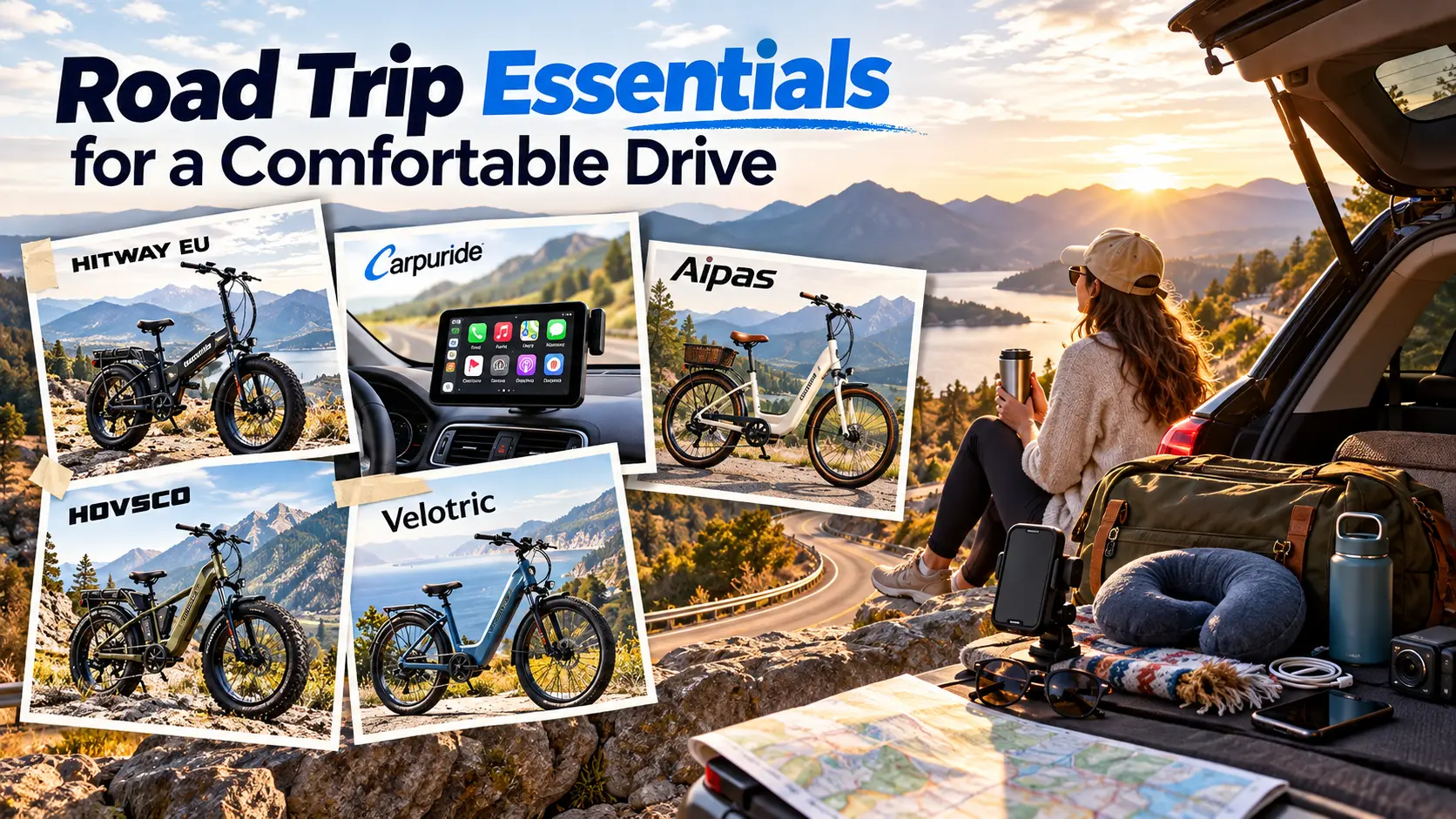
A long drive rarely goes wrong because of one big thing. It goes wrong because of small ones: a tire a few pounds low, a phone charger buried in the trunk, a stiff lower back at hour three, a navigation screen you keep glancing at.
This guide covers what to check, what to pack, and how to set up the car so the miles feel easier. It ends with an optional look at two gear categories that suit some trips: a dashboard screen for navigation and music, and a folding e-bike for exploring once you arrive.
Affiliate Disclosure: Some links in this article are affiliate links. If you purchase through these links, Weekendsmash may earn a commission at no additional cost to you.
Quick Answer: What Are the Essentials for a Comfortable Road Trip?
Comfortable road trips usually come down to five things:
- A checked vehicle: correct tire pressure, working lights and wipers, and fluids topped up.
- A basic safety kit: a first-aid kit, a flashlight, a jump starter or jumper cables, and a tire inflator.
- Cabin comforts: water, easy snacks, layers, sunglasses and phone chargers within reach.
- A navigation setup you don’t fiddle with: a route and music queue set before you move.
- A break plan: stopping about every two hours or 100 miles, a rhythm the CDC and NHTSA both recommend for long drives.
Start With the Car, Not the Packing List
Packing the trunk matters less than whether the car is ready for hours of driving. Do these checks a few days before you leave, so there is time to fix anything you find.
- Tires: Check pressure when the tires are cold, using the number on the placard inside the driver’s door jamb, not the number molded into the tire sidewall. Look at tread and for visible damage too. NHTSA publishes guidance on tire safety if you want the details.
- Fluids: Check engine oil, coolant, and washer fluid.
- Lights and wipers: Test headlights, brake lights and indicators, and replace worn wiper blades.
- Brakes and battery: If the car has been pulling, squealing or struggling to start, have it looked at before a long trip, not during one.
- Spare or repair option: Know whether you have a spare tire, a sealant kit or neither. Many newer cars ship without a full spare.
If the car is due for service, schedule it before the trip. A mechanic can tell you things a checklist can’t.
What Should You Pack in the Car for a Road Trip?
Think in three groups: what keeps you safe, what keeps you comfortable, and what keeps you fed and hydrated. Keep anything you might need on the road within reach of the driver or front passenger, not buried under luggage.
Safety and Breakdown Kit
A basic kit covers the most common roadside problems:
- First-aid kit and any personal medication
- Flashlight with spare batteries, or a headlamp
- Jump starter or jumper cables
- Portable tire inflator or a compact 12V air compressor
- Reflective triangles or flares
- Phone chargers and a charged power bank
- Multi-tool, work gloves and a few zip ties
- Paper map or downloaded offline maps for areas with weak signal
- Blanket or warm layer, since a car cools quickly when the engine is off
- Copies of your registration, insurance and roadside-assistance details
Comfort Items for the Cabin
Comfort on a long drive is mostly about reducing small, repeated annoyances.
- Layers: Cabin temperature changes with sun, shade and altitude. A hoodie or light jacket within reach beats adjusting the heater constantly.
- Sunglasses: Glare is tiring, and a spare pair in the glovebox helps.
- Seat support: A small lumbar cushion or rolled towel can help if your seat has limited lower-back support. Adjust the seat so your knees are slightly bent and your wrists rest comfortably on the wheel.
- Wipes and a small trash bag: A tidy cabin feels calmer.
- Neck pillow and eye mask for passengers: They make rest easier for whoever is not driving.
- Entertainment for passengers: Downloaded playlists, podcasts, audiobooks or games, since mobile coverage drops out on rural stretches.
Food and Water
Water matters more than snacks. Keep a refillable bottle within reach and a cooler or insulated bag for longer trips.
Favor food that is easy to eat without looking down or making a mess: nuts, fruit, sandwiches cut in halves, and cheese sticks. Heavy, greasy meals before driving tend to make people sleepy, so plan bigger meals for stops.
How to Stay Alert and Comfortable Behind the Wheel
Fatigue is the biggest comfort and safety issue on long drives. The CDC and NHTSA both advise taking a break about every two hours or every 100 miles, and napping for around 20 minutes if you feel drowsy. Sleepiness slows reaction time and awareness, and highway monotony makes it creep up.
Some practical habits:
- Sleep before you leave. Most adults need 7 to 9 hours, and no packing list replaces it.
- Share the driving. If you have a second driver, swap on a schedule instead of waiting until someone is exhausted.
- Plan stops, not just a destination. Choose rest areas or towns in advance, so breaks don’t depend on luck.
- Move at each stop. A few minutes of walking and stretching helps stiff legs and backs.
- Know the warning signs. Frequent yawning, drifting within the lane or trouble remembering the last few miles mean it is time to stop.
- Avoid drowsy medications before driving, and read labels.
- Avoid your usual sleep hours. Late-night and early-morning stretches are higher-risk.
Caffeine can help in a pinch, but it takes time to work and it does not replace rest.
Navigation, Music and Phone Setup
Navigation is a comfort issue as much as a convenience. Reaching for a phone, zooming a map or searching for a playlist takes your eyes off the road. The simplest fix is to set your destination, route and audio before you start moving, and let a passenger handle changes.
When a Screen Upgrade Makes Sense
Many newer cars have built-in Apple CarPlay or Android Auto. Older cars often don’t, or have small, slow displays. For those drivers, a dashboard screen can bring maps, calls and music onto a larger display.
Carpuride is a brand that sells smart screens in this category for cars and motorcycles. Its car range is organized by screen size (7-, 9-, 10- and 12-inch series) and by features such as app support, dual Bluetooth and a built-in dash cam option. The brand positions its screens as wireless and portable. It may suit drivers whose car has no CarPlay or Android Auto display and who want a bigger, clearer navigation view. Explore Carpuride’s car screens to compare sizes and features.
What to Check Before Buying a Dashboard Screen
- Compatibility: Confirm the model works with your phone and your car, and read the product page for what it supports.
- Mounting and power: Check how it attaches and how it is powered, and whether cables will interfere with controls or airbags.
- Sightlines: A screen should never block your view of the road or mirrors.
- Local rules: Windshield and dash mounting rules, and rules on recording video with a dash cam, vary by location. Check yours.
- Setup before moving: Even the best screen doesn’t make it safe to type while driving.
How to Pack the Car for Comfort and Safety
Packing affects how the car handles and how easy the trip feels.
- Heavy items low and centered. Keep heavy bags near the rear seat back and low in the trunk, which helps stability.
- Keep sightlines clear. Don’t stack luggage above the rear seat back or block the rear window.
- Secure loose items. Anything unsecured can become a projectile in a sudden stop.
- Make a “daily access” bag. Put chargers, medications, snacks, wipes and a change of clothes in one bag reachable from the cabin.
- Check your load limit. Your owner’s manual lists it. Passengers, luggage and any roof or hitch load all count.
Optional: Bring a Folding E-Bike to Explore at the Destination
This section is not essential. Plenty of great road trips involve no bike at all. But for trips to a lake town, a campground, a coastal village or a city with bike paths, a folding e-bike can turn a parked car into a base for short exploring rides.
What to Check Before Taking an E-Bike on a Road Trip
- Weight and fit: Folding e-bikes are heavy for their size. Check the listed weight, the folded dimensions and whether you can lift it in and out of your trunk or hatch.
- Battery care: Most manufacturers advise against leaving lithium batteries in extreme heat or cold. Don’t leave one in a hot parked car, and check your manual.
- Local rules: E-bike classes, speed limits and trail access differ by country and region, so check before riding.
- Security: Bring a good lock, and don’t leave the bike visible in an unattended car.
- Warranty and returns: Read the policy, especially if you are buying primarily for travel.
Where to Look
Four e-bike brands from the stores researched for this guide list folding models. This table is based on each brand’s official site at the time of research, so confirm details on the product page.
If your priority is the smallest folded size, look first at the compact models (such as Aipas’s A2 Elite or HOVSCO’s Sync Max) and compare folded dimensions. If you want sturdier tires for gravel, sand, or rougher paths, the fat-tire folding models from HITWAY, Aipas and HOVSCO are worth a look, though they are typically heavier. For a more conventional folding commuter, see Velotric’s folding e-bikes.
Many stores show a short list of warranty and return terms on their homepages, such as 1- or 2-year warranties and 14- to 30-day return or trial windows. These vary by store and region and can change, so confirm them at checkout.
Road Trip Checklist
Copy this list and tick it off before you leave.
Car
- Tire pressure checked, including the spare if you have one
- Oil, coolant and washer fluid topped up
- Lights and wipers working
- Registration, insurance and roadside-assistance details accessible
Safety
5. First-aid kit
6. Flashlight, jump starter or cables, tire inflator
7. Reflective triangles, gloves, multi-tool
8. Offline maps downloaded
Comfort
9. Water and easy snacks
10. Layers and sunglasses
11. Chargers and a power bank
12. Lumbar support and a neck pillow if useful
Driving plan
13. Route and music set before you start
14. Break stops planned about every two hours or 100 miles
15. Driving shifts agreed if there are two drivers
Common Road Trip Mistakes
- Skipping the pre-trip check. Tires and fluids are the most common preventable problems.
- Packing the kit in the trunk. An emergency kit buried under luggage doesn’t help in an emergency.
- Driving through fatigue. Pushing on to hit an arrival time is the wrong trade.
- Over-relying on mobile signal. Maps and playlists should be downloaded.
- Adjusting navigation while moving. Set it before you leave or stop first.
- Overpacking. More bags mean a heavier car, a harder-to-reach cabin and a longer search for the one thing you need.
Frequently Asked Questions
What are the most important road trip essentials?
A vehicle that has been checked, a basic safety kit, water, chargers, comfortable layers, a reliable navigation setup and a plan for regular breaks.
How often should you stop on a long drive?
About every two hours or 100 miles, according to CDC and NHTSA guidance. Stop sooner if you feel drowsy.
How can I make a long drive more comfortable?
Adjust your seat so your knees are slightly bent, add lumbar support if you need it, dress in layers, keep water within reach and walk around at every stop.
What should be in a car emergency kit?
At minimum: a first-aid kit, flashlight, jump starter or jumper cables, tire inflator, reflective triangles, gloves, a power bank and a blanket. Add anything your climate or route calls for.
How do I stay awake while driving long distances?
Sleep well beforehand, share driving if you can, stop regularly and nap for about 20 minutes if drowsy. Stop driving if you notice yawning or lane drift.
Can I add CarPlay or Android Auto to an older car?
Often yes, using an aftermarket screen or head unit, but compatibility varies by car and phone. Read the product page and installation details before buying.
Can a folding e-bike fit in a car?
Many folding e-bikes can fit in a trunk or hatchback, but weight and folded size differ a lot between models. Check listed dimensions against your cargo space and make sure you can lift it.
Is it safe to leave an e-bike battery in a hot car?
Most manufacturers advise against it. Heat can shorten battery life, so follow your manual’s guidance.
Final Thoughts
A comfortable road trip is mostly preparation: a checked car, a kit you hope not to use, small comforts within reach and breaks you actually take. The gear covered here, a dashboard screen or a folding e-bike, is optional. Choose it only if it solves a problem on your route.
Recent Blogs
-
Practical Car Accessories for Long-Distance Travel
Discover practical car accessories for long-distance travel, from tire inflators and emergency kits to phone mounts, chargers, and portable CarPlay screens. Learn what’s worth buying for a safer, more comfortable road trip.
-
Road Trip Essentials for a Comfortable Drive
Prepare for a more comfortable road trip with essential car safety checks, emergency supplies, travel comfort tips, and smart navigation gear. Discover what to pack, how to stay alert, and optional gadgets for exploring your destination.
-
Best Car Care Products for Maintaining Your Vehicle
Discover the best car care products for cleaning, protecting, and maintaining your vehicle. Learn which essentials are worth buying, avoid common mistakes, and keep your car looking great while supporting long-term performance.
-
Useful Car Gadgets for Everyday Driving
Discover useful car gadgets for safer, easier everyday driving, from dash cams and tire inflators to jump starters and CarPlay screens. Find practical upgrades that fit your car, budget, and driving needs.
-
Essential Car Accessories Every Driver Should Consider
Discover essential car accessories every driver should consider, from safety kits and jump starters to phone mounts, dash cams, and CarPlay upgrades.