Easy Ways to Make Your Outdoor Space More Inviting

Make your patio, porch, or yard more inviting with warm lighting, comfortable seating, added privacy, and greenery. Discover simple weekend upgrades that transform outdoor spaces into relaxing, functional places to unwind.
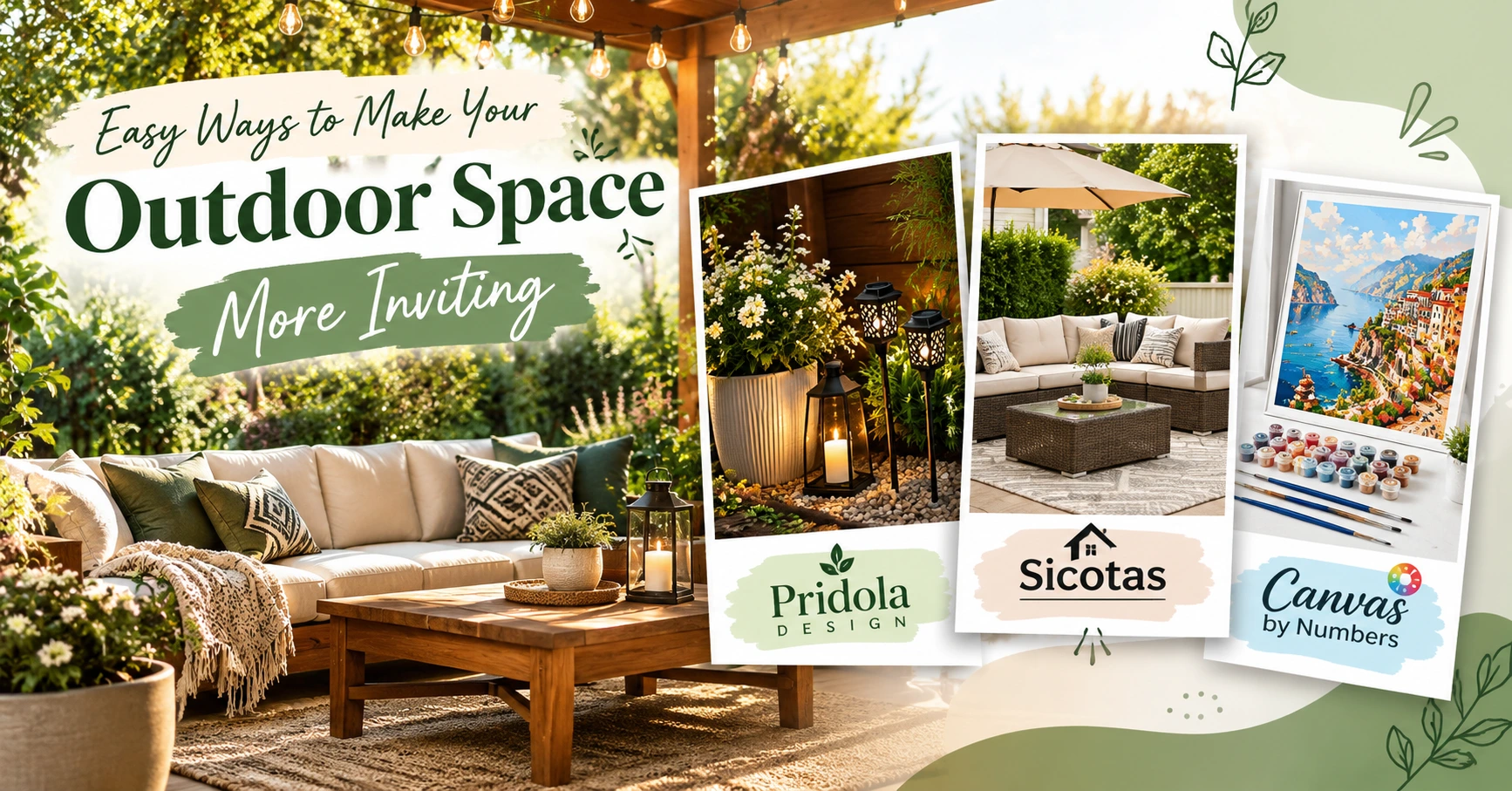
Most patios, porches, and yards don’t fail because of size or budget. They fail because nothing invites you to step outside. The path is dim, the seating is awkward, the light is harsh, and there’s no sense of shelter. Fix those, and even a small balcony starts to feel like a place you want to be.
This guide walks through the changes that make the biggest difference, in roughly the order to tackle them. Most can be done in a weekend, and none require building anything.
Affiliate Disclosure: Some links in this article are affiliate links. If you purchase through these links, Weekend Smash may earn a commission at no additional cost to you.
Quick answer: How do you make an outdoor space more inviting?
At a glance
-
Light the way in. Use warm, low-glare light along paths and seating areas, not one bright floodlight.
-
Make one spot comfortable. A seat you can sit in for an hour matters more than extra decor.
-
Add shelter and privacy. Tall planters, screens, or shade make a space feel enclosed and calm.
-
Layer in plants and texture. Containers and soft materials add life without a landscaping project.
-
Give the space one clear job. Dining, lounging, or quiet reading all work better than “a bit of everything.”
If you only have time for two things, start with lighting and seating.
What makes an outdoor space feel inviting?
An inviting space quietly answers four questions: Can I get there easily? Does it feel safe and pleasant to be in? Is it physically comfortable? Is there a reason to stay?
Use this table as a checklist. Wherever your answer is “not really,” start there.
Start with the approach: paths, entrances, and first impressions
People decide whether a space looks inviting before they reach it. The route in matters as much as the destination.
Make the route obvious and easy
Clear anything that blocks or crowds the path: hoses, stray pots, hanging branches. Edge the walkway with stones, low plants, or lights so the route reads clearly. Fix wobbly pavers and uneven steps, since a path that feels risky in the dark stops people from using the space after sunset.
Create a small “landing” at the door
A sturdy doormat, a pair of planters, and one good light fixture signal “come in.” You don’t need many items. Symmetry and a clear focal point do most of the work.
How do you light an outdoor space so it feels welcoming?
Direct answer: Use warm-white, low-glare light in layers: soft light along paths, gentle ambient light where people sit, and optional accent light on plants or features. Avoid relying on a single bright overhead light.
Lighting is often the most effective change you can make, because it extends how long the space is usable and changes how it feels.
Layer your light
Think in four jobs:
-
Path light: Low light that shows where to step.
-
Ambient light: Soft, general light over seating or dining areas, such as string lights or lanterns.
-
Accent light: A gentle glow on a tree, wall, or planter that adds depth.
-
Task light: Brighter light only where you need it, such as near a grill or steps.
Most outdoor spaces need the first two and one or two accents. Task lighting is only worth adding where you actually do tasks.
Keep it warm, shielded, and purposeful
DarkSky International, a nonprofit focused on reducing light pollution, publishes principles for responsible outdoor lighting. In plain terms: light only what needs light, keep it no brighter than necessary, aim it down where it’s needed, use timers or controls, and choose warm color temperatures at or below about 3000K.
This isn’t only about the night sky. Warm, shielded light is also more comfortable to sit in. Cool white light and exposed bulbs create glare that makes a space feel like a parking lot.
Solar, plug-in, or wired: which is easiest?
If you use anything that plugs in, treat electrical safety seriously. The Electrical Safety Foundation International (ESFI), working with the U.S. Consumer Product Safety Commission, recommends GFCI protection for outdoor power and outdoor-rated equipment. Use only outdoor-rated extension cords, and don’t leave them out as permanent wiring. If you want permanent power outside, hire a licensed electrician.
Where solar pathway lights fit
For a path or garden bed where you don’t want to run wire, solar stake lights are the simplest starting point. Pridola Design is a home-lighting and comfort brand that describes its approach as Scandinavian “hygge.” Its range covers wall sconces, table lamps, shades, blankets, and an Exterior Lamps collection. In that collection, the Solea Pathway Light is the relevant product here.
According to Pridola’s product page, each Solea light is solar-powered with a built-in rechargeable battery, uses a warm-white filament-style LED, and is rated IP65 for weather resistance. It stands about 24.6 inches tall on a ground stake, and it’s sold in sets of 2, 6, or 8. The lights switch on automatically at dusk and can run up to about 12 hours on a full charge, depending on weather.
Who it suits: renters, people with beds or walkways they want to define, and anyone who wants light without wiring. Explore Pridola’s exterior lamps under the Lighting menu if you want to see the options.
Things to weigh before buying:
-
Sunlight: Pridola advises placing the lights where they get direct sun for several hours a day. A shaded path will give disappointing results with any solar light.
-
Ground: The stakes are plastic and meant for soft soil. Hard or rocky ground needs loosening first.
-
Job: Pathway lights guide your eye. They won’t replace a porch light or task lighting.
-
Rating meaning: IP65 means protection against dust and water jets, not submersion.
Pridola’s wireless wall sconces are listed in its general lighting range rather than its exterior collection. Check the product page for outdoor suitability before putting one on an open porch.
Create seating people actually want to use
Direct answer: Choose seating you can comfortably sit in for an hour, arrange it so people face each other, and add a little shelter from sun or wind.
Arrange for conversation
Furniture pushed against a railing, all facing the same direction, rarely gets used. Pull seats into a loose group about conversation distance apart, with a small table within reach. On a small balcony, one comfortable chair and a side table beats a cramped set of two.
Add soft layers
Outdoor-rated cushions and rugs make hard surfaces feel less like a waiting room. For cooler evenings, keep a throw nearby. Pridola’s blankets and throws are described by the brand as breathable, and they’re aimed at indoor comfort rather than weatherproof outdoor use. That makes them suitable for a covered porch or a short evening outside, as long as you bring them in afterward.
Add privacy and shelter without building anything
Feeling watched or exposed is one of the main reasons people avoid their own yards. You can add enclosure without a permanent structure:
-
Tall planters with grasses or evergreen shrubs
-
Outdoor curtains or panels on a pergola or porch
-
A freestanding screen or trellis with climbing plants
-
A shade sail or large umbrella for overhead cover
If you’re adding anything fixed, such as a pergola or a fence, check local regulations or HOA rules first.
Bring in plants and texture
Plants soften hard edges and make a space feel alive. Containers are the easiest route because you can rearrange them.
-
Group pots in odd numbers and vary heights.
-
Match plants to your light: sun lovers in sun, shade plants in shade.
-
Check your climate with the USDA Plant Hardiness Zone Map if you want plants to survive winter.
-
Include something evergreen so the space doesn’t look empty in the off-season.
Start with three to five pots rather than filling every corner. A space that feels curated reads as more inviting than one that feels crowded.
Give the space one clear purpose
A patio that is “for everything” is often used for nothing. Decide what you most want to do there: eat dinner, read, have coffee, let kids play, or entertain. Then set up one zone for that purpose.
On a small balcony, that may be a single chair and a lantern. In a large yard, it can mean two zones, such as a dining area near the house and a quiet seat at the far end.
Which upgrades should you do first?
This is an editorial judgment, not measured data. Costs and effort vary widely by space.
Common mistakes that make outdoor spaces feel less inviting
-
One bright floodlight. It creates glare and hard shadows.
-
Cool white bulbs. They feel clinical compared with warm light.
-
Furniture facing nothing. Seats lined up against a wall or railing discourage conversation.
-
Too many small items. Clutter reads as chaos. Fewer, larger pieces feel calmer.
-
Ignoring sun and wind. A beautiful seat in harsh afternoon sun won’t get used.
-
Using indoor products outside. Cords, fixtures, and fabrics need outdoor ratings.
-
Skipping the path. If getting there feels awkward, the destination won’t matter.
A simple weekend plan
-
Saturday morning: Clear clutter, sweep, and fix any trip hazards. Decide the space’s one main purpose.
-
Saturday midday: Rearrange seating into a conversation-friendly group and add a side table.
-
Saturday afternoon: Add soft layers: cushions, a throw, a rug if the space allows.
-
Sunday morning: Set up lighting. Place path lights first, then ambient light over seating.
-
Sunday midday: Add three to five container plants, including at least one evergreen.
-
Sunday evening: Sit outside after dark. Note glare, dark spots, or discomfort, and adjust next weekend.
FAQs
What is the cheapest way to make an outdoor space more inviting?
Declutter, rearrange the seating, and add warm light. These changes cost little and make a noticeable difference.
What color light is best for outdoor spaces?
Warm white, at or below about 3000K, is generally the most comfortable and is consistent with DarkSky International’s guidance. Avoid cool white or bluish bulbs.
Are solar lights bright enough?
They’re usually bright enough for paths and accents but not for tasks like cooking or reading. Output also depends on how much sun they receive, so test one location first.
How do I make a small balcony more inviting?
Choose one comfortable chair, add a small side table, use a few containers, and add soft, warm light. Keep the floor clear so it doesn’t feel crowded.
How can I add privacy without a fence?
Use tall planters, a freestanding screen, outdoor curtains, or climbing plants on a trellis. Check local rules before adding anything permanent.
Do I need an electrician for outdoor lighting?
Not for solar or battery lights. For permanent wiring or new outlets, hire a licensed electrician. If you use plug-in lights, choose outdoor-rated products and a GFCI-protected outlet.
How do I keep an outdoor space usable in cooler weather?
Add warm lighting, wind shelter, and soft throws. Keep textiles dry and bring them inside when you’re done.
Where to start this weekend
You don’t need to do everything. Pick the area where your honest answer to the four questions was “not really,” and fix that first.
For most people, that means better light and one comfortable seat. If a dark path is your weak spot and you’d like a wire-free fix, browse Pridola’s lighting range and check the Solea Pathway Light’s specifications against your space. If not, the free changes here will still make a visible difference.
Recent Blogs
-
Home Improvement Tools Every Homeowner Should Have
Discover the essential home improvement tools every homeowner needs for DIY repairs, furniture assembly, safe upgrades, and everyday maintenance.
-
Easy Ways to Make Your Outdoor Space More Inviting
Make your patio, porch, or yard more inviting with warm lighting, comfortable seating, added privacy, and greenery. Discover simple weekend upgrades that transform outdoor spaces into relaxing, functional places to unwind.
-

Garden Essentials for Creating a Healthy Outdoor Space
Create a healthier outdoor space with essential gardening tools, soil testing, suitable plants, smart watering, pollinator-friendly choices, and safe pathway lighting. Discover practical tips for a beautiful, comfortable garden.
-

Practical Ideas for Refreshing Your Home on a Budget
Refresh your home on a budget with simple ideas for lighting, wall art, soft furnishings, and furniture. Discover affordable upgrades, DIY decor tips, and practical ways to make every room feel more comfortable and stylish.
-
Home Improvement Projects That Make a Big Difference
Discover home improvement projects that make a big difference, from fresh paint and better lighting to smarter storage, energy efficiency, and curb appeal.