Home Improvement Projects That Make a Big Difference

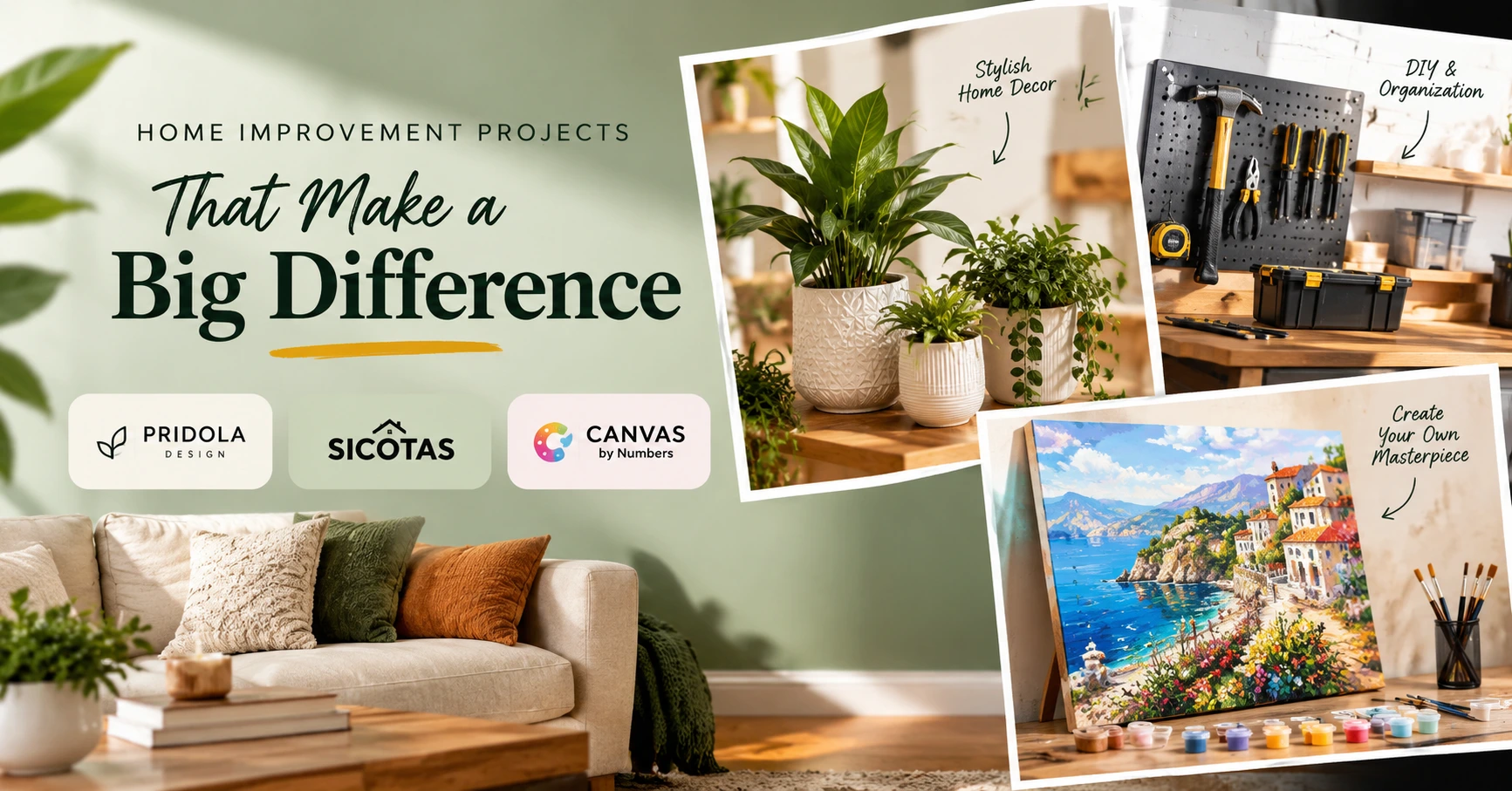
Discover home improvement projects that make a big difference, from fresh paint and better lighting to smarter storage, energy efficiency, and curb appeal.
Most homes have a long list of things that could be better and a short supply of time and money. The hard part is rarely finding ideas. It is knowing which ones change how a home looks, feels, or works every day, and which ones cost a lot for results you stop noticing in a month.
This guide ranks projects by daily impact and effort rather than by trend. You will find a quick shortlist, a way to choose between projects, practical notes on each one, and the mistakes that tend to make projects cost more than they should.
Affiliate Disclosure: Some links in this article are affiliate links. If you purchase through these links, Weekend Smash may earn a commission at no additional cost to you.
Quick Answer: Which Home Improvements Make the Biggest Difference?
The projects that usually matter most are the ones you see or use daily, and that fix a specific annoyance. Interior paint, better lighting, smarter entryway and bedroom storage, sealing drafts, replacing worn hardware, and a tidier front entrance are the most reliable starting points. Most are low to moderate in cost and manageable for a beginner.
Cost and time are relative estimates and will vary with home size, region, and materials.
How to Choose Projects That Are Worth Doing
Run each idea through four questions before you spend anything:
-
How often will I see or use it? A hallway you walk through ten times a day beats a seldom-used guest room.
-
What specific problem does it solve? “The entry is always cluttered” is a better reason than “it would look nice.”
-
How hard is it to undo? Paint and hardware are easy to change. Flooring and built-ins are not.
-
What is the true effort? Count prep, cleanup, delivery, assembly, and drying time, not just the fun part.
Living in It vs. Selling It
If you plan to stay, prioritize what improves your daily routine: lighting, storage, comfort. If you plan to sell within a couple of years, lean toward neutral paint, repairs, and curb appeal. The annual Cost vs. Value report from Remodeling magazine tracks estimated resale returns on common projects and has often shown smaller exterior upgrades performing well. Check the current edition and ask a local agent, because returns vary by market.
Interior Paint: The Highest Impact for the Money
Fresh paint is often the biggest visible change for the least spending, because it affects every surface you see. The difference between a good and a mediocre result is almost entirely preparation.
-
Prep first: Wash walls, fill holes, sand patches smooth, and prime stains so they do not bleed through.
-
Test colors in your own light: Paint a large sample and look at it morning and evening. Light changes color dramatically.
-
Match sheen to the surface: Flat or matte on ceilings, eggshell or satin on most walls, semi-gloss on trim and moisture-prone areas.
-
Do the ceiling, trim, and walls in that order to avoid drips on finished work.
If your home was built before 1978, treat old paint as possibly lead-based. The EPA’s lead-safe renovation guidance covers testing and safe practices, and it is worth reading before you sand or scrape anything.
Lighting: Layer It Instead of Just Changing Bulbs
One overhead fixture rarely does the job. Better rooms usually combine three layers: ambient light for general illumination, task light for reading or cooking, and accent light for warmth and atmosphere. Switching to LED bulbs lowers energy use, according to ENERGY STAR and the U.S. Department of Energy. Warm color temperatures, often labeled around 2700K, tend to feel cozier in living spaces and bedrooms.
The common barrier is wiring. Hardwired sconces need a junction box and often an electrician. That is why plug-in and wireless options are popular for hallways, bedrooms, and rentals.
Pridola Design is a home-decor brand that, according to its own site, was founded in 2021 and draws on Scandinavian “hygge” ideas of warm light and soft layers. It sells wall sconces, table lamps, exterior lamps, lampshades, blankets, and accessories. Its wireless wall sconces are presented as needing no hardwiring, which makes them a fit for renters or for spots without an existing electrical box. You can browse Pridola’s wireless sconces and lamps if that describes your situation.
A few cautions before buying any wireless lighting:
-
Check the power source, expected runtime, and how it charges or changes batteries.
-
Decorative sconces generally provide mood and ambient light, so do not count on them for task lighting at a kitchen counter or desk.
-
For exterior lamps, confirm the product is rated for outdoor use.
-
Read the warranty and shipping terms on the product page. The store lists tracked shipping and a two-year warranty, but terms can change.
Entryway and Bedroom Storage: Fix the Daily Friction
Clutter that returns every week is usually a storage problem, not a discipline problem. Two areas pay off fastest: the entryway, where shoes, bags, and keys pile up, and the bedroom, where dressers and wardrobes decide whether mornings feel calm.
Before buying, measure the space, the door swing, and the path to the room. Decide what must be hidden, such as shoes, and what should stay reachable, such as keys.
Sicotas is a US furniture brand that describes its style as a mix of boho, contemporary, and minimalist design. Its catalog covers shoe cabinets and benches, console tables, nightstands, dressers, wardrobes, bookcases, and home office desks, organized into named collections. If you want to compare options, you can see Sicotas’ entryway and bedroom storage.
Practical points to weigh:
-
Assembly time is real. The brand publishes assembly instructions, and some customer reviews on its site describe a couple of hours for tall pieces and needing a second person to lift sections. Those are customer opinions, not guarantees.
-
Anchor tall furniture. The U.S. Consumer Product Safety Commission’s Anchor It! campaign explains why dressers and bookcases should be fastened to the wall, especially in homes with children.
-
Check the policies. The site lists free shipping, a 60-day return window, and a 360-day warranty at the time of writing. Confirm the details at checkout.
Seal Drafts and Small Leaks
Air sealing is unglamorous but one of the most practical projects, because drafts affect comfort in every season. The Department of Energy lists air sealing among the most cost-effective ways to improve a home’s efficiency.
-
Find leaks on a windy day by feeling around window frames, door edges, and where pipes or wires enter walls.
-
Apply caulk to stationary gaps and weatherstripping to moving parts such as doors and operable windows.
-
Add door sweeps at exterior doors.
-
Leave attic and combustion-appliance work to a professional, and never block ventilation for furnaces or water heaters.
Replace the Small Things You Touch Every Day
Worn details make a home feel tired even when everything else is fine. These fixes are cheap, quick, and satisfying:
-
Swap dated or loose cabinet pulls and door handles.
-
Replace yellowed switch plates and outlet covers.
-
Re-caulk tubs and sinks where old caulk has darkened or cracked.
-
Fix the dripping faucet. The EPA notes a leak of one drip per second can waste thousands of gallons a year.
-
Tighten or oil squeaky hinges and sticking doors.
Renters can often do the hardware swap too. Keep the originals and put them back when you move.
Curb Appeal: Make the First Impression Count
The front of the house sets expectations before anyone steps inside. A few inexpensive moves go a long way:
-
Repaint or refinish the front door.
-
Update house numbers and the mailbox.
-
Replace a worn exterior light fixture.
-
Trim shrubs, edge walkways, and pressure wash grime from steps and siding.
Wall Art: Make Bare Walls Feel Finished
Bare walls can make a freshly painted room feel unfinished. This is decor rather than repair, and it suits people who like a hands-on project.
Two common guidelines help: choose art roughly two-thirds to three-quarters the width of the furniture beneath it, and hang it so the center sits near eye level, often cited as about 57 inches from the floor.
Canvas by Numbers sells paint-by-numbers and diamond painting kits. A standard kit includes a pre-printed canvas with numbered sections, matching acrylic paints, and brushes, so no drawing skill is needed. Kits are rated beginner, intermediate, or advanced, come in several sizes (the site lists up to 24x30 inches), and can be ordered rolled, framed, or mounted on board. It also offers custom kits made from your own photo, including pets and portraits. You can explore custom and ready-made kits at Canvas by Numbers.
Be realistic about what you are buying. A detailed canvas can take days or weeks, and framing may add cost. Shipping windows differ by product type, so check the current estimate before ordering for a deadline.
Do Projects in a Sensible Order
Order matters because later steps can damage earlier ones.
-
Repairs and safety fixes (leaks, drafts, loose railings)
-
Painting and wall prep
-
Fixtures, hardware, and lighting
-
Furniture and storage
-
Art and finishing touches
Common Mistakes to Avoid
-
Skipping prep. Painting over dirt, gloss, or stains shows within weeks.
-
Buying before measuring. Furniture that blocks a door swing or hallway is a costly lesson.
-
Starting with cosmetic work while problems persist. Fix leaks and drafts first.
-
Trying everything at once. A half-finished house is more stressful than a slow, finished one.
-
Treating electrical work casually. Always switch off the breaker, and know when a permit is required.
Safety, Permits, and When to Call a Professional
Paint, hardware, caulking, and plug-in lighting are generally low risk. Hire a licensed professional for new wiring, anything structural, roof work, and suspected lead or asbestos disturbance. Permit rules vary by location, so confirm requirements with your local building department before changing wiring or plumbing.
Weekend Planning Checklist
-
List three annoyances you notice every day.
-
Pick the one project that solves the most of them.
-
Measure everything and sketch the layout.
-
Check whether your home was built before 1978.
-
Buy supplies and confirm delivery or assembly time.
-
Work in the order above and finish one room before starting another.
Frequently Asked Questions
What home improvement makes the biggest difference for the least money?
Interior paint usually offers the best value, followed by better lighting, new hardware, and small repairs. All four are low- to moderate-cost and DIY-friendly.
What should I fix first in my house?
Start with safety issues and anything causing damage, such as leaks, electrical hazards, and drafts. Cosmetic projects come after.
Which projects help a home sell?
Neutral paint, repairs, clean lighting, and curb appeal are common choices. Check the latest Cost vs. Value report and ask a local agent, since returns differ by market.
Can renters make home improvements?
Yes, within the lease. Wireless lighting, freestanding storage, wall art, and reversible hardware swaps are renter-friendly. Get permission for anything that alters walls or fixtures.
Do I need a permit for these projects?
Paint, hardware, caulking, and plug-in lighting typically do not. New wiring, plumbing changes, and structural work often do. Check with your local building department.
How long does it take to paint a room?
A typical bedroom often takes a weekend, including prep, two coats, and drying time. Larger rooms or heavy repairs take longer.
Is it worth buying furniture online for storage projects?
It can be, if you measure carefully, read the assembly instructions in advance, and confirm return and warranty terms before ordering.
Where to Start This Weekend
Pick the project that removes your most frequent daily irritation, do the prep properly, and finish it before starting another. One well-done room or entryway changes how a home feels more than five half-finished projects.
Recent Blogs
-
Home Improvement Tools Every Homeowner Should Have
Discover the essential home improvement tools every homeowner needs for DIY repairs, furniture assembly, safe upgrades, and everyday maintenance.
-

Easy Ways to Make Your Outdoor Space More Inviting
Make your patio, porch, or yard more inviting with warm lighting, comfortable seating, added privacy, and greenery. Discover simple weekend upgrades that transform outdoor spaces into relaxing, functional places to unwind.
-

Garden Essentials for Creating a Healthy Outdoor Space
Create a healthier outdoor space with essential gardening tools, soil testing, suitable plants, smart watering, pollinator-friendly choices, and safe pathway lighting. Discover practical tips for a beautiful, comfortable garden.
-

Practical Ideas for Refreshing Your Home on a Budget
Refresh your home on a budget with simple ideas for lighting, wall art, soft furnishings, and furniture. Discover affordable upgrades, DIY decor tips, and practical ways to make every room feel more comfortable and stylish.
-
Home Improvement Projects That Make a Big Difference
Discover home improvement projects that make a big difference, from fresh paint and better lighting to smarter storage, energy efficiency, and curb appeal.