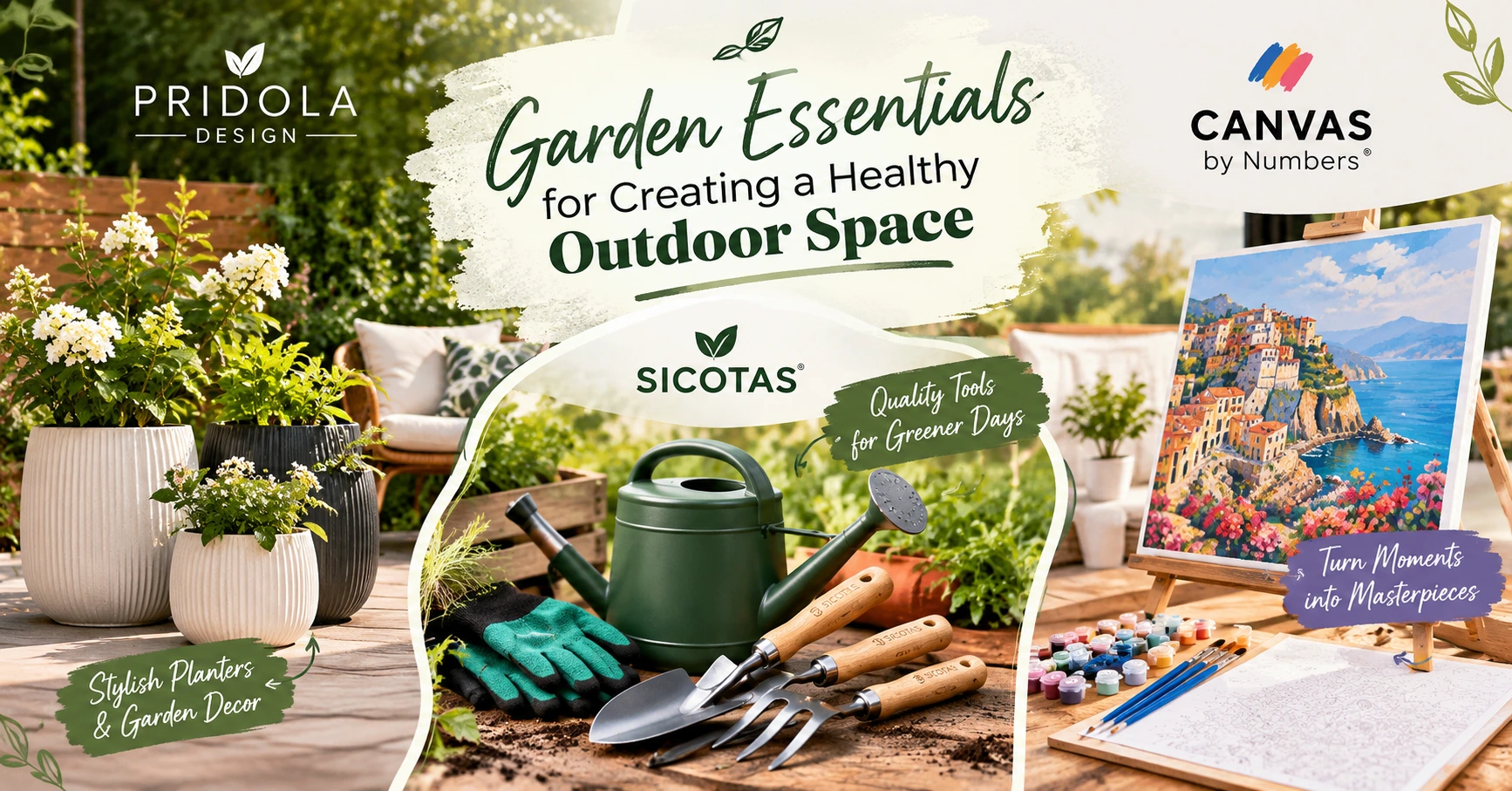
Garden Essentials for Creating a Healthy Outdoor Space

Create a healthier outdoor space with essential gardening tools, soil testing, suitable plants, smart watering, pollinator-friendly choices, and safe pathway lighting. Discover practical tips for a beautiful, comfortable garden.
Affiliate Disclosure: Some links in this article are affiliate links. If you purchase through these links, Weekend Smash may earn a commission at no additional cost to you.
Most garden advice starts with plants. A healthier approach starts one step earlier: what is in the ground, how water moves through the space, and whether you will actually want to spend time there.
This guide walks through the essentials in the order they matter. It covers soil, plants, water, tools, lighting, and a place to rest. You can build the whole thing in a few weekends, on a yard, a patio, or on a balcony.
Quick answer: A healthy outdoor space rests on five things.
-
Soil you have checked, not guessed at.
-
Plants matched to your sun, water, and climate.
-
Watering that is deep and sensible, with no standing water left behind.
-
Paths and lighting that make the space safe to use.
-
Somewhere comfortable to sit.
Start with the soil test. Everything else gets easier once you know what you are working with.
What Makes an Outdoor Space “Healthy”?
A healthy outdoor space is one where the soil, plants, wildlife, and people all do well together. The garden should be safe to touch and eat from, kind to pollinators, easy to maintain, and pleasant enough that you use it.
It helps to think in four layers:
-
Soil: the base. It affects plant growth and, in some places, your exposure to contaminants.
-
Plants and wildlife: what grows, and which insects and birds benefit.
-
Water: how you supply it, and where it collects when you don’t want it to.
-
People: safe footing, light after dark, shade and seating.
Most gardens that disappoint are strong in one layer and ignored in the others.
Start With the Soil
Should You Test Your Soil Before Planting?
Yes, especially if you plan to grow food. A soil test can report nutrient levels and pH, and a lab can also screen for contaminants such as lead. Many university extension offices offer testing, and some do it at low cost.
Lead is the main concern in older neighborhoods and near older homes, because pre-1978 exterior paint and past leaded gasoline left residues in soil. The EPA treats lead above 400 parts per million in soil as a hazard. Soil that tests below that level is not automatically “safe”. It means the risk is lower, so treat results as one input to your decision. ksu
How you are exposed matters as much as the number. Contaminated dust on plants is a bigger concern than lead taken up inside plants. Swallowing or breathing in contaminated soil is more likely to cause harm than eating food grown in it. oregonstatepsu
Practical habits that help:
-
Wear gloves, and wash hands after gardening.
-
Keep small children from eating soil, and keep bare soil covered with mulch or plants.
-
Rinse produce well before eating.
If a result worries you, ask your local extension office or health department how to interpret it. This is general information, not medical advice.
When Do Raised Beds Make Sense?
Raised beds make sense when you are unsure about your soil, or when the soil is compacted, poorly drained, or contaminated. EPA guidance notes that labs may recommend above-ground gardening in place of in-ground planting to reduce exposure to unsafe soil. epa
If you go this route, fill the beds with clean soil or a quality planting mix. Consider a barrier at the base between the bed and native ground. Raised beds are also a good fit for patios and balconies, where containers do the same job.
How Do You Feed the Soil?
Feed the soil, not just the plant. Compost and other organic matter improve structure and water retention, and a layer of mulch protects the surface. The most useful habits are simple:
-
Add compost each season.
-
Mulch bare ground.
-
Avoid walking on planting beds, because compaction squeezes out the air roots need.
Choose Plants That Fit Your Site
How Do You Read Your Site?
Before buying anything, spend a day watching the space. Note where sun falls in the morning and afternoon, where wind funnels, and where water pools after rain. Those patches are your microclimates.
Then pick plants whose labels match the spot. “Right plant, right place” saves more effort than any fertilizer. A sun-lover in shade will struggle however well you feed it.
How Do You Make a Garden Pollinator-Friendly?
Plant for variety and bloom time. The USDA Forest Service advises a wide mix of plants that bloom from early spring into late fall, planted in clumps, and including plants native to your region. usda
Pesticides deserve a second thought. Insecticides can harm beneficial insects too, and extension guidance suggests avoiding them where you can, including organic ones. If you must treat a problem, target it narrowly and follow the label. usu
Water Smartly and Keep Standing Water Out
For most gardens, water deeply and less often, at the base of plants, in the morning. Check moisture a couple of inches down before you water again. Mulch reduces evaporation, and drip lines or a soaker hose put water where roots can use it.
The other half of water management is where you don’t want it. Mosquitoes lay eggs in still water, even small amounts. The CDC advises that once a week you empty and scrub, turn over, cover, or throw out anything that holds water, such as buckets, planters, flowerpot saucers, and birdbaths. Rain barrels should have tight lids or fine mesh. cdc
Do a quick walk-around once a week and tip out anything that has collected water.
The Garden Essentials Checklist
How Do You Light a Garden Path Without Rewiring?
Light is the most overlooked garden essential. Uneven steps and dark paths are the practical reasons, and evenings are when many people finally have time to sit outside.
There are three common routes:
-
Hardwired low-voltage lighting: the most permanent option, but it needs installation and planning.
-
Solar lights: no wiring, but performance depends on sun exposure and season.
-
Rechargeable or plug-in lights: flexible placement, with the trade-off of charging them.
If you want warm, decorative pathway light with no installation, one place to look is Pridola Design. Pridola is a home-décor brand that describes itself as Scandinavian-inspired and founded in 2021. It sells lighting, blankets, and accessories, and its exterior lamps collection includes the Solea Pathway Lights. Its home page presents its lighting as needing no hardwiring.
Who it suits: renters, people with small yards, and anyone who wants to try garden lighting without hiring an electrician.
What to check before buying:
-
Weather rating: confirm the product’s outdoor suitability on its page, since it is not stated in the collection listing.
-
How it is powered: Pridola’s FAQ refers to rechargeable bulbs charged by USB-C, so check how each item works.
-
What is in the box: The FAQ says bulbs may be sold separately.
-
Delivery time: the FAQ lists standard delivery of 7 to 14 business days, so plan ahead for an event.
It is decorative and path-marking lighting, not a replacement for security floodlights or large-area illumination. You can browse Pridola’s exterior lamps and lighting range to see which style fits your path.
Make Room to Slow Down
A healthy outdoor space is one you use. That usually means a place to sit, some shade, and something that gives you a reason to stay a while.
Many people find seated, slow hobbies suit a garden corner. Painting is one example. Strictly speaking, it is not a garden essential, but it pairs naturally with a calm space.
Canvas by Numbers sells paint-by-numbers kits and diamond painting kits. According to the store, each paint-by-numbers kit includes a pre-printed numbered canvas, matching acrylic paints and brushes, and kits are rated beginner, intermediate or advanced. The catalogue includes flowers and landscapes. The store also offers custom kits made from your own photo, which means you could turn a picture of your garden into a painting.
Who it suits: beginners who want a guided creative hobby, and gift-givers looking for something tied to a person’s own space.
Things to keep in mind:
-
The store’s claims about relaxation are its own. Many people enjoy the pace, but results vary.
-
Acrylic paint and canvas do best out of direct sun, wind and rain, so a shaded patio or covered porch suits better than an open lawn.
-
Time to finish depends on size and detail, and the store says it varies from a day to weeks.
If that sounds appealing, you can explore the available kits and custom options. If not, a good chair and a book do the same job.
Common Garden Mistakes
-
Planting before testing the soil, especially for edible crops.
-
Choosing plants by looks only, then fighting the site.
-
Watering a little every day, which encourages shallow roots.
-
Leaving saucers, buckets, and birdbaths full, which invites mosquitoes.
-
Using pesticides first, which can harm the insects the garden needs.
-
Ignoring the evening, so the space is unusable after dark.
-
Buying many tools at once, when a few good ones go further.
A First-Weekend Plan
-
Observe: note sun, shade, wind, and wet spots over one day.
-
Test: send a soil sample to a lab or local extension office.
-
Decide: choose in-ground, raised beds, or containers based on the result.
-
Prepare: add compost and mulch to beds.
-
Plant: pick species suited to your light, and mix bloom times.
-
Check water: empty anything holding water, then set up a watering routine.
-
Finish: add seating, shade and path lighting.
FAQs
What are the essential items for a beginner garden?
A soil test, gloves, a hand trowel, pruners, a watering tool, compost and mulch, and plants suited to your sunlight. Add seating and path lighting once the basics are in.
How do I know if my garden soil is safe?
Test it. An extension office or accredited lab can check nutrients, pH, and contaminants such as lead. If results are a concern, raised beds with clean soil are a common precaution. Ask your local health or extension office to help you interpret the results.
How often should I water a garden?
It depends on climate, soil, and plants. A reliable approach is to water deeply, then wait until the soil a couple of inches down is dry before watering again. Mulch helps retain moisture.
How do I make my garden friendly to pollinators?
Plant a variety that blooms from spring to fall, group plants in clumps, include native species, and limit pesticide use.
How do I keep mosquitoes down in my garden?
Remove standing water at least once a week. Empty or scrub containers, turn them over, cover them, or throw them out, and cover rain barrels tightly.
Do garden path lights need to be hardwired?
No. Solar, rechargeable, and plug-in options exist. Hardwired low-voltage systems are more permanent, while no-wiring options are easier to install and move.
Can a balcony be a healthy outdoor space?
Yes. Use containers with drainage and fresh potting mix, choose plants that suit your light, keep saucers empty of standing water, and add a chair and soft lighting.
Where to Start
You don’t need to do everything at once. Test the soil, match plants to your light, keep water moving and never standing, and make sure there is a safe, comfortable place to sit when the day ends.
Recent Blogs
-
Home Improvement Tools Every Homeowner Should Have
Discover the essential home improvement tools every homeowner needs for DIY repairs, furniture assembly, safe upgrades, and everyday maintenance.
-
Easy Ways to Make Your Outdoor Space More Inviting
Make your patio, porch, or yard more inviting with warm lighting, comfortable seating, added privacy, and greenery. Discover simple weekend upgrades that transform outdoor spaces into relaxing, functional places to unwind.
-
Garden Essentials for Creating a Healthy Outdoor Space
Create a healthier outdoor space with essential gardening tools, soil testing, suitable plants, smart watering, pollinator-friendly choices, and safe pathway lighting. Discover practical tips for a beautiful, comfortable garden.
-

Practical Ideas for Refreshing Your Home on a Budget
Refresh your home on a budget with simple ideas for lighting, wall art, soft furnishings, and furniture. Discover affordable upgrades, DIY decor tips, and practical ways to make every room feel more comfortable and stylish.
-
Home Improvement Projects That Make a Big Difference
Discover home improvement projects that make a big difference, from fresh paint and better lighting to smarter storage, energy efficiency, and curb appeal.