
October 20, 2026
Best Types of Trips for Different Travel Styles
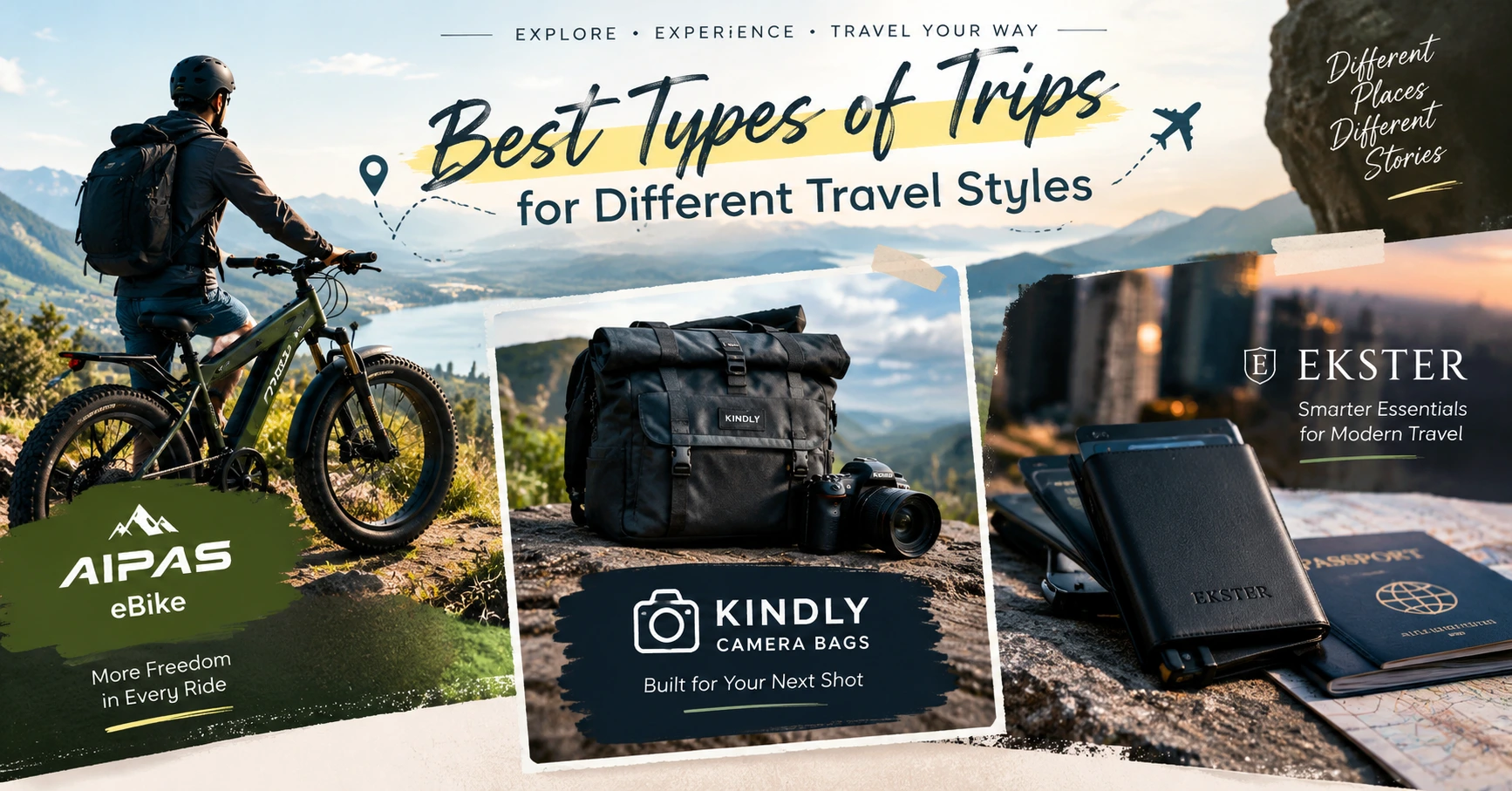
Two people can spend the same week in the same city and come home with opposite verdicts. One loved the packed schedule. The other needed a lie-down by day two. The destination wasn’t the problem. The trip type didn’t match how each person actually likes to travel.
This guide helps you match the kind of trip to your travel style before you pick a destination. You’ll find nine trip types, a comparison table, a simple method for choosing between two options, and a checklist to run through before you book.
Affiliate Disclosure: Some links in this article are affiliate links. If you purchase through these links, Weekend Smash may earn a commission at no additional cost to you.
Quick Answer: Which Trip Type Fits Which Traveler?
The best type of trip is the one that fits your pace, budget, energy, and appetite for planning. As a starting point:
- Want to recharge with minimal decisions: a beach or resort trip.
- Like museums, neighborhoods and street life: a city break.
- Plan your day around light and views: a photography-focused trip.
- Want to be outdoors and moving: an adventure or outdoor trip.
- Value flexibility and your own schedule: a road trip.
- Travel for the next meal: a food trip.
- Want a routine in a new place: slow travel or a workation.
- Travel with kids or a group: a base-camp trip with one anchor activity per day.
- Have only a weekend: a short trip built around light packing.
What Is a Travel Style?
A travel style is the set of preferences that shapes how much you enjoy a trip: how fast you move, how much you plan, how much comfort you need, where you like to spend money, and who you travel with. It isn’t a personality test. It’s a practical filter that keeps you from booking someone else’s ideal vacation.
How to Work Out Your Travel Style
Answer these five questions before you open a booking site.
- Pace: After a day with one main activity, do you feel satisfied or restless?
- Planning: Do you enjoy building an itinerary, or does it feel like homework?
- Comfort: What is the minimum you need to sleep well and feel settled?
- Spending: Would you rather spend on lodging, food or experiences?
- Company: Are you traveling solo, as a couple, with kids or with a group that has different energy levels?
Your answers matter more than the destination. A restless, low-comfort, experience-first traveler and a slow, high-comfort, lodging-first traveler need different trips, even for the same city.
The Best Types of Trips for Each Travel Style
Beach and Resort Trips
Best for: Travelers who want to rest, keep decisions low, and let the days stay unstructured.
These trips suit a slow pace, low planning effort, and a preference for comfort. Choose a base with walkable food, shade, and one or two optional outings rather than a full activity list. Check what a resort fee or package covers, because inclusions vary widely. Peak seasons bring crowds, so shoulder seasons are worth comparing.
City Breaks and Cultural Trips
Best for: Curious travelers who enjoy museums, architecture, local food, and wandering neighborhoods.
City trips work best when you group sights by area, pick one anchor activity per day, and leave afternoons loose. Expect a lot of walking, so comfortable shoes and a way to carry your phone, cards, and a small camera hands-free matter more than they sound. Keep important items in a front or zipped pocket in crowded areas.
For inspiration on places worth exploring, see our guide to bucket list travel destinations. It can help you shortlist destinations that suit your interests before you build an itinerary.
Photography-Focused Trips
Best for: Travelers who plan around light, locations, and gear.
A photography trip is built around golden hour, scouting, and patience, so the schedule often starts early and ends late. The practical challenge is carrying equipment comfortably all day while keeping it within reach. Kindly Camera Bags is an online retailer of camera bags. Its collections include camera backpacks, crossbody bags, straps, and camera wallets, and its site describes a holster-style bag designed for quick, hands-free access.
Before buying any camera bag, check that your body and longest lens fit, and compare its dimensions against your airline’s carry-on limits. A bag helps you carry your gear. It doesn’t replace planning your shooting days.
Adventure and Outdoor Trips
Best for: Active travelers who prefer trails, scenery, and self-powered exploration.
Hiking, cycling, and national-park trips reward fitness planning, weather checks, daylight awareness and a realistic route. Electric bikes can widen what a day outdoors looks like, since they make longer routes and hills more manageable and let riders of different fitness levels travel together.
Aipas is an online electric bike seller. Its range includes off-road models with full suspension and 4.0-inch fat tires, commuter bikes, folding bikes, and a heavy-duty cargo e-trike. If trail riding is the point of your trip, browse the Aipas off-road and fat-tire options and compare motor, battery, and weight capacity against your own needs.
Two cautions apply. Many trails restrict motorized bikes, so check the land manager’s rules for your destination. And check your battery rules before any flight (see the road trip section below).
Road Trips and Scenic Drives
Best for: Independent travelers who want control over their schedule and the freedom to stop wherever looks good.
Road trips suit flexible planners. Build in buffer time, plan fuel or charging stops, and avoid scheduling more than a few hours of driving per day if you want time to enjoy the places in between.
Road trips are also the easiest way to bring a bike. Aipas lists folding models, including the F3 Max Adventurer, F3 Adventurer, A2 Elite and A4 Gentry, and describes its folding design as easy to place in a trunk. If that appeals, see Aipas’s folding e-bike range and check the folded dimensions and weight against your car and your own ability to lift it.
Flying is different. The FAA’s PackSafe guidance for battery-powered recreational vehicles says airline approval is needed for lithium-ion batteries above 100 watt-hours, and batteries above 160 watt-hours are prohibited in carry-on and checked baggage. To estimate a battery’s capacity, multiply its volts by its amp-hours. A 48V, 12.8Ah pack, a spec Aipas lists for some folding models, works out to roughly 614 Wh by that arithmetic, well above those limits. For fly-in trips, renting at your destination is usually the simpler route. Always confirm with your airline.
Food and Culinary Trips
Best for: Travelers who plan their day around meals, markets and local specialties.
Pick one anchor meal per day, whether a reservation, a market visit or a cooking class, and leave the rest open. Walk between meals instead of scheduling more sights. If you have allergies or dietary restrictions, carry a short written note in the local language and confirm ingredients directly, since menu descriptions can be incomplete.
Slow Travel and Workations
Best for: Travelers who want a routine in a new place and prefer depth over a checklist of sights.
Slow travel means staying two to four weeks in one location, often in an apartment, and living like a temporary local. A workation adds remote work. Test the Wi-Fi before you commit, check time-zone overlap with your team, and check the destination’s rules on working remotely, since these vary by country. Use official government sources instead of forum posts.
Family and Group Trips
Best for: Travelers coordinating different ages, energy levels, and interests.
The most reliable approach is a home base with one fixed anchor activity per day and genuine downtime built in. Choose destinations with variety within a short radius so nobody has to endure a long transfer for something they don’t enjoy. Share the planning so one person isn’t carrying all the logistics.
When traveling with children or a mixed-age group, choosing a destination with suitable activities for everyone can make planning easier. Our guide to family vacation ideas offers more inspiration for trips that balance group activities with downtime.
Short Weekend Trips
Best for: Efficient packers with limited time who want to keep luggage small.
Weekend trips fall apart when you check a bag and wait for it. A carry-on-only approach saves time but takes practice. Ekster sells smart wallets, trackers, and travel gear. Its TravelPack Vacuum Kit is a compression bag with a pump, which Ekster says lets travelers pack for 15 or more days with just a carry-on. That is a brand claim, so test it against your own packing and your airline’s weight limits. Compression reduces volume, not weight.
Ekster also makes a Tracker Card that it says works with Apple’s Find My and Android’s Find Hub, and a trackable passport wallet that includes a tracker card. If losing a bag or wallet is your main worry, explore Ekster’s travel collection and read the compatibility notes for your phone. A tracker helps you locate an item. It doesn’t guarantee you’ll recover it.
If you’re deciding where to go for a short break, check out our weekend getaway ideas for inspiration on planning a refreshing trip without using too many vacation days.
Trip Types at a Glance
How to Choose Between Two Trip Types
When two options both appeal, use this process.
- Write down your non-negotiables: rest, adventure, food, scenery, or time with someone.
- Check your calendar and energy. A demanding week at work usually calls for a slower trip type.
- Compare effort, not just cost. Count the transfers, the planning hours, and how much you’ll have to carry.
- Check the season. The same destination can suit a different trip type at a different time of year.
- Choose the trip you’ll be glad you took, not the one that sounds most impressive.
Budget is another useful factor when narrowing down your options. Compare transport, accommodation, meals, and activity costs before committing. Our guide to budget-friendly travel ideas shares practical ways to plan a trip while keeping spending under control.
Common Mistakes When Matching a Trip to Your Travel Style
- Copying someone else’s trip. Their pace, budget, and priorities aren’t yours.
- Overscheduling. More activities rarely means a better trip.
- Assuming gear fixes a mismatch. A good bag helps you carry things, but it won’t make a trip suit you.
- Ignoring airline rules for batteries, trackers, and baggage. Check these before you buy or pack.
- Booking nonrefundable too early. Lock in what’s firm and keep the rest flexible.
Pre-Booking Checklist
- Check passport validity and entry rules on the U.S. Department of State’s travel site or your own government’s equivalent.
- Review health guidance for your destination at CDC Travelers’ Health.
- Read your airline’s baggage and battery rules, and the FAA PackSafe guidance if you’re carrying lithium batteries.
- Consider travel insurance and read what it actually covers.
- Save offline maps and keep copies of key documents.
- Leave a buffer day in the itinerary.
- Decide where your cards, phone, and passport will travel on each day out.
FAQs
What are the main types of trips?
The most common types are beach and resort trips, city breaks, adventure and outdoor trips, road trips, food trips, photography trips, slow travel or workations, family or group trips, and short weekend getaways.
How do I know what travel style I have?
Look at how you feel after a day on a trip. If you want more to do, you lean active. If you want more downtime, you lean relaxed. Combine that with how much you enjoy planning and how much comfort you need.
Which trip type is best for first-time solo travelers?
A city break in a well-connected, easy-to-navigate city is a common starting point, since transport, food, and lodging are straightforward. A small-group tour can also work if you’d like built-in company.
Is one type of trip always cheaper than another?
No. Costs depend on destination, season, and how you travel. A road trip, a slow-travel stay with a kitchen, and a short weekend can each cost more or less than a flight-and-hotel city break.
Can I take an e-bike on a plane?
Usually not with the battery. FAA guidance requires airline approval for batteries above 100 watt-hours and prohibits batteries above 160 watt-hours in carry-on and checked baggage. Most e-bike batteries exceed that, so check with your airline, or rent at your destination instead.
Do I need special gear for different trip styles?
Not always. Gear should solve a specific problem, such as carrying a camera, keeping luggage small, or locating a lost item. If it doesn’t, skip it.
Final Thoughts
Choosing a trip type is mostly an exercise in honesty. Be clear about your pace, your comfort needs, and the amount of planning you’ll enjoy, then pick the trip that fits. Gear can make a good trip smoother, but the match comes first.