
October 20, 2026
Budget-Friendly Travel Ideas for Your Next Trip
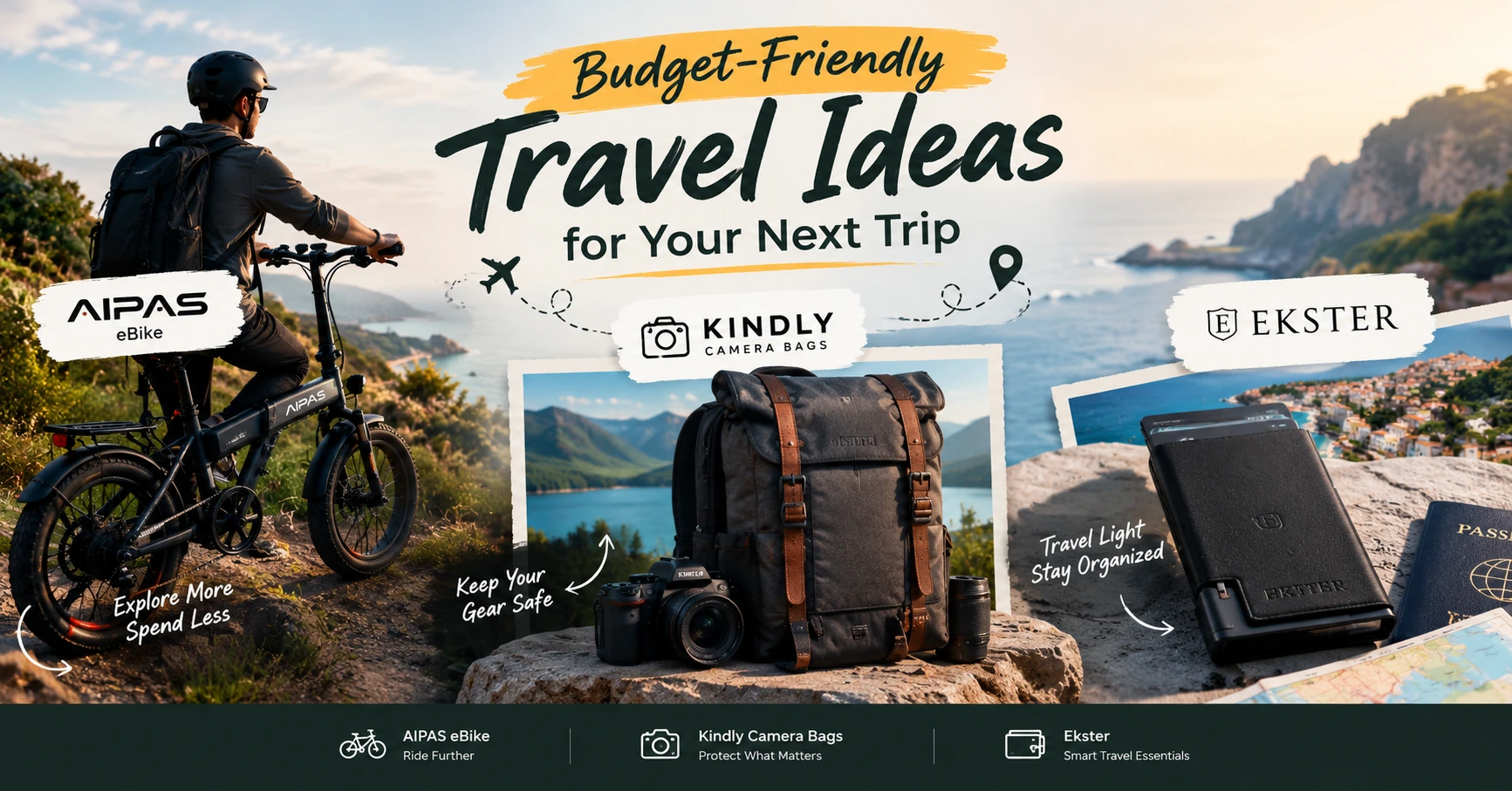
Most people don’t skip trips because they don’t want to go. They skip them because the total looks scary. Flights, a place to stay, food, getting around, and the “small” extras can turn a modest idea into a number you can’t justify.
The good news is that cheap travel is rarely about deprivation. It’s mostly about timing, flexibility, and a few decisions made early. This guide covers the ideas that save the most, a simple way to budget, and the gear and transport choices that can prevent expensive mistakes.
Affiliate Disclosure: Some links in this article are affiliate links. If you purchase through these links, Weekend Smash may earn a commission at no additional cost to you.
Quick Answer: How Do You Travel on a Budget?
You travel on a budget by cutting the highest costs first and avoiding surprise fees. In practice, that means:
- Traveling in shoulder or off-peak season, with flexible dates.
- Choosing a destination where your money stretches further, or staying closer to home.
- Staying in one or two bases instead of hopping constantly.
- Packing light enough to skip baggage fees.
- Protecting the trip with basic insurance and document backups.
Where Your Travel Money Actually Goes
Before hunting for deals, know which categories deserve your attention. For most leisure trips, transportation and lodging are the two largest lines. Food and activities are the most flexible, and “extras” are where budgets quietly leak.
This table is a planning lens, not statistical data. Your own trip will weigh these differently.
Budget-Friendly Trip Ideas Worth Considering
Travel Where Your Money Stretches Further
A destination with lower day-to-day costs can fund a longer or more comfortable trip than the same budget in an expensive city. Compare total daily spending (lodging, meals, transit), not just the flight price. A cheap flight to an expensive city can cost more overall than a slightly pricier flight to an affordable one.
If you're still deciding what kind of destination suits you, our guide to best types of trips for different travel styles can help you compare different travel experiences before setting your budget.
Choose Shoulder Season Over Peak Season
Shoulder season is the period between a destination’s busiest and quietest months. Prices usually soften and crowds thin, while weather is often still pleasant. Check a destination’s climate and local events first, because some attractions close entirely in the off-season.
Pick One Home Base
Every move between cities costs money and time. Choosing a single base and taking day trips usually beats a rushed multi-stop route. You unpack once and may negotiate better rates on a longer stay.
Consider a Road Trip or a Nearby Getaway
If a destination is within a reasonable drive, you can skip airfare, baggage fees, and airport transfers. A road trip also lets you carry cooking gear, a cooler, and extra supplies, which helps your food budget. Weigh fuel, tolls, and parking before assuming it’s cheaper.
For shorter breaks that don't require a long itinerary, explore these weekend getaway ideas for inspiration on planning a refreshing trip without committing to an expensive extended vacation.
How to Cut Transportation Costs
Getting There for Less
- Search with flexible dates. Shifting a trip by a day or two can change the price noticeably.
- Set fare alerts instead of checking daily.
- Compare nearby airports and the train or bus as alternatives.
- Pack for a carry-on only when the airline’s fare rules make that cheaper.
Before you fly with any battery-powered gear, check the rules. The FAA states that spare lithium-ion batteries and power banks must travel in carry-on baggage, and that lithium-ion batteries are limited to 100 Wh each, with 101–160 Wh requiring airline approval. Airlines may set stricter limits.
Getting Around Once You Arrive
Local transport is where many travelers overspend on taxis and rideshares for short hops. Walking, transit passes, and cycling are the budget-friendly default in compact, bike-friendly areas.
If you’re driving to a destination, or live somewhere you’ll use a bike for local trips, a folding e-bike can be a practical way to cover short distances without paying for rides. Aipas is an e-bike brand whose range includes folding models, commuter bikes and cargo options. Its folding models, such as the F3 and A2 series, are described on the brand’s site as compact for storage.
A few honest caveats:
- It’s not a flight companion. E-bike batteries are far larger than the 100 Wh airline standard, so they are not realistic carry-on items. This idea suits road trips or local use, not air travel.
- It’s only budget-friendly if you’ll use it repeatedly. A single trip rarely justifies a purchase. It makes more sense if it also replaces short commutes or errands at home.
- Check local rules. E-bike regulations vary by city and country, including speed, power, and where you may ride.
Readers who may want to look further can browse the Aipas folding e-bike range and confirm current specs, warranty, and delivery terms directly on the official site.
Cheaper Ways to Sleep and Eat
Lodging. Staying slightly outside the center often costs less and may be a short transit ride away. Consider places with a kitchen if you’re staying more than a few nights, since cooking even some meals changes your food budget. Read cancellation terms carefully, because a non-refundable rate is only a bargain if your plans are firm.
Food. A workable pattern is breakfast at your lodging, a main meal out, and a simple grocery-based dinner or picnic. Eating where locals eat, away from major landmarks, tends to be cheaper than tourist-facing restaurants.
Activities. Pick the two or three experiences you’d regret missing, and fill the rest with free options: walking tours, parks, markets, viewpoints. This keeps the trip full without a ticket for every hour.
For travelers planning a family break, these family vacation ideas can help you explore different trip options while considering accommodation, activities, and the needs of everyone traveling.
Pack Smart to Avoid Fees and Losses
Packing is a budget topic more than it seems. Overweight bags, checked-bag fees, lost wallets, and misplaced luggage can each wipe out the savings from a careful plan.
Carry-On Packing and Compression
Compression bags can help fit more into a carry-on. Ekster is a company known for slim smart wallets, and its travel range includes TravelPack vacuum compression kits, a trackable passport wallet, and luggage tracker products. The brand states that its vacuum kit can save space, though real results depend on what you pack and the airline’s carry-on limits, which Ekster’s page doesn’t address.
Packing tips that cost nothing:
- Choose a color palette so everything mixes and matches.
- Plan outfits for the number of days between laundry opportunities, not the full trip.
- Wear your bulkiest items on travel day.
- Weigh your bag at home against your airline’s limit.
Protecting Cards, Documents and Luggage
Losing a wallet or bag abroad creates immediate costs: replacement cards, emergency cash, lost time. A slim cardholder keeps essentials together, and a Bluetooth tracker can help you find a bag or wallet.
Ekster’s travel wallets and trackers include a Tracker Card (which the brand describes as compatible with both Apple and Android and offering up to 10 months of battery life), a passport holder with a tracker card, and RFID-blocking accessories. These suit travelers who want fewer loose items and some recovery help. Remember that a tracker shows approximate location, doesn’t prevent loss, and brand battery claims should be confirmed on the official product page.
Carrying Camera Gear Without Overspending
If you’re bringing a camera, a well-fitting bag protects an expensive item and keeps it accessible so you’re not constantly digging through a backpack. Kindly Camera Bags sells camera backpacks, sling and crossbody-style bags and accessories, and the brand highlights a holster-style bag designed for quick, hands-free access.
Because the brand’s site provides limited sizing detail, check dimensions against your specific camera and lenses before choosing. Customer reviews on the site mention that fit varies by model. You can see the available Kindly Camera Bags styles and compare sizes against your own gear.
This is only relevant if photography is part of your trip. If you’re traveling with just a phone, skip it.
Costs That Quietly Break a Budget
The most expensive surprises tend to be the ones you didn’t plan for:
- Baggage and seat fees. Read the fare rules before you buy.
- Foreign transaction and ATM fees. Check your card terms before leaving.
- Medical costs abroad. According to the U.S. Department of State, the U.S. government does not pay medical bills or unexpected travel costs for citizens abroad, and most U.S. health plans, including Medicare and Medicaid, usually don’t cover care overseas. It strongly recommends travel medical insurance with emergency care and medical evacuation coverage.
- Document problems. Check passport validity early, since some countries require six months beyond your travel dates, and keep copies of key documents separate from the originals. The State Department also recommends enrolling in its Smart Traveler Enrollment Program (STEP) for international trips.
Insurance feels like an extra cost until you need it. For international trips, it’s often the cheapest protection against the most expensive scenario.
How to Build Your Trip Budget in Six Steps
- Set a total ceiling. Decide what you can spend without stress.
- Fix the big two first. Price transportation and lodging, since they constrain everything else.
- Estimate a daily number. Combine food, local transport, and activities per day, then multiply by trip length.
- Add a buffer. Keep a cushion for unplanned costs.
- Add protection. Include insurance and any gear you genuinely need.
- Track as you go. A simple note on your phone is enough to see whether you’re ahead or behind.
Common Budget Travel Mistakes
- Choosing a destination by flight price alone. Daily costs matter more over a longer trip.
- Booking everything nonrefundable. One change can erase the discount.
- Over-scheduling and over-moving. Transfers cost money and energy.
- Buying gear for one trip. Spend on items you’ll reuse.
- Skipping insurance on international trips. The downside is large and uncommon but expensive.
Budget Travel FAQ
What is the cheapest time to travel?
It depends on the destination, but shoulder and off-peak seasons are generally cheaper than school holidays and major events. Check weather and closures before committing.
How much should I budget per day for a trip?
There’s no universal number. Price your lodging and transport first, then estimate food, local transport, and activities for your destination and travel style, and add a buffer.
Is it cheaper to stay in one place?
Often, yes. Fewer transfers reduce transport costs, and longer stays can unlock better lodging rates. It’s not guaranteed, so compare options.
How can I avoid baggage fees?
Pack light enough for a carry-on, check your airline’s size and weight limits before you buy the fare, and weigh your bag at home.
Can I take an e-bike battery on a plane?
Generally no. The FAA limits lithium-ion batteries to 100 Wh each, with 101–160 Wh needing airline approval, and most e-bike batteries are larger. Always confirm with your airline.
Is travel insurance worth it on a budget?
For international trips, it often is. The U.S. Department of State notes that U.S. health plans usually don’t cover care overseas, and it recommends medical coverage including evacuation. Read policy limits carefully.
Final Budget Travel Checklist
- Dates are flexible, and fare alerts are set.
- Destination daily costs are checked, not just the flight.
- Lodging cancellation terms are read.
- Bag is within the airline’s carry-on limits.
- Cards, passport, and documents are backed up.
- Insurance is arranged for international travel.
- Only trip-relevant gear is on the buy list.
A cheaper trip usually comes from a handful of good decisions made early, not from endless deal hunting. Start with timing, destination, and transport, then add protection and gear where they truly earn their place.