
October 20, 2026
Weekend Getaway Ideas for a Quick Escape
Friday afternoon arrives, the inbox is still full, and you would very much like to be somewhere else by Saturday morning. A weekend getaway can do that, but only if the trip is small enough to survive a busy week. The best quick escapes are rarely the most dramatic ones. They take little planning, little travel time, and little packing, so most of your 48 hours go to actually resting.
This guide walks through the main types of weekend trips, how to choose between them, a simple planning sequence, and the gear that makes short trips easier. A few relevant stores are mentioned along the way for readers who want them. None of it is required to have a good weekend. If you're still deciding what kind of trip suits you, explore our guide to the best types of trips for different travel styles.
Affiliate Disclosure: Some links in this article are affiliate links. If you purchase through these links, Weekend Smash may earn a commission at no additional cost to you.
Quick answer: The best weekend getaway is usually close enough that travel doesn't eat the trip (a rough rule of thumb is two to three hours each way), matched to the kind of break you need, and built around one or two anchor activities instead of a packed schedule. Choose the type of escape first, then the destination.
What Makes a Good Weekend Getaway?
A good weekend getaway is easy to reach, easy to move around in, and well matched to what you need from the break. Those three qualities matter more than how famous or photogenic the destination is.
Start with travel time, because it is the cost you can't get back. Every extra hour in the car or at an airport is an hour not spent at the destination. A town that is ninety minutes away and mildly charming often beats a spectacular place that takes a full day to reach.
Then be honest about the purpose of the trip. Short breaks tend to serve one of three needs:
- Rest: you want quiet, good sleep and very few decisions.
- Movement: you want to hike, cycle, paddle or simply be outdoors.
- Novelty: you want new streets, food and sights to break up a routine.
Trying to get all three in one weekend is how short trips turn into tiring ones. For a longer holiday or a more ambitious adventure, our guide to bucket list travel destinations can help you think beyond a quick escape.
Weekend Getaway Ideas by Type of Escape
You don't need a specific destination list to start. You need a type of trip that fits your energy and your budget, which you can then search for near where you live.
Cabin or Countryside Retreat
This is the classic reset. You trade a screen-heavy week for woodland, farmland or a quiet village, and the schedule is mostly sleeping in, cooking something simple and going for a walk.
It works best when you resist over-planning. Pick one outing, such as a nearby trail, farm stand or viewpoint, and leave the rest of the weekend open. If you're traveling in a group, agree on who handles groceries before you arrive.
Coastal or Lakeside Town
Water has a calming effect on many people, and a small waterfront town offers plenty to do without a plan: walking, local cafés, a short boat or paddle rental, a sunset.
The caveat is weather and season. A beach town in the off-season can feel peaceful and affordable. The same town on a crowded holiday weekend may feel very different, so check local event calendars before booking.
City Break Close to Home
You don't have to leave your region to feel like you've traveled. A neighboring city gives you new food, new neighborhoods and a hotel bed that someone else has made.
Choose a walkable area and stay there rather than crossing town repeatedly. Two or three well-chosen stops, such as a museum, a market and a good dinner, are enough.
State or National Park Camping and Hiking
If your idea of recharging involves a trail, a park weekend delivers it affordably. Many parks offer campsites, cabins or nearby lodging, and the main activities (walking, scenery, stargazing) cost little.
Check the park's official site before you go for reservation rules, trail closures, fire restrictions and weather. These details change with the season and can make or break a short trip.
Small-Town Food or Wine Trail
Food-led getaways suit travelers who like to anchor the day around meals. Pick a region with a cluster of restaurants, markets, bakeries or tasting rooms close together, so you spend time eating rather than driving.
If alcohol is part of the plan, decide in advance who is driving, or base yourself in a walkable town or use a ride service.
How to Choose Between Weekend Getaway Ideas
When several options look good, a short decision process cuts through the noise.
- Decide the goal. Rest, movement or novelty? Pick the main one.
- Set a travel-time ceiling. Choose a maximum drive or flight time and stick to it.
- Check the season. Daylight hours, temperature and crowds shape what is realistic.
- Count the full cost. Include fuel or fares, parking, food and any activity fees, not just the room rate.
- Choose one anchor activity. A hike, a market, a show, a spa booking. Everything else is optional.
- Keep a buffer. Leave one open block each day so the weekend doesn't become a checklist.
If two options tie, choose the one with less travel and fewer reservations. Families planning a trip with children or relatives can also explore these family vacation ideas for options that suit different ages and interests.
How to Plan a Weekend Getaway Step by Step
Planning a quick trip well is mostly about doing a few things early and skipping the rest.
- Pick dates and a rough area. Decide whether you're leaving Friday evening or Saturday morning, since that changes how far you can go.
- Book lodging first. It's the item most likely to sell out or rise in price. Check cancellation terms.
- Reserve only what needs reserving. Popular restaurants, timed entries, tours, and campsite permits. Leave the rest flexible.
- Map the basics. Parking, the route, and one backup plan for bad weather.
- Pack the day before. Use a checklist (below) so you aren't deciding at the door.
- Set a Sunday plan. Know your check-out time and your return route, so the last day doesn't feel rushed.
A Simple Friday-to-Sunday Rhythm
A relaxed structure might look like this:
- Friday evening: arrive, check in, easy dinner, early night.
- Saturday: one anchor activity in the morning, a long lunch, free time in the afternoon, a relaxed dinner.
- Sunday: slow breakfast, a short walk or one last stop, then head home with time to spare.
Building in an easy Sunday makes Monday feel better.
Gear That Makes a Short Trip Easier
Short trips are won or lost on logistics. You don't need much gear, but a few well-chosen items can reduce friction, depending on how you like to travel. The three stores below are relevant for different kinds of weekends, and you should only consider the ones that match yours.
A Folding E-Bike for Exploring Once You Arrive
If your getaway is a car trip to a town, lakeside path or park with bike-friendly routes, a folding electric bike gives you a way to cover more ground without a long hike or a second car.
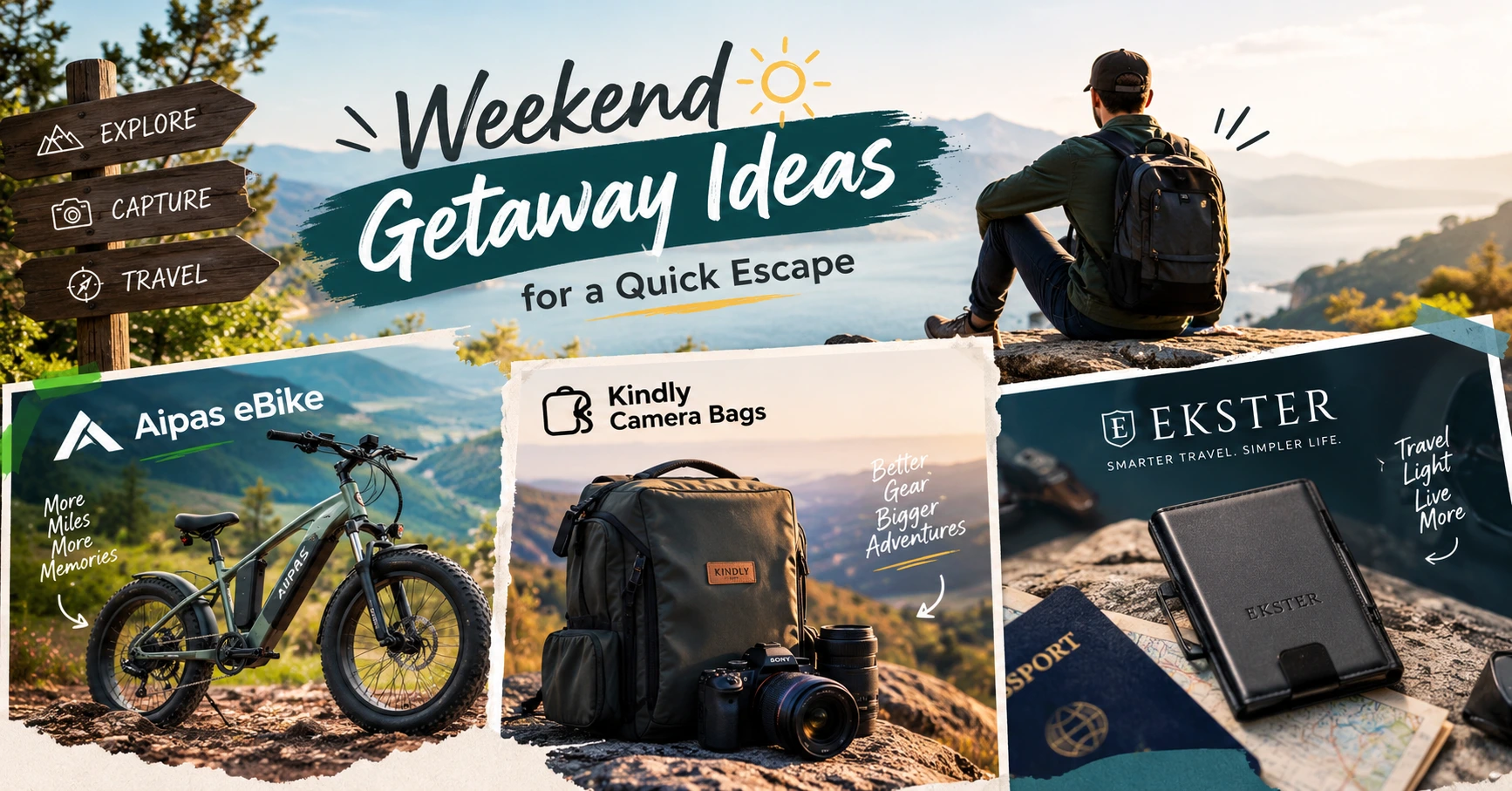
Aipas sells electric bikes in several categories, including folding, commuter, fat-tire and off-road models. For weekend travel, the folding range is the most relevant. The brand describes models such as the A2 Elite and A4 Gentry as compact or lightweight folding bikes for easier storage, and says its folding bikes are designed to fit in a car trunk.
Before you buy any e-bike for travel, check a few things:
- Weight. Folding does not mean light. Check the listed weight and whether you can lift it into a trunk by yourself.
- Local rules. E-bike regulations, and which trails or parks allow them, vary by place. Confirm where you plan to ride.
- Flying. Large e-bike batteries are generally not something you can bring on a plane, so treat this as a road-trip option and check your airline and regulator's lithium battery rules.
- Warranty and returns. The brand lists a one-year limited warranty on its site. Read the current terms before purchasing.
This suits road-trippers who like to explore a place by bike. If you mostly take trains or flights, or prefer to walk, you can safely skip it. You can browse the folding e-bike range to compare current models and specifications.
A Camera Bag for Trips Built Around Photos
For some people, the getaway itself is the photo trip: sunrise at a lake, street scenes in a new town, a few days of landscapes. The practical problem is carrying a camera, a lens or two and a layer of clothing comfortably all day.
Kindly Camera Bags is a store focused on camera backpacks, crossbody bags, camera straps and related accessories. Its Holster Bag is described by the brand as built for quick access and hands-free carrying, which is the kind of design that helps if you stop to shoot often.
What to consider before choosing any camera bag:
- Fit your gear. Check the bag's dimensions against your camera body and longest lens, not just the general category.
- Match the bag to the trip. A backpack suits a hiking day, while a smaller crossbody or holster-style bag suits a walkable town.
- Think about access. If you stop frequently, quick access matters more than maximum capacity.
If you only bring a phone, you don't need one. For photographers who want something designed around their gear, you can see the available camera bags and straps.
Wallets, Trackers and Packing Tools for Light Travel
Small items cause some of the biggest travel stress: a wallet left on a restaurant table, a bag misplaced in a hotel room, a suitcase that won't close. Ekster sells slim wallets and cardholders, tracker cards and tags, passport holders, and travel gear such as backpacks and vacuum packing kits.
Three of its product types fit weekend travel particularly well:
- Slim cardholders and wallets. Useful if you want to carry only a few cards and cash while exploring. The brand says several of its wallets include RFID-blocking features.
- Tracker cards and tags. Ekster states its Tracker Card works with both Apple and Android finding networks and is designed to fit in a wallet. Like any tracker, it helps locate an item but doesn't guarantee recovery.
- Vacuum packing kits. The brand positions its TravelPack kits as a way to compress clothing and save space in a carry-on, which can matter on a short flight with baggage fees.
Ekster also lists a return window and a warranty on its site, but terms can change, so read them at checkout. This is most useful for frequent short-trip travelers who carry a lot of small items. If you rarely travel, an existing wallet and an ordinary packing cube may do the job. To compare options, you can explore Ekster's wallets and travel accessories.
Common Weekend Getaway Mistakes
- Choosing a destination that is too far. If you spend a third of the weekend in transit, it isn't a weekend away.
- Over-scheduling. A packed itinerary turns rest into work.
- Ignoring the forecast. Beach, lake, and hiking trips depend heavily on weather. Have a backup plan.
- Forgetting total cost. Fuel, parking, resort fees, and meals add up faster than room rates suggest.
- Booking nothing, then finding everything full. Lodging and popular reservations on peak weekends fill quickly.
- Leaving Sunday unplanned. A late, rushed return erases much of the benefit.
- Buying gear for the trip. New equipment you haven't tried is a risk. Buy it early enough to test it, or skip it.
Weekend Getaway Packing Checklist
Adapt this to your destination and season.
Documents and money
- ID and any booking confirmations
- Payment cards and a little cash
- Phone, charger, and a backup battery
Clothing and comfort
- Two outfits plus one spare, layered for the forecast
- Comfortable walking shoes
- Sleepwear and any toiletries not provided by the lodging
- Rain layer or sun protection, depending on the season
Trip-specific items
- Hiking or camping gear if applicable
- Camera and spare memory card or battery
- Reusable water bottle and a snack bag
- A small first-aid kit and any regular medication
Before you leave
- Confirm check-in time and parking
- Download offline maps
- Adjust your home thermostat and lock up
Weekend Getaway FAQs
How far should I travel for a weekend getaway?
As a rule of thumb, two to three hours each way works well for most people, because it leaves most of the weekend at the destination. If you can leave Friday evening or return Monday, you can go farther.
What is the cheapest way to take a weekend getaway?
Stay close to home, travel off-peak, and choose a destination where the main activities are free or low-cost, such as parks, walking routes or markets. Compare the full cost, including fuel, parking, and meals, rather than just the room rate. For more ways to reduce expenses, see our guide to budget-friendly travel ideas.
How do I plan a last-minute weekend getaway?
Choose a trip type, set a travel-time limit, book lodging with flexible cancellation, and reserve only one or two things. Keep the rest of the schedule open.
Is a road trip or a flight better for a quick escape?
For short distances, driving is often simpler because it avoids airport time and lets you carry what you want. Flying makes sense when the destination is too far to drive without losing the weekend, but baggage fees and airport time reduce the benefit.
What should I pack for a weekend trip?
Pack light: a couple of outfits, comfortable shoes, essentials, and anything specific to your activities. A written checklist helps, and traveling carry-on only reduces both cost and waiting time.
How many activities should I plan?
One or two anchor activities across the weekend is plenty. Leave the remaining time open for meals, rest, and anything unexpected you find.
Can I take an electric bike on a weekend trip?
By car, often yes, if it fits in your vehicle and you can lift it. Flying with an e-bike is usually difficult because of lithium battery restrictions, so check your airline's rules first and confirm that your destination allows e-bikes where you want to ride.
Final Thoughts
A good weekend getaway is less about the destination and more about the design of the trip: close enough to reach easily, matched to the kind of rest you need, and light on obligations. Start with the type of escape, set a travel limit, book the one or two things that need booking, and leave space for the rest.
If you want a little help along the way, whether a bike to explore with, a bag for your camera or a smarter way to carry your essentials, choose only what fits your kind of trip. The most useful preparation is still a clear plan and an open Sunday.