How to Build a Versatile Everyday Wardrobe

Learn how to build a versatile everyday wardrobe with essential clothing, a simple color palette, comfortable layers, and practical bags. Discover smart shopping tips to create outfits that suit your lifestyle and budget.
You open the closet, see plenty of clothes, and still can’t put together an outfit. Most of the time, the problem isn’t a lack of clothing. The pieces don’t work together, don’t suit your actual week, or don’t fit well enough to wear on repeat.
A versatile everyday wardrobe fixes that. It’s a smaller, more intentional set of clothes that combine easily and cover the situations you actually live in. This guide walks through how to build one, from auditing what you own to choosing core pieces, plus where comfort layers and everyday bags fit in.
Affiliate Disclosure: Some links in this article are affiliate links. If you purchase through these links, Weekend Smash may earn a commission at no additional cost to you.
Quick Answer
To build a versatile everyday wardrobe:
- List what your week actually requires (work, errands, social, exercise, travel).
- Audit your closet and note what you wear, what you don’t, and why.
- Choose a simple color palette, usually two or three neutrals plus one or two accents.
- Fill gaps with core pieces that fit well and pair with at least three things you already own.
- Check fit and fabric before buying, and add bags and accessories last.
What Makes a Wardrobe Versatile?
A versatile wardrobe is one where most pieces can be combined with most other pieces, and where many items work in more than one setting. It is not the same as a minimalist wardrobe. You can own plenty of clothes and still have a versatile closet if they mix well.
Before keeping or buying anything, ask three practical questions:
- Does it pair with at least three things I already own? If not, it creates one outfit at most.
- Can I wear it in at least two settings? A knit that works at the office and at dinner earns its space.
- Is it comfortable enough to wear on repeat? Clothes you avoid wearing aren’t versatile, however well they match.
These three questions are a working rule of thumb, not an industry standard. They are easy to apply in a store or at home.
There’s a practical reason to buy with intention, too. The US Environmental Protection Agency estimated that 17 million tons of textiles were generated in 2018, and that the recycling rate for clothing and footwear was 13 percent. Owning fewer pieces you wear often is one way to reduce what you throw away. EPA textile materials data
How to Build a Versatile Wardrobe, Step by Step
Map your real week
Start with your actual life rather than an imagined one. Write down a typical week and note where you spend your time: working in an office or from home, running errands, seeing friends, exercising, traveling.
Then estimate how much of your week each setting takes. Someone who works from home and goes out twice a week needs a different wardrobe than someone in an office five days a week. Your clothing should match that proportion. A closet full of formal outfits is wasted if you rarely dress up.
Audit the closet you already have
Pull everything out, or work category by category, and sort items into three piles:
- Keep: Fits well, feels good, and you’ve worn it in the past few months.
- Maybe: Good condition but doesn’t fit your current life, or you’re unsure.
- Let go: Doesn’t fit, is uncomfortable, or you’ve never reached for it.
For each “let go” item, note why. If you see the same reason repeatedly, such as “too tight,” “wrong color,” or “only works with one top,” you’ve found a buying rule for later. Clothes in good condition can be resold, donated, or swapped.
Finally, write a gap list. If you own five tops but only one pair of trousers that fits, the gap is clear.
Pick a color palette
A palette is the fastest way to make clothes mix. A common approach is two or three neutrals (black, navy, grey, cream, tan, or denim) plus one or two accent colors you enjoy.
To choose, look at what you reach for most. If your favorites are mostly navy and olive, build around those rather than following a trend. Colors that suit your skin tone and make you feel confident matter more than a “correct” palette.
Patterns and prints can still belong. Just make sure each one shares at least one color with your neutrals.
Choose your core pieces
Core pieces are the workhorses: items you can wear weekly in several combinations. There’s no single right number, but many people find that 10 to 15 well-chosen core items go a long way once they add a few extras. Adjust to your climate and lifestyle.
Treat this as a template rather than a shopping list. Skip categories that don’t match your week.
Your core wardrobe should also reflect your local climate. Read our guide to choosing clothes for different seasons to learn how to select practical clothing and layers for changing weather.
Prioritize fit and fabric over trends
Fit is usually what separates clothes that look good from clothes that look off. Check that shoulders sit correctly, sleeves and hems are the right length, and you can sit, reach, and walk comfortably. A tailor can fix many small issues, especially hems and waistbands.
Fabric affects comfort, durability, and upkeep. Read the care label before buying. If an item needs dry cleaning or hand washing and you won’t do that, it probably won’t earn its place.
For more guidance on material choices, explore our guide to the best fabrics for everyday clothing. It can help you compare fabric options based on comfort, care requirements, and everyday use.
A simple cost-per-wear calculation helps compare options. Divide the price by the number of times you expect to wear the item. A $100 jacket worn 50 times costs $2 per wear. A $30 top worn twice costs $15 per wear. The cheaper item isn’t always the better value.
When filling wardrobe gaps through online shopping, learn how to choose clothing size online to compare your measurements with a brand’s size chart and check sizing details before ordering.
Add bags and accessories that earn their place
Accessories are often where a wardrobe gets its personality and where it quietly fails. A bag that’s too small, too heavy, or hard to organize makes your day harder no matter how good the outfit is.
Choose a bag by how you carry things. If you need a laptop or documents, look for structure and capacity. If you move around a lot, a crossbody or belt-style bag keeps your hands free. Stick to a neutral color for your main bag and use smaller details, like charms or scarves, to add variety.
Where Comfort Layers and Everyday Bags Fit In
Once you know your gaps, shop for specific categories rather than browsing broadly. Two categories that often need attention are comfortable casual layers and everyday bags. The stores below cover those categories only. None of them replace shirts, tailored trousers, or shoes.
Relaxed base layers for weekends and travel
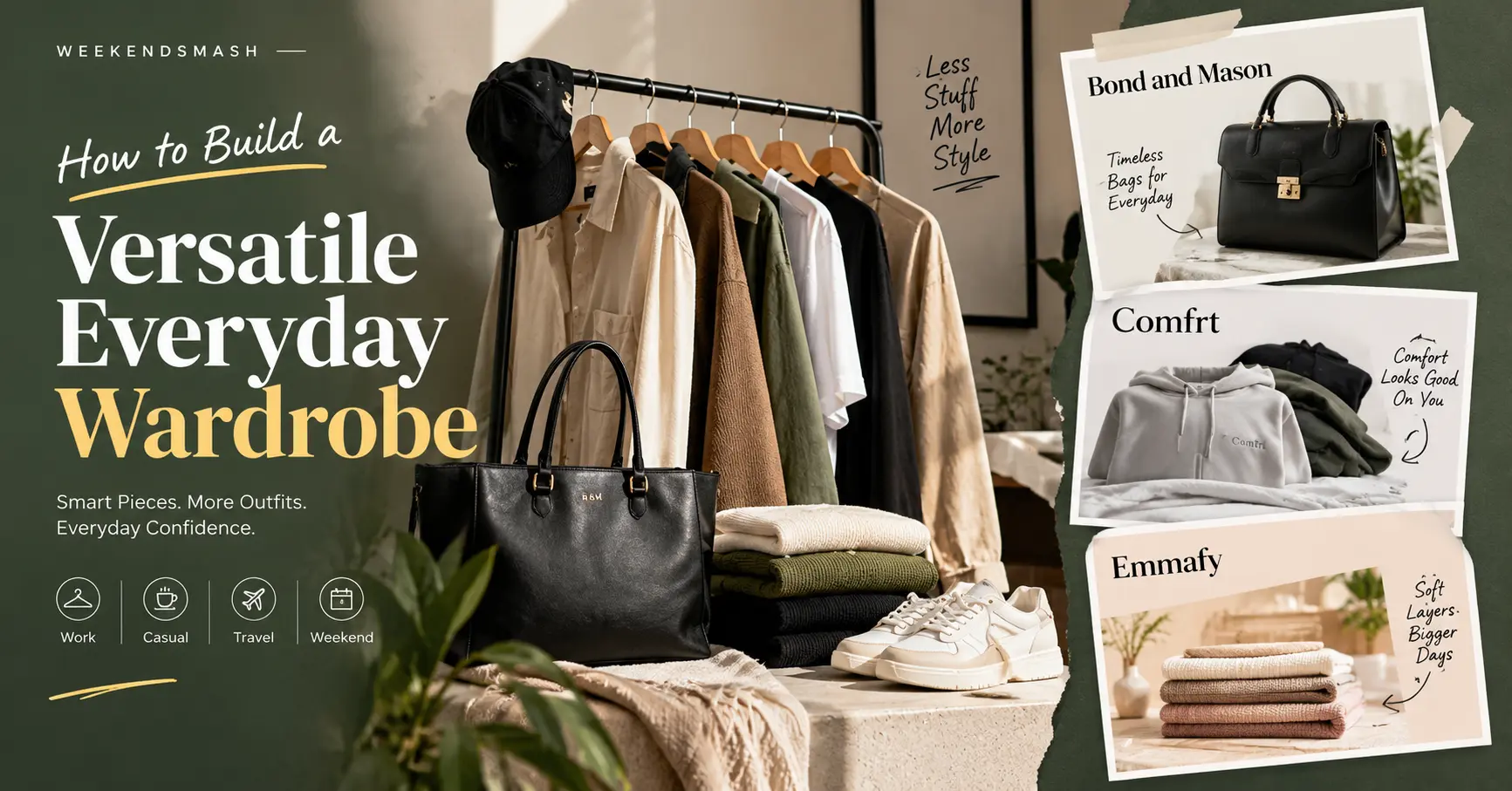
Comfrt is an apparel and home brand. Its site lists hoodies, sweatpants, loungewear, athleisure, blankets, and kids’ and accessories collections, and its homepage links a hoodie fit guide. It tends to suit people who want a soft, casual layer for weekends, travel, or time at home.
That focus matters. A hoodie or sweatpants fills the comfort-layer row in the table above, but it won’t replace a polished top or tailored bottom. Sizing and cut also vary by product, so use the store’s fit guide and check each product page before ordering. Explore Comfrt’s everyday comfort pieces if a relaxed casual layer is on your gap list.
A structured bag for work and errands
Bond & Mason is a bag retailer. Its handbag collection includes handbags, totes, and crossbody styles, and the store also lists backpacks, wallets and purses, and travel bags. On its handbag page, the store advertises a 5-year quality guarantee and 30-day returns. Read the full terms before relying on either.
Structured totes and handbags tend to suit people who carry a laptop, documents, or a full day’s essentials and want one bag to work across outfits. Check each product page for materials, dimensions, and strap options, since those differ between styles. Browse Bond & Mason’s handbag collection to compare shapes and sizes.
A hands-free bag with swappable details
Emmafy sells crossbody and other bags, wallets, organizers, and bag charms and chains. Its GoFree bum bag is described by the store as roomy, which may appeal to people who want hands-free carrying for errands or travel.
This fits the accessories step. A hands-free bag makes busy days easier, and charms or chains let you change a bag’s look without buying another one. Check capacity and dimensions against what you carry, and review the store’s return terms before ordering. Explore Emmafy’s bags and accessories to see what suits your routine.
Three Outfit Formulas to Test Your Wardrobe
A good test of a versatile wardrobe is whether you can build outfits from repeatable formulas. Try these with what you own.
For more inspiration, browse these casual outfit ideas for everyday wear and adapt the combinations to your own wardrobe.
- Office casual: Tailored or straight trousers, a fine knit or button-up, a light jacket, a structured bag.
- Weekend errands: Jeans or relaxed pants, a plain tee, a comfortable layer such as a hoodie or cardigan, and a crossbody bag.
- Travel day: Comfortable bottoms, a base tee, an easy layer, supportive shoes, and a hands-free bag.
If you can’t build at least two or three variations of each, you’ve found what to buy next.
Common Wardrobe-Building Mistakes
- Buying for an imaginary life. Clothes for events you rarely attend sit unworn.
- Chasing trends. Trendy pieces can be fun, but they rarely mix with the rest of your closet.
- Skipping the audit. Without it, you’ll buy duplicates and miss real gaps.
- Ignoring care labels. High-maintenance items often go unworn.
- Ignoring fit. A flattering fit matters more than the label or price.
- Buying a bag last and rushing it. A bag affects daily comfort and ties outfits together.
- Treating sales as a reason to buy. A discount on something you won’t wear is still wasted money.
Frequently Asked Questions
What makes a wardrobe versatile?
A versatile wardrobe has pieces that combine easily, work in more than one setting, and suit your actual routine. A limited color palette and good fit make this much easier.
How many pieces do I need in an everyday wardrobe?
There’s no fixed number. Many people find 10 to 15 core items plus a few extras a workable starting point. Adjust for your climate, laundry habits, and how often you dress up.
What are the basic pieces every wardrobe needs?
Common foundations include plain tops, a polished top, comfortable and dressier bottoms, a jacket, versatile shoes, and a neutral bag. Skip anything that doesn’t match your week.
How do I choose a color palette?
Look at the colors you wear most and build around them. Use two or three neutrals as a base and add one or two accent colors you enjoy.
How do I build a wardrobe on a budget?
Audit first so you don’t repeat purchases, then fill gaps one at a time. Use cost per wear to compare options, and consider secondhand for items like outerwear.
Is it better to buy fewer, higher-quality clothes?
Often, but not always. Price doesn’t guarantee durability. Check fit, fabric, construction, and care requirements, and consider how often you’ll wear the item.
Can comfortable clothes still look put together?
Yes. Pairing a soft layer, such as a hoodie, with well-fitting bottoms, clean shoes, and a neat bag usually looks more intentional than the same layer with worn items.
Final Thoughts
A versatile wardrobe comes from a repeatable process, not a single shopping trip. Map your week, audit your closet, set a palette, fill specific gaps, and check fit and fabric before buying.
Start small. Pick one gap from your list, such as a comfortable layer or a reliable everyday bag, and fill it with a piece you’ll wear often. You can build from there.
Recent Blogs
-
Home Improvement Tools Every Homeowner Should Have
Discover the essential home improvement tools every homeowner needs for DIY repairs, furniture assembly, safe upgrades, and everyday maintenance.
-
Easy Ways to Make Your Outdoor Space More Inviting
Make your patio, porch, or yard more inviting with warm lighting, comfortable seating, added privacy, and greenery. Discover simple weekend upgrades that transform outdoor spaces into relaxing, functional places to unwind.
-
Garden Essentials for Creating a Healthy Outdoor Space
Create a healthier outdoor space with essential gardening tools, soil testing, suitable plants, smart watering, pollinator-friendly choices, and safe pathway lighting. Discover practical tips for a beautiful, comfortable garden.
-
Practical Ideas for Refreshing Your Home on a Budget
Refresh your home on a budget with simple ideas for lighting, wall art, soft furnishings, and furniture. Discover affordable upgrades, DIY decor tips, and practical ways to make every room feel more comfortable and stylish.
-
Home Improvement Projects That Make a Big Difference
Discover home improvement projects that make a big difference, from fresh paint and better lighting to smarter storage, energy efficiency, and curb appeal.