How to Choose the Right Clothing Size Online

Learn how to choose the right clothing size online with accurate measurements, brand-specific size charts, fit guides, fabric details, customer reviews, and return policy tips to help you shop confidently.
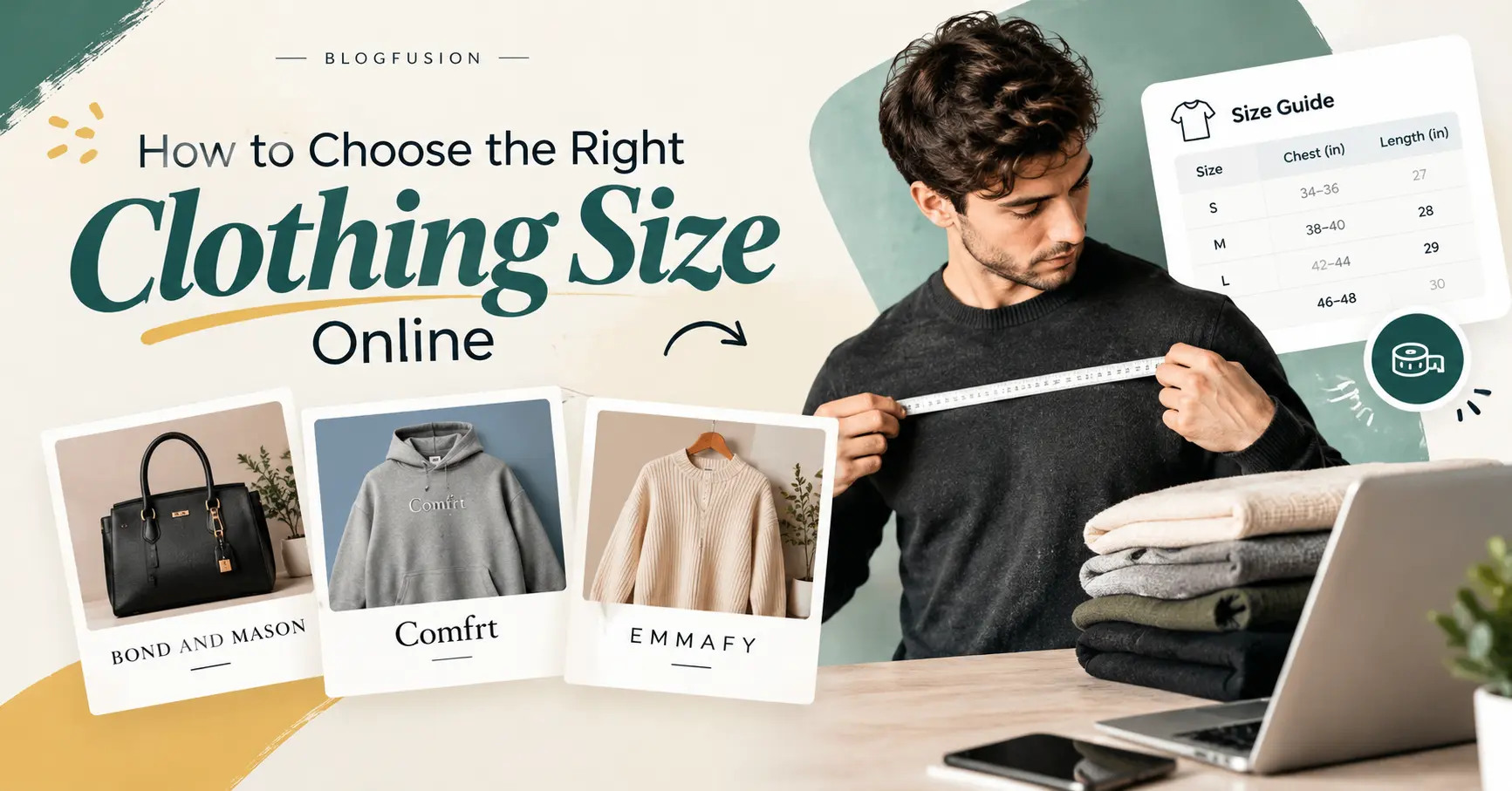
Ordering clothes online means committing to a size without a fitting room. The number on the tag turns out to be a weaker guide than most people expect. A medium from one brand can fit like a small from another, and a “relaxed” cut can swallow you in a size you wear everywhere else.
A few minutes with a tape measure, plus a method for reading size charts, removes most of the guesswork. This guide covers how to measure yourself, how to compare your numbers with a brand’s chart, how fit, style, and fabric change the answer, and how to protect yourself with return policies when you’re still unsure.
Affiliate Disclosure: Some links in this article are affiliate links. If you purchase through these links, Weekend Smash may earn a commission at no additional cost to you.
Quick Answer
To choose the right clothing size online, measure your body, then compare those numbers with the specific brand’s size chart rather than the size you wear elsewhere. Check the garment’s intended fit and fabric stretch, read reviews from people with similar measurements, and confirm the return policy before you order.
At a glance:
- Your measurements beat your “usual size.”
- Always use the chart for the exact brand and product.
- Garment measurements show how much room a piece actually has.
- Fit style (fitted, regular, relaxed, oversized) can change the size you should pick.
- A clear return policy is your safety net.
Why Does Clothing Size Vary So Much Between Brands?
Size labels aren’t a universal language. ASTM International publishes body-measurement tables for adult women’s misses sizes 00 to 20, and describes them as a baseline for apparel design that still has to account for fabric, ease, styling, and fit. In other words, even the reference tables leave room for brands to make their own decisions. You can read the standard’s scope on the ASTM D5585 page.
Those decisions are why the same label can mean different things:
- Target customer: A brand designing for a taller or curvier customer builds a different base pattern.
- Fit model: Garments are often adjusted around one person’s proportions.
- Regional sizing: US, UK, and EU numbers don’t line up one-to-one.
- Vanity sizing: Many shoppers notice that the same number on the tag runs larger than it used to.
- Intended fit: A size M in a slim cut and a size M in an oversized cut are different garments.
So the goal isn’t to find “your size.” It’s to find your size in this particular garment.
What to Gather Before You Measure
You don’t need special equipment:
- A soft, flexible measuring tape. The sewing kind works best. A metal construction tape can’t follow your body.
- A garment that fits you well. A favorite pair of pants and a shirt are useful reference points later.
- A notebook or phone note to record numbers.
- A mirror or a helper. It’s hard to keep a tape level on your own back.
Wear thin, close-fitting clothing or measure over underwear. Bulky layers add inches that don’t belong to you.
How to Measure Yourself for Clothes
Stand relaxed, breathe normally, and keep the tape snug but not tight. You should be able to slide one finger underneath. The tape should stay parallel to the floor.
Tops, Dresses, and Outerwear
- Chest or bust: Wrap the tape around the fullest part of your chest, under your arms and across your shoulder blades.
- Waist: Measure around your natural waist, the narrowest part of your torso, usually above the navel.
- Shoulder width: Measure straight across your back from one shoulder point to the other.
- Sleeve length: Measure from the shoulder point down your relaxed arm to your wrist bone.
Pants, Skirts, and Shorts
- Waist: Measure where you actually wear your pants, which may sit lower than your natural waist.
- Hips: Measure around the fullest part of your hips and seat, with feet together.
- Inseam: The easiest way is to lay a well-fitting pair of pants flat and measure from the crotch seam to the hem.
- Rise (optional): On the same pair, measure from the crotch seam to the top of the waistband. It matters most for high-rise and low-rise styles.
Record Your Numbers
Write measurements down in both inches and centimeters, since brands use either. Re-measure after a few weeks or if your body changes. Keeping a simple log makes every future purchase faster:
How to Read a Size Chart
Find the chart for the specific brand and product, since many stores have more than one. Then match your measurements to the size range they fall into, and note which kind of chart you’re looking at.
Body Measurements vs. Garment Measurements
- Body measurement charts list the body dimensions each size is designed for. Compare them with your own measurements.
- Garment measurement charts list the actual dimensions of the clothing, often taken flat. These tell you how much room the piece has.
The difference between your body and the garment is called ease. Here is a worked example with made-up numbers:
- Your chest measures 38 inches.
- The garment chart lists chest width as 22 inches measured flat, pit to pit.
- Flat width doubles to get the full circumference: 22 × 2 = 44 inches.
- Ease: 44 − 38 = 6 inches of room.
Six inches suits a relaxed sweatshirt. It would feel baggy on a tailored shirt. If a brand only lists flat measurements, remember to double the chest, waist, and hip numbers before comparing them with your body.
What to Do If You Fall Between Sizes
- Stretch fabric: The smaller size usually works, because the fabric gives.
- Woven, non-stretch fabric: Go with the size that fits your widest measurement. Tight shirts and pants don’t forgive.
- Layering pieces (jackets, hoodies, cardigans): Lean larger so you can wear something underneath.
- Hard-to-alter areas: Prioritize the shoulders for tops and the hips for pants. Sleeve and hem length are easier to fix than shoulder width.
- Check the notes: If product reviews or the description say the item runs small or large, factor that in.
If you’re buying clothes for changing temperatures, remember that the extra room you need for layering can vary by season. Our guide on how to choose the right clothes for different seasons explains how layers and weather influence clothing choices.
Why Fit Style Can Change Your Size
Fit style is how loose or close a garment is meant to sit. Two items in the same size can fit very differently because of it.
With oversized clothing, the question shifts from “what size fits me?” to “how much room do I want?” That is a style decision as much as a measurement one.
Comfrt, an online apparel and home brand known for hoodies, sweatpants, loungewear and blankets, shows how this works in practice. Its Hoodie Fit Guide groups hoodies into two silhouettes. Oversized is described as generous but still shaped, with roominess through the chest and shoulders and a dropped shoulder. Mega goes a step further, with even more room through the chest, shoulders, and arms and a deeper dropped shoulder, and the guide positions it for layering. The guide’s models show a 5'9" model wearing a size small in both fits.
Two takeaways apply well beyond one brand:
- Before choosing a size, check which silhouette you’re buying. The same size in Oversized and Mega won’t feel alike.
- If you prefer a roomier look, you may size differently than you would for a tailored piece.
Shoppers who like relaxed, comfort-first pieces may find that comparing these two fits is a useful exercise. You can explore Comfrt’s hoodies and loungewear and compare the fits yourself. The fit guide covers hoodies specifically, so for sweatpants, loungewear or other categories, check the size chart on each product page.
Once you understand the fit you prefer, you can use it to build outfits that feel comfortable without sacrificing style. Explore these best casual outfit ideas for everyday wear for inspiration on putting different clothing pieces together.
How Fabric Affects Sizing
The same measurements can feel different depending on what the garment is made of:
- Knit fabrics (jersey, fleece, rib) stretch and recover, so they’re more forgiving.
- Woven fabrics (poplin, denim without stretch, linen) hold their shape and give little.
- Elastane or spandex in the blend adds stretch. The care label or product description usually lists the fiber content.
- Heavier fabrics like thick fleece or wool add bulk, which affects how much layering room you need.
- Natural fibers like cotton can shrink if washed hot. Follow the care label and consider that when sizing.
Fabric affects more than comfort. It can influence how a garment drapes, stretches, and holds its shape after washing. For a closer look at common clothing materials and their everyday uses, read our guide to the best fabrics for everyday clothing.
How to Use Reviews, Photos, and Model Details
Reviews are most useful when they include numbers:
- Look for model height and the size worn, and compare them with your own.
- Prioritize reviewers who share their height, weight, or measurements along with the size they ordered.
- Treat “runs small” or “runs large” as meaningful only when several reviews agree.
- Check customer photos when available, since they show the garment on bodies other than the model’s.
- Pay attention to comments about length, sleeves, and waist, not only overall size.
One review is an anecdote. A pattern across several is information.
Check the Return Policy Before You Order
Sizing is partly a risk-management problem, and the return policy defines the risk. Before buying, look for:
- The length of the return or exchange window
- Who pays return shipping
- Whether items must be unworn, with tags attached
- Whether exchanges are allowed, or only refunds
- Which items are final sale
- Separate rules for international orders
Most stores publish this in the footer. If a policy is hard to find or unclear, treat that as a reason to be more cautious with the order.
Common Online Sizing Mistakes
- Relying on your “usual size” instead of the brand’s chart
- Comparing flat garment measurements with body measurements without doubling them
- Measuring too tightly or over bulky clothing
- Ignoring fabric stretch when choosing between two sizes
- Skipping the fit description (slim, relaxed, oversized)
- Trusting a single review over a pattern
- Forgetting to check the return policy until something doesn’t fit
Online Sizing Checklist
- Measure chest or bust, waist, hips, shoulders, sleeve, and inseam, and write them down.
- Open the size chart for the exact brand and product.
- Check whether the chart lists body or garment measurements.
- Double-check flat measurements before comparing them with your body.
- Read the fit description and compare it with how much room you want.
- Check fabric content for stretch.
- Read reviews from people with similar measurements.
- Confirm the return and exchange policy.
- Order, then keep notes on how the size actually fits for next time.
Once you know your measurements and preferred fit, the next step is choosing pieces that work together. Our guide on building a versatile everyday wardrobe covers how to select useful staples you can wear in different combinations.
Frequently Asked Questions
How do I know what size to order online?
Measure your body, then compare your numbers with the brand’s own size chart for that specific item. Use fit style, fabric stretch, and reviews to refine the choice.
Should I size up or down if I’m between sizes?
It depends on the fabric and the garment. Stretchy fabrics usually work in the smaller size, while non-stretch fabrics and layering pieces usually work better in the larger one.
Is my size the same across brands?
Not reliably. Brands set their own patterns and fit models, so the same label can mean different measurements. Always check the chart.
What’s the difference between body and garment measurements?
Body measurements describe a person, and garment measurements describe the clothing itself. The gap between them is ease, which determines how loose or fitted the piece feels.
How tight should the measuring tape be?
Snug, but not pulling. You should be able to fit a finger beneath it, and the tape should sit level around your body.
How do I choose a size for oversized clothing?
Decide how much extra room you want first. If you like the intended relaxed look, your usual size often works. For a less voluminous look, many shoppers size down, so check the brand’s fit guide and chart.
Is it OK to order two sizes and return one?
It can work when returns are free and simple, but it adds shipping and handling steps and may not be offered everywhere. Confirm the return policy first.
Final Thoughts
Choosing a size online comes down to replacing assumptions with data: your measurements, the brand’s chart, the garment’s fit and fabric, and a clear return path. Once you have your numbers recorded, each new order gets easier, and the guesswork shrinks with every purchase you log.
Recent Blogs
-
Home Improvement Tools Every Homeowner Should Have
Discover the essential home improvement tools every homeowner needs for DIY repairs, furniture assembly, safe upgrades, and everyday maintenance.
-

Easy Ways to Make Your Outdoor Space More Inviting
Make your patio, porch, or yard more inviting with warm lighting, comfortable seating, added privacy, and greenery. Discover simple weekend upgrades that transform outdoor spaces into relaxing, functional places to unwind.
-

Garden Essentials for Creating a Healthy Outdoor Space
Create a healthier outdoor space with essential gardening tools, soil testing, suitable plants, smart watering, pollinator-friendly choices, and safe pathway lighting. Discover practical tips for a beautiful, comfortable garden.
-
Practical Ideas for Refreshing Your Home on a Budget
Refresh your home on a budget with simple ideas for lighting, wall art, soft furnishings, and furniture. Discover affordable upgrades, DIY decor tips, and practical ways to make every room feel more comfortable and stylish.
-
Home Improvement Projects That Make a Big Difference
Discover home improvement projects that make a big difference, from fresh paint and better lighting to smarter storage, energy efficiency, and curb appeal.