How to Create a Minimalist Skincare Routine

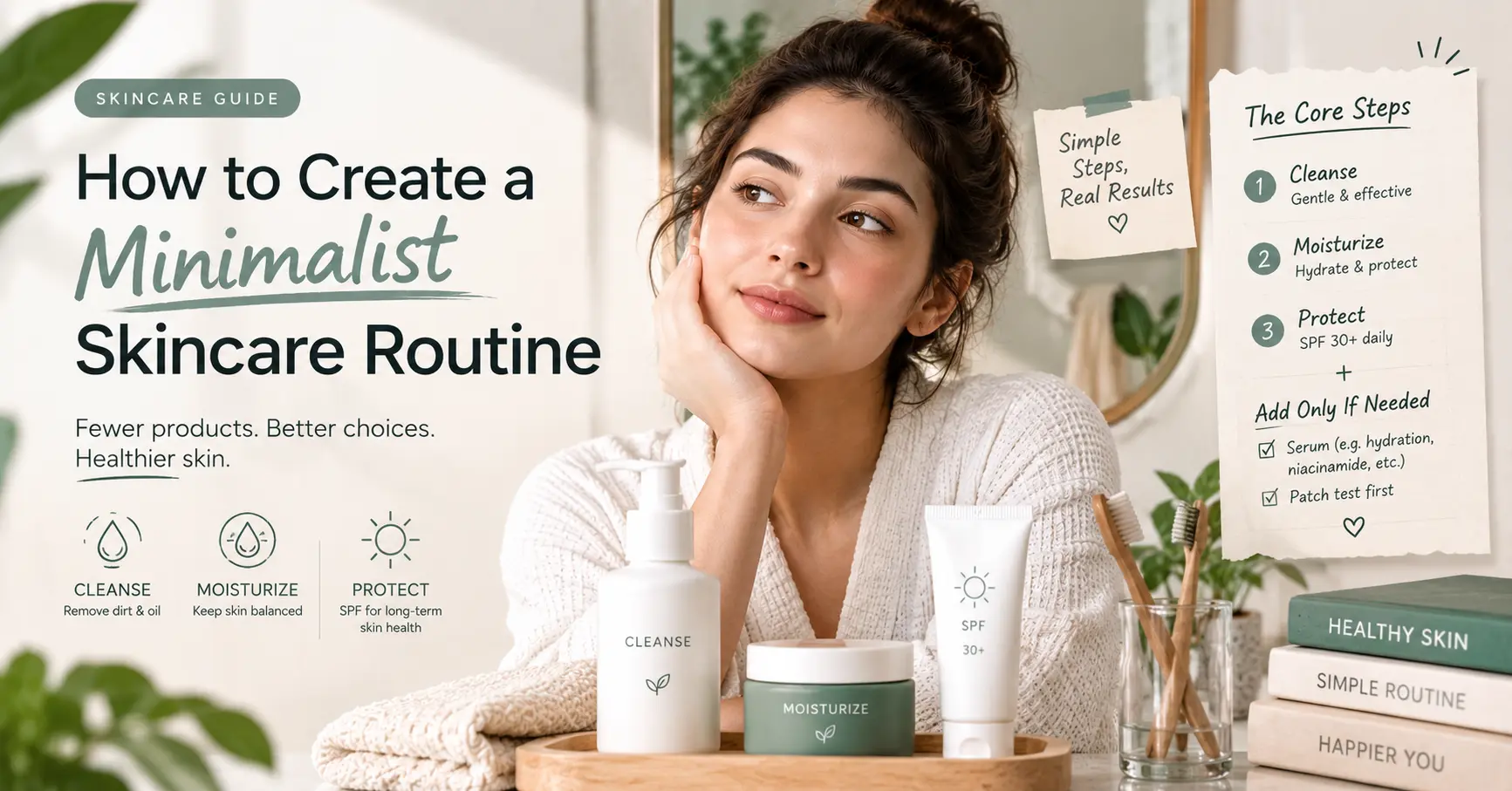
If your bathroom shelf holds ten products and your skin still isn't happy, the fix is usually fewer steps, not more.
The short answer: A minimalist skincare routine has three core steps, repeated morning and night: cleanse, moisturize, and protect (sunscreen in the morning). Add a single targeted product only when you have a specific concern, and introduce it on its own.
This guide explains what each step does, how to choose products, how to add something new without irritation, and what to avoid.
What is a minimalist skincare routine?
A minimalist routine uses the fewest products that do the essential jobs: remove dirt and oil, keep skin moisturized, and shield it from UV light. Every product has a reason to be there.
It isn't about owning nothing, skipping sunscreen, or buying "natural" everything. It also isn't a one-size-fits-all formula. The dermatologists at the American Academy of Dermatology (AAD) say it plainly: their advice is to simplify, focus on a gentle cleanser, sunscreen, and moisturizer, and keep morning and night routines you can stick with. aad
Why simpler can work better
- Less irritation risk. The more products you layer, the harder it is to tell which one caused a reaction. Dermatologists note that scrubbing irritates skin, and they advise limiting face washing to twice a day and after sweating. aad
- Lower cost. The AAD says products don't need to be expensive to be effective, and a simple cleanse, moisturize, and protect approach can reduce costs. aad
- Better consistency. A two-minute routine is one you'll actually do.
The 3 core steps
Step 1: Cleanse
Cleansing removes sweat, oil, sunscreen, and pollution. The goal is clean, not squeaky.
- Use a gentle, non-abrasive cleanser without alcohol, apply it with your fingertips and lukewarm water, and pat dry rather than scrubbing. Aad
- Oily or combination skin: Dermatologists suggest a mild, gentle foaming wash, because a harsh one can irritate skin and increase oil production. Aad
- Dry or sensitive skin: Look for creamy or low-foam cleansers. When comparing gentle formulas, understanding what to look for when choosing clean beauty products can help you assess ingredient transparency and choose products that suit your needs.
- In the evening, if you wear sunscreen or makeup, a cleansing oil or balm first can help. That makes it a two-part cleanse, but still one step.
If you like Korean-style gentle cleansers, Luxiface's Korean skincare range includes cleansing foams, oils, balms, and waters from brands such as COSRX, Anua, and Beauty of Joseon, so you can compare formats by skin type.
Step 2: Moisturize
A moisturizer helps hold water in your skin and supports the skin barrier. Texture matters more than price: gel-creams and lotions for oily or combination skin, richer creams for dry skin.
The AAD says to moisturize even if your skin is oily. Skipping it can leave skin feeling tight, and some people then over-cleanse to compensate. aad
If you want lightweight, hydration-focused formulas, you can browse Luxiface's moisturizer and cream collections by skin type (sensitive, oily, dry, combination).
Step 3: Protect (sunscreen, plus shade and clothing)
If you keep only one step, keep this one. Sun exposure is a major driver of both skin cancer risk and visible skin aging.
- What to look for: Broad-spectrum protection against UVA and UVB, SPF 30 or higher, and water resistance. Aad
- Reapplication: No sunscreen is waterproof or sweatproof, so reapply after swimming or sweating. Aad
- Sunscreen isn't the whole plan. The AAD says sunscreen alone can't fully protect you, so it also advises seeking shade and wearing sun-protective clothing, including a wide-brimmed hat and sunglasses. scituatema
That last point is where clothing helps. UPF-rated clothing covers skin without needing reapplication. UV Skinz sells UPF 50+ sun shirts, hats, sleeves and neck shields for adults and kids, along with a sunscreen collection (mineral, tinted, and face and lip options). The brand states its fabrics are third-party tested to block 98% of UVA and UVB rays.
Time-saver: Some moisturizers and cosmetics contain SPF. If you use one as your morning sunscreen, check that the label says broad spectrum and SPF 30 or higher, and apply it generously. aad
Should you add a fourth step?
Only if you have a specific concern, such as dark marks, breakouts, or dryness that a moisturizer alone doesn't handle. Then follow the one-new-product rule:
- Choose one product aimed at one concern.
- Patch test on a small area (such as behind the ear or inner forearm) for a few days.
- Use it a few times a week, then build up if skin stays comfortable.
- Wait a few weeks before judging it or adding anything else.
Before making a new formula part of your routine, learn how to tell if a skincare product is right for your skin by considering its ingredients, suitability, and how your skin responds.
Common single add-ons include a hydrating serum or essence (for dryness), niacinamide (for uneven tone or oil), or a retinoid at night (for texture and fine lines). Introduce retinoids especially slowly, and ask a dermatologist if you're pregnant, have a skin condition, or use prescription treatments.
Sample minimalist routines by skin type
If you aren't sure of your skin type, the AAD suggests talking to a board-certified dermatologist before starting a routine. aad
Build your routine step by step
- Identify your skin type and main concern. Normal skin is clear and not sensitive; dry skin is flaky, itchy, or rough, and oily skin is shiny and greasy. aad
- Strip back. Pause everything except cleanser, moisturizer, and sunscreen for a couple of weeks.
- Choose your three basics. Prioritize gentle, fragrance-light formulas and a sunscreen you'll enjoy wearing.
- Make it a habit. Same steps, same order, morning and night. A routine is easier to maintain when it fits your daily schedule, so learn how to build a skincare routine that fits your lifestyle without adding unnecessary steps.
- Add one product only if you need it, using the rules above.
If you'd rather get matched than guess, Luxiface offers a skincare quiz and a routine finder with beginner-friendly routine sets. Treat any suggestion as a starting point and trim it back to your three basics.
Keep the same logic beyond your face
The minimalist principle, "fewer products that each do a clear job," also works for the rest of a daily routine. Two optional examples:
- Oral care. Larine makes hydroxyapatite-based toothpaste, gum, and mints, positioned as enamel-support products. The brand describes them as fluoride-free and sugar-free, and its own disclaimer says they aren't intended to diagnose, treat or prevent disease. If you currently use fluoride toothpaste, ask your dentist before changing it.
- Hair color. Polar Haircare offers an instant dye shampoo that the brand says colors hair in under ten minutes during a normal wash, an alternative to multi-step box dyes. Check the brand's page for current color and stock availability, and do a patch test first.
Common mistakes
- Starting with too many actives at once. If irritation appears, you won't know the cause. To avoid other habits that can undermine your results, explore these common skincare mistakes that make your routine less effective.
- Over-cleansing or scrubbing. Limit washing to twice a day and after sweating.
- Skipping moisturizer on oily skin.
- Treating SPF as optional or applying too little.
- Judging a product after three days. Give a new product a few weeks unless it stings or irritates, in which case stop.
- Chasing trends. A product that works for someone else isn't automatically right for your skin.
Quick checklist
- Gentle cleanser (morning and night)
- Moisturizer suited to your skin type
- Broad-spectrum SPF 30+ every morning
- Shade, hat, or UPF clothing for long outdoor days
- Only one new product at a time, patch tested
- No scrubbing, no harsh or alcohol-heavy cleansers
FAQs
How many steps should a minimalist skincare routine have?
Three: cleanse, moisturize, and protect. Evenings are cleanse and moisturize, with an optional single treatment.
What is the bare minimum skincare routine?
Wash your face gently, apply moisturizer, and wear SPF 30+ sunscreen during the day.
Do I need toner or serum?
Not necessarily. They're optional extras. Add one only if it addresses a specific concern you have.
Should oily skin skip moisturizer?
No. The AAD recommends moisturizing even if your skin is oily. Choose a lightweight, oil-free, noncomedogenic formula. aad
Can I use a moisturizer with SPF instead of separate sunscreen?
Yes, if it's labeled broad-spectrum with SPF 30 or higher and you apply enough of it. Reapply during long outdoor time.
How long until I see results?
Comfort (less tightness or irritation) often improves within days, while changes in tone or texture take weeks. Judge a new product after several weeks, unless it irritates.
Do I need sunscreen every day?
Dermatologists recommend wearing sunscreen daily. aad
Final Thoughts
A minimalist skincare routine is gentle cleanser, moisturizer, and sunscreen, done consistently, with one carefully chosen extra if you need it. Start there, change one thing at a time, and see a board-certified dermatologist if you have persistent acne, a skin condition, or a changing mole.
Recent Blogs
-

Practical Car Accessories for Long-Distance Travel
Discover practical car accessories for long-distance travel, from tire inflators and emergency kits to phone mounts, chargers, and portable CarPlay screens. Learn what’s worth buying for a safer, more comfortable road trip.
-

Road Trip Essentials for a Comfortable Drive
Prepare for a more comfortable road trip with essential car safety checks, emergency supplies, travel comfort tips, and smart navigation gear. Discover what to pack, how to stay alert, and optional gadgets for exploring your destination.
-

Best Car Care Products for Maintaining Your Vehicle
Discover the best car care products for cleaning, protecting, and maintaining your vehicle. Learn which essentials are worth buying, avoid common mistakes, and keep your car looking great while supporting long-term performance.
-

Useful Car Gadgets for Everyday Driving
Discover useful car gadgets for safer, easier everyday driving, from dash cams and tire inflators to jump starters and CarPlay screens. Find practical upgrades that fit your car, budget, and driving needs.
-

Essential Car Accessories Every Driver Should Consider
Discover essential car accessories every driver should consider, from safety kits and jump starters to phone mounts, dash cams, and CarPlay upgrades.