Essential Pet Supplies for New and Experienced Pet Owners

Essential pet supplies for dogs and cats, including beds, harnesses, water fountains, grooming tools, and toys. Discover must-have items for new owners and practical upgrades for experienced pet parents.
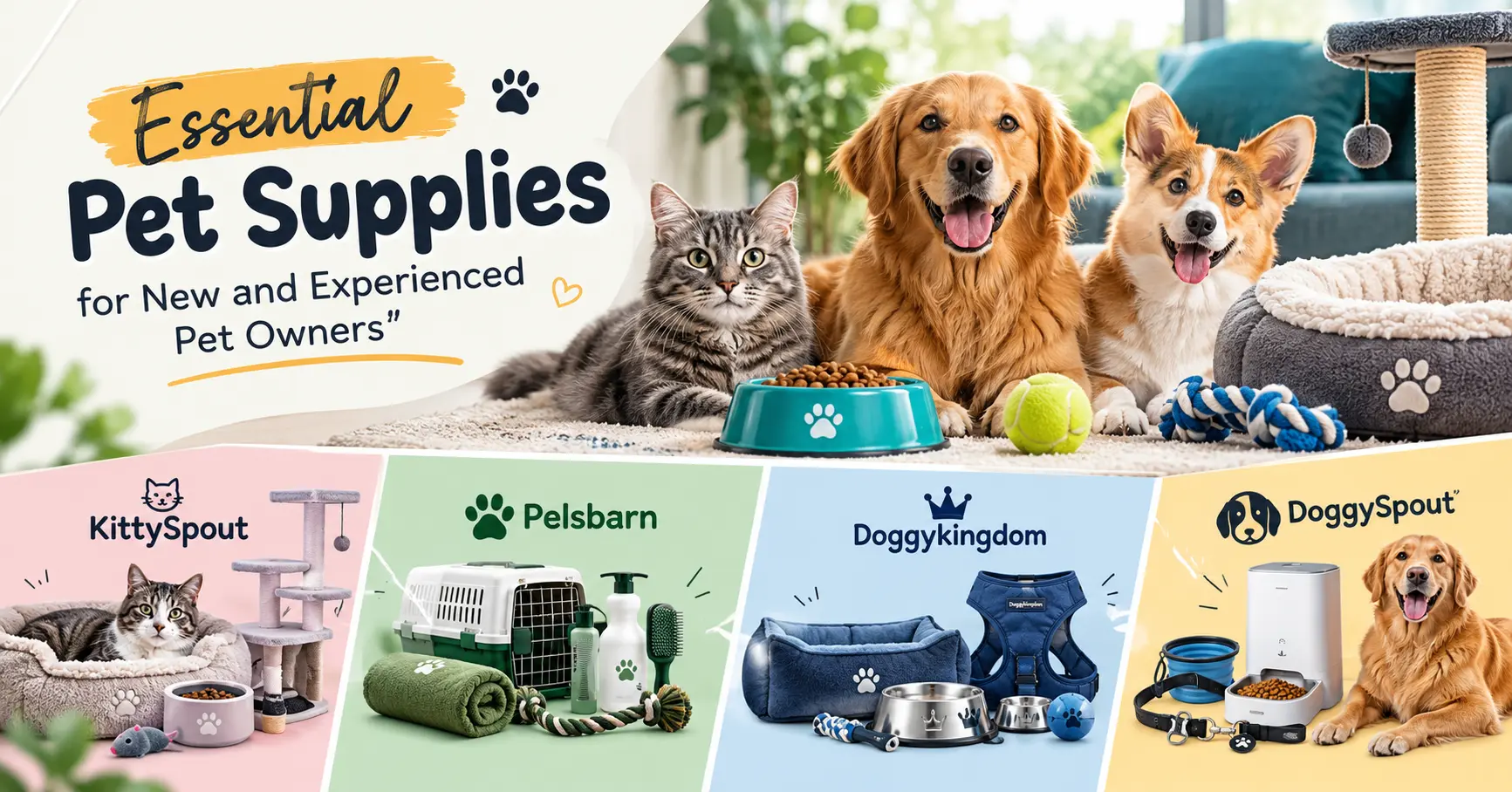
A new pet often brings an early shopping spree, and some of it gets regretted: a bed that gets ignored, a toy destroyed in a day, a gadget that ends up in a closet. Experienced owners have the opposite problem. Their setup goes quietly stale, with a harness that no longer fits well, a water bowl that doesn’t get scrubbed enough, or a bed that no longer suits an aging dog.
This guide separates what is truly essential from what is worth upgrading and what can wait. It focuses on dogs and cats, the pets most households have. Rabbits, birds, reptiles, and fish have specialized needs that a general list can’t cover well, so ask a veterinarian or a species-specific rescue for those. For a closer look at products designed to support pets' comfort and everyday care, see our guide to the best pet products for everyday comfort and care.
Quick Answer: What Every Dog or Cat Actually Needs
Every dog or cat needs identification, a safe place to rest, constant access to fresh water, appropriate food and bowls, a safe way to travel, basic grooming tools, and something to play with. Cats also need litter boxes and a scratching surface. Everything else is situational.
Affiliate Disclosure: Some links in this article are affiliate links. If you purchase through these links, Weekend Smash may earn a commission at no additional cost to you.
Essential Supplies for Dogs
Collar, Harness, Leash, and ID
A flat collar with an ID tag is the baseline. A common fit check, also given by VCA Animal Hospitals, is that you should be able to slide two fingers under the collar. VCA also notes that a harness is a sensible option for dogs that pull, because it keeps pressure off the neck. Check fit often on growing puppies.
Then choose the harness style that matches your walks:
- Everyday walking: a padded harness with an adjustable chest and girth.
- Dogs that pull: a no-pull design with a front attachment point.
- Night walks: reflective trim or built-in lights.
- Car rides: a harness that is designed to connect to a seat belt (check the maker’s stated use).
Doggykingdom, a Florida-based online shop for dog accessories, sells harnesses, collars, leashes, clothing, travel accessories, grooming tools, and toys. Its site lists personalized no-pull harnesses, an LED harness for night walks, and a dog seat belt. If you want to compare options, you can browse Doggykingdom’s harnesses, collars, and leashes.
Before you buy any harness, measure your dog’s chest and neck rather than guessing by breed or weight. For personalized items, confirm production and shipping times if you need the harness soon. Also read the warranty and return terms.
For more ideas on choosing practical items for walks, travel, and everyday pet care, read our guide to pet accessories for daily routines.
Beds, Crates, and a Safe Place to Rest
Every dog needs a defined resting spot. VCA recommends a crate that lets your dog stand, lie down, and turn around. For a puppy, don’t buy a crate sized for the adult dog without a divider, because extra room can make house training harder.
Bed choice depends on your dog:
- Large, older, or stiff dogs often do better with a supportive (orthopedic-style) bed. If your dog seems to be in pain, see your vet rather than shopping your way out of it.
- Heavy chewers can destroy any soft bed. Start with a cheaper option until you know your dog’s habits.
- Hot-weather dogs may appreciate a cooling mat.
Pelsbarn is a dog-bed brand that, according to its site, focuses on dog beds, car beds, calming beds, cooling mats, and travel items, and says it supports shelter dogs with each purchase. It’s a good fit for owners who want a design-forward bed or a car bed for road trips. You can explore Pelsbarn’s dog beds and car beds.
A few things to keep in mind:
- A car bed is a comfort product unless the maker clearly states it is a tested restraint. Comfort and crash safety are different things, so check the product’s stated purpose.
- “Calming” beds are designed for comfort. They are not a treatment for anxiety, and persistent anxiety deserves a conversation with your vet or a trainer.
- Pelsbarn’s US store points visitors outside the US to a regional store, so international buyers should use the store that serves their country.
Essential Supplies for Cats
Litter Boxes: The N+1 Rule
The most common cat-supply mistake is too few litter boxes. The Cornell Feline Health Center gives a good general rule: the number of litter boxes should equal the number of cats plus one. So one cat means two boxes, and two cats means three.
Placement matters too. Put boxes in quiet but not dead-end locations, and don’t line them all up side by side, since cats may treat that as one big box. Scoop daily and wash boxes regularly.
Feeding Setups and Automatic Feeders
Most cats do fine with two simple bowls, one for food and one for water, in a calm spot. An automatic feeder becomes useful when your schedule is irregular, when you need portion control, or when you travel for a night or two.
KittySpout, the cat-focused sister brand of DoggySpout, sells the KittyFeeder automatic cat feeder, which its site lists in single-bowl and double-bowl versions. It is most relevant to owners who want scheduled meals rather than free-feeding.
Consider these before buying any automatic feeder:
- Ask your vet before changing how or how much your cat eats, especially for cats on prescription or weight-management diets.
- Check what happens during a power loss.
- Test it for a few days while you’re home, before relying on it while you’re away.
Scratching, Play, and a Carrier
Cats need something appropriate to scratch. A sturdy post tall enough for a full stretch, or a stable horizontal scratcher, protects your furniture and meets a natural need. Add a few toys for solo play and a wand toy for interactive play.
A secure, hard-sided or well-structured carrier is also essential, even for indoor-only cats. You’ll need it for the first vet visit and for any emergency.
Fresh Water: The Supply Owners Underinvest In
Water is the one supply every pet uses every day, and it’s the one many owners leave on autopilot. A bowl is fine if you wash it regularly and refill it often. Standing water and residue build up quickly, so a bowl that only gets topped off isn’t really being cleaned.
Some owners switch to a fountain because some pets seem to prefer moving water. Preferences vary, and no fountain guarantees your pet will drink more. If your pet’s drinking changes suddenly, talk to your vet instead of troubleshooting with gadgets.
Compare fountains on practical points:
- Cleaning effort. Fewer parts and dishwasher-safe materials make it more likely you’ll actually clean it.
- Material. Stainless steel is easier to keep clean than many plastics.
- Capacity. Match it to your pet and number of pets.
- Noise. A loud pump can put off sensitive pets.
- Filters. These are a recurring cost. DoggySpout’s site lists a two-week replacement interval, so factor that in.
- Power. Wireless models trade cords for charging.
DoggySpout is KittySpout’s fountain line built for dogs. Its site describes a wireless stainless steel fountain in 4L and 7L sizes with carbon filtration and dishwasher-safe parts, and advertises a money-back guarantee (read the current terms before relying on it). It’s a good fit for dog owners who want a larger, easy-to-clean setup. You can see the DoggySpout dog water fountain.
For cat owners, explore KittySpout’s cat water fountains. The store also sells replacement filters, an anti-splash mat, and cat supplements. As with any supplement, ask your vet first.
New Owner vs. Experienced Owner: What to Buy and What to Upgrade
Common Mistakes When Buying Pet Supplies
- Buying for the adult size too early. Oversized crates and collars cause problems for puppies and kittens.
- Skipping identification. Collars and tags are cheap insurance. Add a microchip if your vet recommends one.
- Too few litter boxes. The N+1 rule exists for a reason.
- Buying the cheapest harness without measuring. A poor fit rubs, slips, or encourages pulling.
- Treating comfort items as safety equipment. A cozy car bed is not automatically a crash restraint.
- Buying many toys at once. Start small and see what your pet actually plays with.
- Forgetting recurring costs. Filters, litter, and replacement parts add up over time.
Choosing appropriate food and treats is another important part of caring for a pet. Before adding new snacks or changing your pet’s diet, check our guide to choosing pet food and treats for practical points to consider.
Which Store Fits Which Need?
Quick Checklist
- ID tag on a well-fitted collar, and a microchip if your vet recommends it
- Leash and a harness that fits
- Bed and/or correctly sized crate
- Clean water bowl or fountain, plus a cleaning schedule
- Food bowls and a measuring scoop
- Litter boxes by the N+1 rule (cats)
- Scratching post (cats)
- Secure carrier (cats and small dogs)
- Brush, nail clippers, and pet-safe dental care
- A few toys, rotated
- Your vet’s number saved in your phone
Indoor play can also help pets stay engaged when outdoor activity is limited. For ideas that go beyond buying supplies, read our guide to indoor activities to keep pets happy and engaged.
Frequently Asked Questions
What are the essential supplies for a new dog?
A collar with an ID tag, a leash, a harness if your dog pulls, a bed or crate, food and water bowls, grooming basics, waste bags, and a few toys. Add a microchip if your vet recommends one.
What do I need for a new cat?
Litter boxes, a scratching post, food and water bowls, a secure carrier, a bed or perch, grooming basics, and toys. Follow the N+1 rule for litter boxes.
How many litter boxes does a cat need?
The Cornell Feline Health Center’s general rule is one box per cat plus one extra. A single cat should have two.
Should I use a harness or a collar?
Use a well-fitted flat collar for ID tags. For dogs that pull, a harness can be a better walking option because it avoids neck pressure. Many owners use both.
Is a pet water fountain worth it?
It depends on your pet. Some pets seem to prefer moving water, but there’s no guarantee a fountain will increase drinking. It also needs regular cleaning and filter changes. If your pet’s thirst changes suddenly, see your vet.
Are calming beds a substitute for vet care?
No. Calming or soft beds are comfort products. If your pet shows ongoing anxiety, pain, or sleep problems, ask your vet.
Where to Start
You don’t need everything at once. Start with identification, a safe place to rest, fresh water, and a way to travel safely. Then add the rest as you learn your pet’s habits. If you’ve owned pets for years, pick one area from the table above and audit it this week.
Recent Blogs
-
Home Improvement Tools Every Homeowner Should Have
Discover the essential home improvement tools every homeowner needs for DIY repairs, furniture assembly, safe upgrades, and everyday maintenance.
-

Easy Ways to Make Your Outdoor Space More Inviting
Make your patio, porch, or yard more inviting with warm lighting, comfortable seating, added privacy, and greenery. Discover simple weekend upgrades that transform outdoor spaces into relaxing, functional places to unwind.
-
Garden Essentials for Creating a Healthy Outdoor Space
Create a healthier outdoor space with essential gardening tools, soil testing, suitable plants, smart watering, pollinator-friendly choices, and safe pathway lighting. Discover practical tips for a beautiful, comfortable garden.
-

Practical Ideas for Refreshing Your Home on a Budget
Refresh your home on a budget with simple ideas for lighting, wall art, soft furnishings, and furniture. Discover affordable upgrades, DIY decor tips, and practical ways to make every room feel more comfortable and stylish.
-

Home Improvement Projects That Make a Big Difference
Discover home improvement projects that make a big difference, from fresh paint and better lighting to smarter storage, energy efficiency, and curb appeal.