Indoor Activities That Keep Pets Happy and Engaged

Keep dogs and cats happy indoors with simple activities that combine play, mental stimulation, and rest. Discover easy enrichment ideas, safe toys, and practical tips to keep pets active, comfortable, and engaged every day.
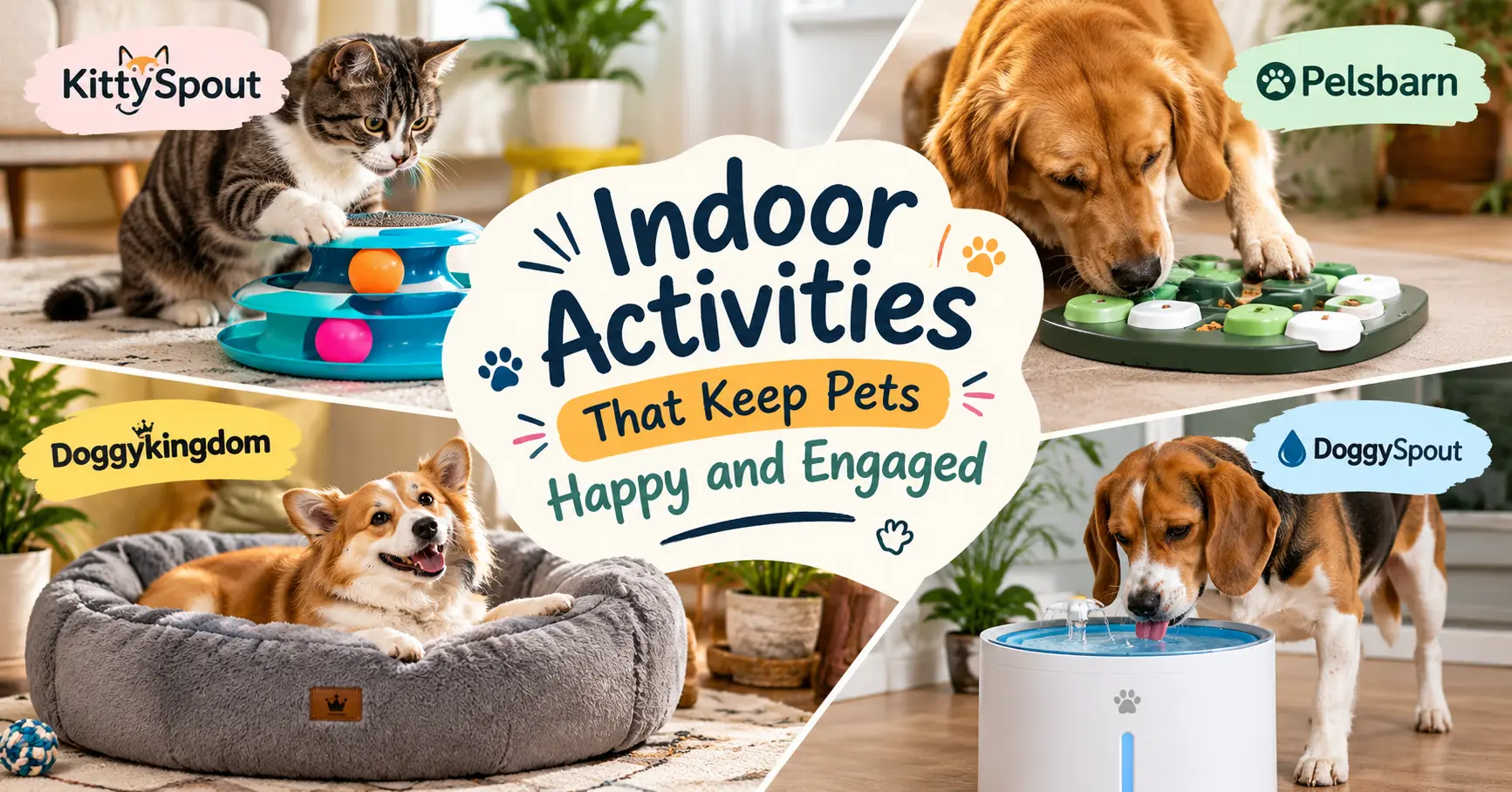
A bored pet usually lets you know. Dogs chew shoes or pace the hallway, and cats yowl at 3 a.m. or shred the sofa. Most of this behavior is not defiance. It is energy and instinct with nowhere to go.
The good news is that you don’t need a big yard or a long hike to fix it. A few short, well-chosen activities each day can give dogs and cats the movement, problem-solving, and attention they need. This guide covers what works, how to do it safely, and which supplies are worth considering. If you’re building a complete setup for your pet, our essential pet supplies checklist can also help you identify the everyday basics.
Quick answer: The most reliable indoor activities combine three things: movement (chase or fetch-style play), mental work (scent games, food puzzles, short training sessions), and rest (a quiet, comfortable place to settle). Rotate a few options through the week, keep sessions short, and watch your pet’s body language to see what they enjoy.
Affiliate Disclosure: Some links in this article are affiliate links. If you purchase through these links, Weekend Smash may earn a commission at no additional cost to you.
Why Indoor Activities Matter for Pets
Pets in the wild spend much of their day searching, stalking, and problem-solving. A bowl of food and a soft bed don’t cover those needs. For cats, the American Association of Feline Practitioners and the International Society of Feline Medicine give a clear framework in their environmental needs guidelines. It includes opportunities for play and predatory behavior, plus a safe place to retreat. Dogs benefit from the same idea. Sniffing, chewing, and working for food are natural behaviors, and they can be channeled at home.
Signs your pet may be bored
Look for patterns, not single incidents:
- Destructive chewing or scratching
- Excessive barking, meowing, or night-time restlessness
- Pacing, circling or following you from room to room
- Overgrooming or attention-seeking behavior
- Weight gain from low activity
A sudden change in behavior can also have a medical cause. If something seems off, or your pet is older, check with your veterinarian before assuming boredom.
Indoor Activities for Dogs
Dogs need both physical and mental outlets. On rainy days or in small homes, mental work is often the better tool, because it tires dogs out faster than many owners expect.
Scent games
Dogs experience much of their world through their noses, so scent games are among the easiest enrichment activities. Start simple:
- Show your dog a treat, then place it under one of three cups.
- Let them sniff out the right one.
- Once they understand, hide treats around a room and encourage them to search.
The AKC notes that scent games work for dogs of any age, including puppies and seniors, and can be played in small indoor spaces. Plastic cups or flower pots work for larger dogs, and paper cups work for small ones.
Food puzzles and slower feeding
Food puzzles, snuffle mats, and treat dispensers turn a two-minute meal into a ten-minute task. Some owners feed part of a meal this way. You can also make a DIY version by rolling kibble inside a towel or placing treats in the cups of a muffin tin.
When choosing puzzle rewards, make sure treats suit your pet’s needs and fit within their daily food allowance. Our guide to choosing pet food and treats explains what to consider when selecting everyday food and treats.
Two cautions apply. Count treats toward your dog’s daily calories, and check labels, because some peanut butters contain xylitol, which is toxic to dogs.
Short training sessions
Five minutes of practicing a trick, such as “touch,” “spin,” or “go to your mat,” uses real mental effort. Keep sessions upbeat and end while your dog is still interested. Training also builds the communication that makes every other activity easier.
Hide and seek, tug and mini obstacle courses
For movement, try:
- Hide and seek: Ask your dog to stay, hide in another room, and call them. It works for most ages and builds recall.
- Tug: Use a sturdy toy and teach a “drop it” cue. Pause the game if your dog gets overexcited.
- Mini obstacle course: Cushions to step over, a chair to weave around and a blanket tunnel.
If you want fresh toys for these games, Doggykingdom is an online pet accessories store whose range includes a dedicated toys category alongside harnesses, grooming tools and travel items. For more ideas on choosing practical items for walks, play, and everyday care, see our guide to pet accessories for daily routines. Browse the toys category at Doggykingdom if you’re looking for new options. Whatever you buy, match the toy size to your dog’s mouth and check the material for chewing strength.
Indoor Activities for Cats
Indoor cats do best when their routine includes short bursts of hunting-style play. Cats stalk, pounce, and catch, and a good indoor routine lets them finish that sequence.
Hunting-style play with wand toys
Wand toys let you imitate prey: skitter the lure along the floor, hide it behind furniture, then let your cat catch it. Always end a session with a successful catch, and consider following it with a small meal or treat. Put string-style toys away after play so your cat can’t swallow them. Many guides suggest laser pointers should be used sparingly and finished with a physical toy, because chasing a light that can never be caught frustrates some cats.
Foraging and food puzzles
Cats can work for food too. Try hiding small portions around the house, using a ball that releases kibble as it rolls, or putting wet food in a hollow toy. Introduce this gradually. The transition from bowl to scavenger hunt can take cats a while, so start with easy hiding spots.
Vertical space, window views and boxes
Not every activity needs your participation. Cats generally enjoy:
- A perch near a window with a safe view
- Shelves or cat trees that add height
- Cardboard boxes (remove any plastic or tape) and paper bags with the handles cut off
The AAFP and ISFM guidelines also stress a private retreat space, ideally off the ground. This is especially valuable in multi-pet homes.
Self-moving toys for solo play
When you’re busy or out, motion-activated toys can keep a cat engaged for short stretches. KittySpout, a cat-focused brand best known for water fountains, also sells the KittyBall, which it describes as a smart cat ball designed to stimulate a cat’s instincts. Explore KittySpout’s smart cat ball and other cat products if your cat likes chasing rolling toys. Electronic toys are a supplement, not a replacement for interactive play with you, and they won’t suit every cat.
For more ideas on useful items that support pets’ comfort and everyday care beyond playtime, read our guide to the best pet products for everyday comfort and care.
KittySpout also sells an automatic feeder. It helps with scheduling but isn’t a puzzle feeder, so it won’t give foraging enrichment on its own.
Build a Daily Mix, Not a Perfect Routine
You don’t need an elaborate schedule. A balanced day touches four categories:
Rotate toys every few days. Putting some away and bringing them back later makes old toys feel new. Adjust intensity for puppies, kittens, seniors, and pets with joint or health issues, and ask your vet when in doubt.
Don’t Forget Rest and Water
Active pets need downtime, and a consistent, comfortable resting place helps both dogs and cats settle. A quiet corner, a supportive bed, or a familiar blanket is often enough. If you’re looking for dog beds, Pelsbarn is a US-based dog bed brand offering orthopedic beds, sofa-style beds, car beds, and calming beds and blankets, and it says a share of its profits supports shelter dogs. See Pelsbarn’s calming beds and blankets if your dog needs a better place to settle. Treat the calming claims as the brand’s descriptions. A cozy, predictable spot matters more than any label. The site also points shoppers in some countries to a regional store, so check that before ordering.
Fresh water matters after play, too. A clean bowl refreshed daily works well for most pets. If you want to try a fountain, some pets seem to prefer moving water. DoggySpout, made by the KittySpout team, offers a wireless stainless-steel fountain for dogs, and its site recommends changing the filter about every two weeks. Explore the DoggySpout wireless fountain if you’d like to compare options. A fountain is optional, and it only helps if you keep it clean.
Safety Checklist Before You Start
- Supervise new toys, especially chew toys and puzzle toys.
- Choose toys sized for your pet so they can’t be swallowed.
- Remove strings, ribbons, and rubber bands after play.
- Check treats and spreads for xylitol before using them in puzzles.
- Factor treat calories into daily food intake.
- Stop activities that cause frustration, panting, or stress.
- Keep sessions short and let your pet leave when they want.
- Consult your vet before starting new exercise with senior or medically sensitive pets.
A Simple Weekly Plan
If you want a starting point, try this and adjust:
- Daily: One short play session, one food puzzle or foraging activity, and a quiet rest spot.
- Three times a week: A short training or scent game.
- Weekly: Rotate toys and add one new activity, such as a cardboard box or a hide-and-seek game.
Watch how your pet responds. Enthusiastic engagement, relaxed body language, and settling afterward are good signs.
Frequently Asked Questions
How do I know if my cat is bored?
Repeated destructive scratching, night-time yowling, overgrooming, and weight gain can all signal boredom. Because these signs can also have medical causes, check with a vet if they’re new or sudden.
How do I tire out a dog without a walk?
Mental activities such as scent games, food puzzles, and training often tire dogs as much as physical exercise. Combine one mental activity with a short play session.
How long should indoor play sessions be?
Short sessions, often around 10 to 15 minutes, are a common starting point. Let your pet’s age, energy, and health set the pace.
Are puzzle toys safe for dogs and cats?
They are generally safe when sized correctly and supervised. Choose appropriate sizes, check the materials, and avoid any toy your pet destroys easily.
Are laser pointers bad for cats?
They aren’t dangerous by themselves, but the endless chase can frustrate some cats. If you use one, finish with a physical toy or treat so your cat gets a “catch.”
How often should I rotate pet toys?
Every few days to weekly works for many households. The goal is to keep toys feeling new without overwhelming your pet with choices.
Can senior pets do indoor activities?
Yes. Gentle scent games, slow puzzle feeders, and comfortable rest areas suit many older pets. Talk to your vet first if mobility or health is a concern.
Final Thoughts
Keeping a pet happy indoors doesn’t take much time or money. It takes variety: a bit of movement, a bit of mental work, and a comfortable place to rest. Start with one or two activities this week, watch what your pet enjoys, and build from there.
Recent Blogs
-

Home Improvement Tools Every Homeowner Should Have
Discover the essential home improvement tools every homeowner needs for DIY repairs, furniture assembly, safe upgrades, and everyday maintenance.
-

Easy Ways to Make Your Outdoor Space More Inviting
Make your patio, porch, or yard more inviting with warm lighting, comfortable seating, added privacy, and greenery. Discover simple weekend upgrades that transform outdoor spaces into relaxing, functional places to unwind.
-

Garden Essentials for Creating a Healthy Outdoor Space
Create a healthier outdoor space with essential gardening tools, soil testing, suitable plants, smart watering, pollinator-friendly choices, and safe pathway lighting. Discover practical tips for a beautiful, comfortable garden.
-

Practical Ideas for Refreshing Your Home on a Budget
Refresh your home on a budget with simple ideas for lighting, wall art, soft furnishings, and furniture. Discover affordable upgrades, DIY decor tips, and practical ways to make every room feel more comfortable and stylish.
-
Home Improvement Projects That Make a Big Difference
Discover home improvement projects that make a big difference, from fresh paint and better lighting to smarter storage, energy efficiency, and curb appeal.