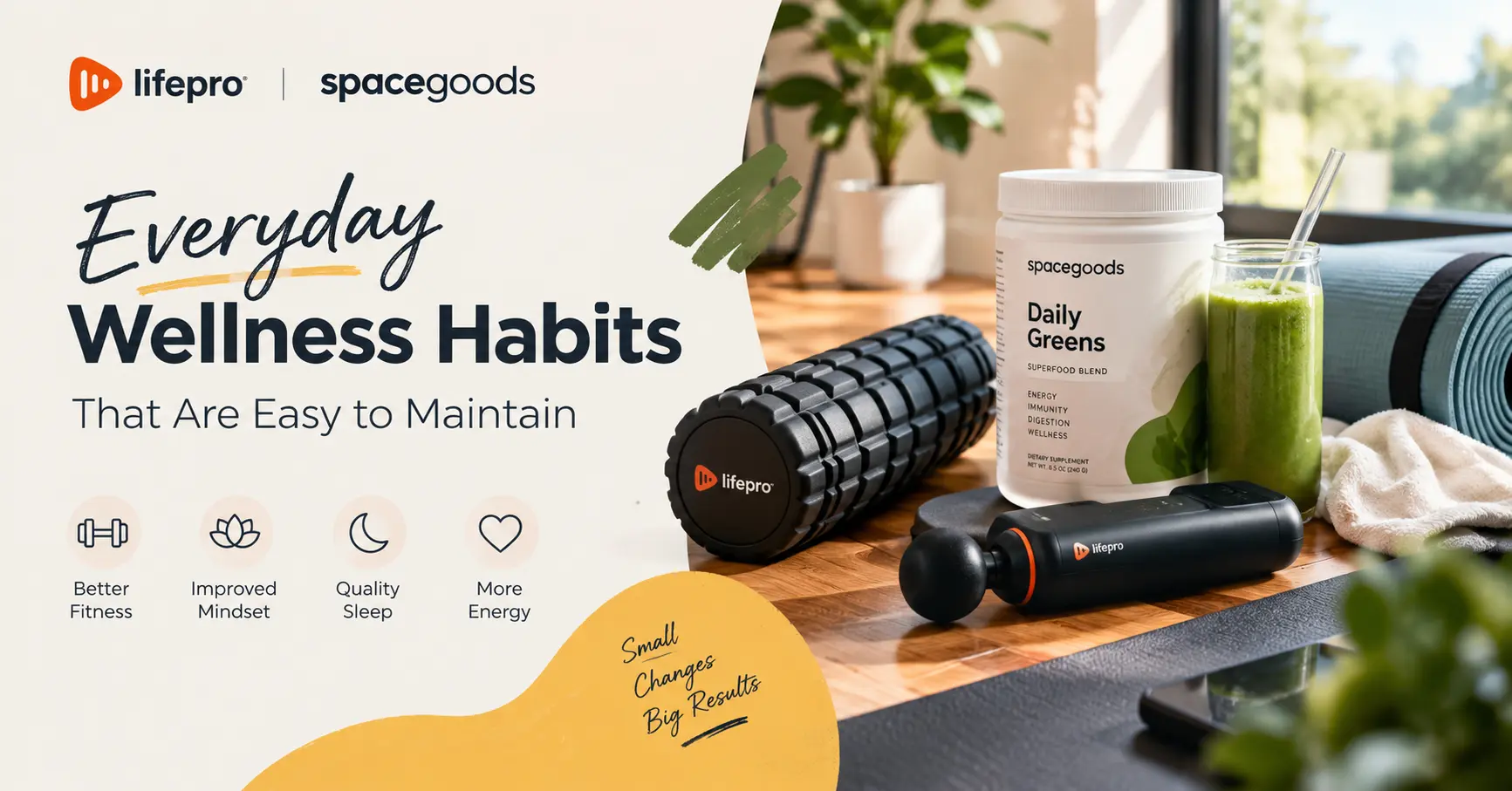
Everyday Wellness Habits That Are Easy to Maintain

Discover easy wellness habits for better sleep, daily movement, hydration, and stress management. Learn how simple routines and helpful wellness products can support a healthier lifestyle.
Affiliate Disclosure: Some links in this article are affiliate links. If you purchase through these links, Weekend Smash may earn a commission at no additional cost to you.
Most people don’t quit wellness routines because they lack information. They quit because the plan asks for more time, energy, or willpower than an ordinary Tuesday allows. A 6 a.m. workout, a perfect meal prep Sunday, and a twenty-minute meditation might all be good ideas, but they’re hard to repeat when work runs late or the week gets messy.
This guide takes the opposite approach. It covers small, forgiving habits for sleep, movement, hydration, stress, and food, plus a method for making them stick. It also covers where wellness products can help and where they won’t.
For a broader look at building healthy routines, explore our guide to healthy lifestyle essentials for a daily routine.
Quick answer: The wellness habits that last are small, tied to something you already do every day, and easy to restart after a missed day. Pick one or two from this list: a steady wake-up time, a short daily walk, water first thing in the morning, a five-minute reset, and one repeatable meal. Add products only after the habit exists.
Why Most Wellness Habits Fade
Habits form through repetition in a stable context, not through motivation. A well-known study from University College London followed volunteers who each picked a new daily behavior, such as drinking water or exercising. It found that the time to reach automatic behavior averaged about 66 days, with a huge range from person to person (roughly 18 to 254 days). Missing a single day did not derail the process.
That research points to what easy habits have in common:
- They’re small. A ten-minute walk survives a bad day. A 60-minute gym session often doesn’t.
- They have an anchor. They attach to something that already happens, like brushing your teeth or pouring coffee.
- They’re forgiving. A missed day is a blip, not a failure.
- They’re visible. A water bottle on your desk works better than a good intention.
If a habit fails all four tests, redesign it before you blame yourself.
Five Everyday Wellness Habits Worth Keeping
1. Keep a Steady Sleep Window
The CDC advises adults to get at least seven hours of sleep a night, and consistency matters as much as the total. A fixed wake-up time is usually easier to maintain than a fixed bedtime because you control the alarm, not the moment you fall asleep.
Easy ways to start:
- Set the same wake-up time on most days, including weekends if you can.
- Dim lights and put screens down for a short wind-down before bed.
- Move your last caffeinated drink earlier in the day and see how you sleep.
For more ideas on improving your nighttime routine, read our guide to better sleep and relaxation tips.
2. Move a Little, Most Days
The World Health Organization recommends that adults do 150 to 300 minutes of moderate-intensity activity per week, plus muscle-strengthening activity on at least two days. It also stresses that some activity is better than none. Spread across a week, the range works out to roughly 20 to 40 minutes a day.
If that sounds like a lot, shrink it. Aim for ten minutes after lunch, a walking call, or one set of squats while the kettle boils. Short sessions still add up, and they build the identity of someone who moves daily.
You can also discover more everyday habits to stay active and energized for practical ways to keep movement part of your routine.
3. Start the Day With Water
Hydration needs vary with body size, climate, and activity, so there’s no single number worth chasing. The easy-habit version is simple: drink a glass of water before your first coffee or tea. Keep a bottle where you can see it, and refill it at the same moments each day.
4. Build a Five-Minute Reset
Stress management doesn’t need a retreat. A short daily reset can be slow breathing, a stretch, stepping outside, or writing down tomorrow’s top three tasks. Pick one that costs nothing and takes under five minutes, and attach it to a natural break, like the end of your workday.
If stress, low mood, or anxiety feels persistent or heavy, that calls for support from a healthcare professional, not another habit.
5. Make One Meal Repeatable
You don’t need a perfect diet plan to eat better. Choose one meal, often breakfast or lunch, and make it a simple default you can assemble without thinking. Aim to add something rather than ban things, such as a fruit, a vegetable, or a protein source you enjoy. Repeatable meals reduce daily decisions, which is where many healthy intentions leak away.
How to Build a Habit You Can Keep
- Choose one or two habits. Starting five at once is the most common way to finish none.
- Shrink each to a two-minute version. “Walk for ten minutes” becomes “put on my shoes.” Starting is the hard part.
- Attach it to an anchor. Use the format: “After I [existing habit], I will [new habit].”
- Write a bad-day version. Decide in advance what the minimum looks like when you’re tired, traveling, or sick.
- Track it simply. A calendar tick or a notes-app streak is enough.
- Review after a few weeks. Keep what feels automatic, and adjust what doesn’t. Formation timelines vary widely, so don’t judge yourself against a fixed day count.
Where Wellness Products Fit In
Products can’t build a habit for you. At their best, they reduce friction, such as a tool that makes a routine more comfortable, or add a small ritual that makes a habit more enjoyable. Before buying anything, ask three questions:
If you're considering tools to support your daily habits, check out our guide to wellness products worth adding to your routine.
- Does it make the habit easier to start? A product that needs a complicated setup works against you.
- Will you use it on tired days? Be honest about your real routine.
- Are the claims modest and the policies clear? Look for transparent returns, warranty terms, and ingredient or specification details. Treat marketing language as a brand claim, not established evidence.
Anything that touches your body, whether a device or a supplement, deserves a check with a doctor or pharmacist if you have a medical condition, take medication, are pregnant, or are nursing.
Recovery and Movement Tools: Lifepro
Lifepro is a wellness and recovery equipment brand. Its range includes vibration plates, red light therapy devices, infrared sauna blankets and cabins, massage guns, and home fitness equipment. The brand frames its vibration plates around short daily sessions, which matches the “small and repeatable” principle in this guide.
This kind of equipment may suit people whose barrier is time or access, for example someone who finds a gym hard to reach but is willing to build a short home routine. Some people also enjoy a massage tool or heat-based device as part of a post-work wind-down.
A few honest caveats:
- A vibration plate doesn’t replace walking or strength training. The brand describes benefits for circulation and recovery, but independent evidence for broad everyday-wellness claims is more limited than marketing suggests.
- Read the manufacturer’s safety instructions. If you’re pregnant, have an implant, or have a medical condition affecting balance, bones, or circulation, ask a clinician before using vibration or heat-based devices.
- The store’s site lists free shipping, 30-day returns, and a lifetime warranty, with the warranty described as covering structural components. Confirm current terms at checkout.
If a home recovery tool sounds useful, you can browse the Lifepro range to compare vibration, light therapy, and massage options by size, features, and fit for your space.
Morning and Evening Drink Routines: Spacegoods
A drink ritual is one of the easiest anchors there is, because most people already have one. Spacegoods is a London-based brand that makes powdered functional blends, produced in England. Its morning product, Rainbow Dust, is positioned as a mushroom and adaptogen coffee alternative. Its listed ingredients include lion’s mane, cordyceps, chaga, KSM-66 ashwagandha, maca, B5, and natural caffeine from coffee (listed at 80 to 120 mg per serving). The store also lists an evening line called Astro Dust and a hydration blend called Hydro Dust.
This may suit people who already have a daily hot-drink habit and want to swap in something different. It adds nothing if your real challenge is sleep, movement, or stress, and no powder replaces those.
Points worth weighing before you buy:
- Caffeine counts. Rainbow Dust contains caffeine, so include it in your daily total, especially if you’re protecting your sleep.
- Ashwagandha has safety notes. The NIH Office of Dietary Supplements says ashwagandha extracts might help reduce stress and anxiety. Studies showed no safety concerns for up to about three months, but long-term safety is unclear. Reported concerns include rare liver problems and possible effects on thyroid function. Talk to a healthcare professional first if you’re pregnant, have a liver or thyroid condition, or take thyroid medication.
- Brand claims are claims. Statements about focus, energy, and mood come from the brand and its customer survey, not independent trials of this specific product.
- Try before you commit. The store’s starter kits are subscription-based, while one-time pouches and small sample packs are also offered. The product page lists a 60-day money-back guarantee, so check the current terms. Shipping rates and currency vary by country.
If a drink ritual appeals to you, you can see the Spacegoods blends and start with a sample size before committing to a subscription.
A Simple Habit Planner
Use this table as a starting template, and swap in your own anchors.
Common Mistakes to Avoid
- Starting too many habits at once. Begin with one or two.
- Treating a missed day as failure. Resume the next day without making up for it.
- Buying equipment before the habit exists. Gear works best as support, not motivation.
- Copying someone else’s routine. A routine built around another person’s schedule won’t fit yours.
- Skipping medical advice. Persistent symptoms, new supplements, and new equipment all deserve professional input when you have a health condition.
FAQs
What are the easiest healthy habits to start?
Drinking a glass of water in the morning, taking a short daily walk, keeping a steady wake-up time, and adding one fruit or vegetable to a meal are low-effort starting points. Each takes under ten minutes and attaches easily to an existing routine.
How long does it take to form a wellness habit?
It varies widely. A University College London study found an average of about 66 days, with a range from roughly 18 to 254 days. Treat any fixed number like “21 days” with caution.
How many habits should I start at once?
One or two. Once those feel automatic, add another.
What should I do if I miss a day?
Return to the habit the next day. Research on habit formation found that a single missed day did not meaningfully disrupt progress. A written “bad-day version” makes it easier to keep a thin streak going.
Do wellness gadgets and supplements help build habits?
They can help by reducing friction or adding enjoyment, but they work best after a habit exists. Check return policies, read the safety information, and ask a healthcare professional if you have a medical condition or take medication.
Is it safe to take adaptogens every day?
It depends on the ingredient and the person. For ashwagandha, the NIH Office of Dietary Supplements notes that studies showed no safety concerns for up to about three months but that long-term safety is unclear, and it flags liver and thyroid considerations. Ask a doctor or pharmacist first.
How much exercise do adults need?
The World Health Organization recommends 150 to 300 minutes of moderate-intensity activity a week, plus muscle-strengthening activity on at least two days. It also says some activity is better than none, so start where you are.
The Short Version
Easy wellness habits are small, anchored, and forgiving. Start with one or two, write a bad-day version, and give the habit time. Add tools only if they make the routine easier or more enjoyable, and read the fine print on anything you put in or on your body.
Affiliate Disclosure: Some links in this article are affiliate links. If you purchase through these links, Weekend Smash may earn a commission at no additional cost to you. This article is for general information and isn’t medical advice. Talk to a qualified healthcare professional about your personal health, medication, or supplement use.
Recent Blogs
-
Home Improvement Tools Every Homeowner Should Have
Discover the essential home improvement tools every homeowner needs for DIY repairs, furniture assembly, safe upgrades, and everyday maintenance.
-

Easy Ways to Make Your Outdoor Space More Inviting
Make your patio, porch, or yard more inviting with warm lighting, comfortable seating, added privacy, and greenery. Discover simple weekend upgrades that transform outdoor spaces into relaxing, functional places to unwind.
-

Garden Essentials for Creating a Healthy Outdoor Space
Create a healthier outdoor space with essential gardening tools, soil testing, suitable plants, smart watering, pollinator-friendly choices, and safe pathway lighting. Discover practical tips for a beautiful, comfortable garden.
-

Practical Ideas for Refreshing Your Home on a Budget
Refresh your home on a budget with simple ideas for lighting, wall art, soft furnishings, and furniture. Discover affordable upgrades, DIY decor tips, and practical ways to make every room feel more comfortable and stylish.
-
Home Improvement Projects That Make a Big Difference
Discover home improvement projects that make a big difference, from fresh paint and better lighting to smarter storage, energy efficiency, and curb appeal.