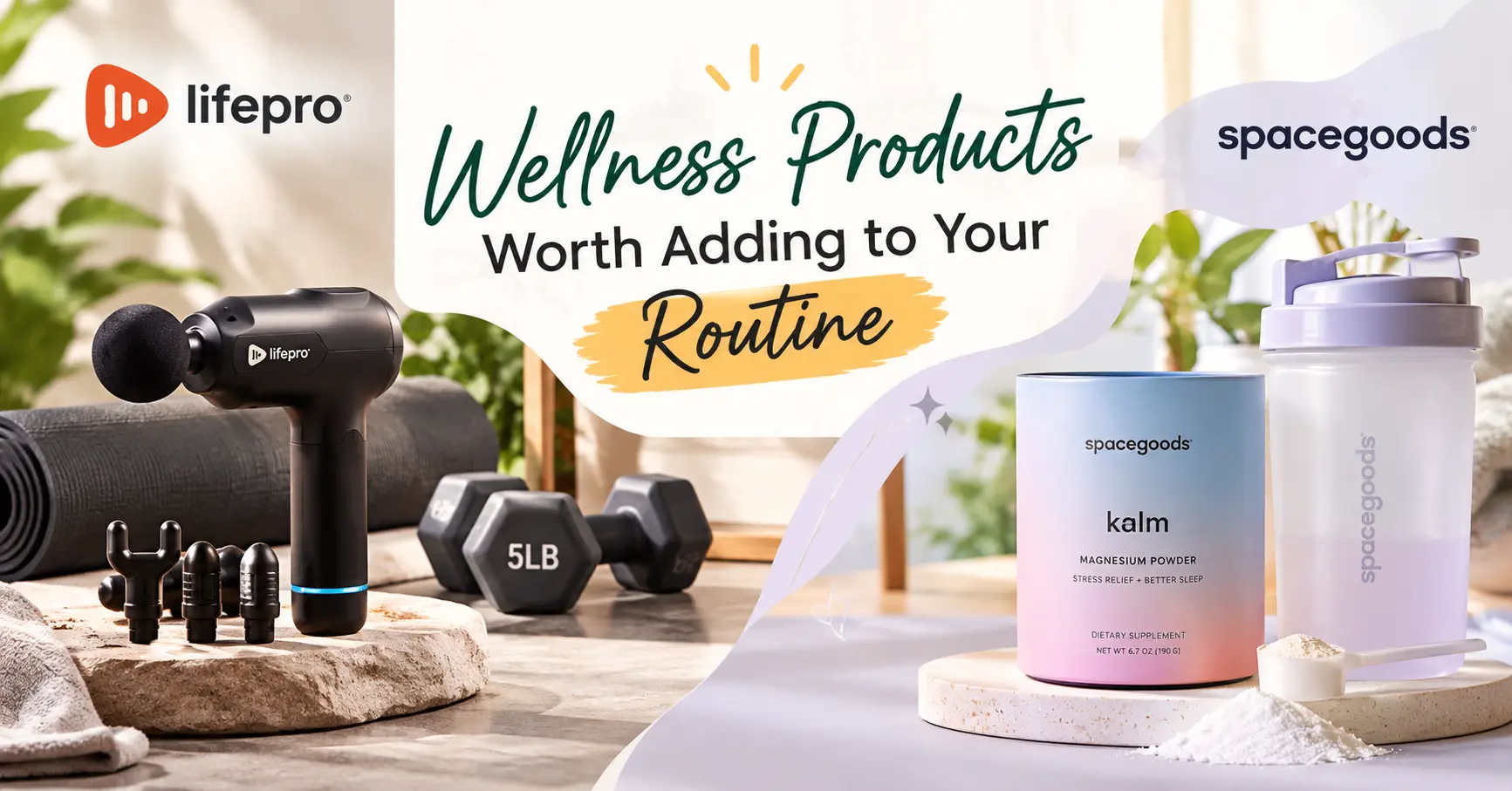
Wellness Products Worth Adding to Your Routine

Explore wellness products from Lifepro and Spacegoods that support energy, movement, recovery, hydration, and relaxation. Learn how to choose practical products, compare benefits, and build a healthier daily routine.
Most wellness shopping goes wrong in the same way. You buy the product first, then try to figure out what job it was supposed to do.
A better order is to start with the day you already have. Where do you feel flat, stiff, restless, or short on time? Then look for a product that makes one specific habit easier.
This guide gives you a simple way to judge wellness products. It then walks through a typical day (morning, daytime movement, and evening) with examples from two brands, Lifepro and Spacegoods.
For a broader foundation before choosing wellness products, explore our guide to healthy lifestyle essentials for a better daily routine.
Affiliate Disclosure: Some links in this article are affiliate links. If you purchase through these links, Weekend Smash may earn a commission at no additional cost to you.
Quick answer: A wellness product is worth adding when it supports a habit you will repeat, has a clear and modest purpose, suits your health situation, and comes from a brand that is open about what it sells. Add one product at a time. No product replaces sleep, movement, or medical care.
What Makes a Wellness Product Worth Buying?
A wellness product is anything you buy to support day-to-day health habits. That covers two broad groups:
- Tools and devices: vibration plates, massage guns, red light devices, sauna blankets
- Consumables: supplement powders, functional drink mixes, electrolyte blends
The useful ones make a good habit easier. A drink mix that gives you a morning ritual, or a recovery tool you actually use after a walk, can earn its place. The risky ones promise to replace the habit itself, such as a gadget that claims to stand in for exercise.
Five Questions to Ask Before You Buy
Run any product through these questions before you spend money.
- What specific problem does it address? “Feel better” is too vague. “I want a lower-effort way to wind down at night” is something you can test.
- How strong is the evidence for that purpose? Some uses are well supported, such as caffeine for alertness. Others are early or mixed. Decide whether you are comfortable paying for a plausible benefit rather than a proven one.
- Is it appropriate for you? Age, pregnancy, medications, implanted devices, and existing conditions all change the answer.
- Will you actually use it? A device that takes ten minutes to set up gets used less than one that takes two. Consider space, noise, effort, and taste.
- Is the brand transparent? Look for clear ingredient or specification details, a stated return window, warranty terms in plain language, and testing information you can verify.
Brand Claims, Reviews, and Evidence Are Not the Same Thing
When you read product pages, keep three kinds of information separate.
- Brand claims are what the company says. These are useful for facts such as specifications and policies, but they are marketing when they describe benefits.
- Customer opinions are individual experiences and survey results the brand has collected. They can show how people feel about a product, but they are not controlled research.
- Established evidence comes from independent sources such as government health agencies and peer-reviewed studies.
For example, a brand’s survey saying most customers “felt the benefits” is a customer-reported figure. It tells you about satisfaction, not about what the product does biologically. This article uses brand facts for specifications and policies, and independent sources for health context.
Build the Routine Around Your Day, Not the Product
Mapping products to moments in your day shows quickly what you actually need.
Morning: Products That Support Energy and Focus
Many people’s first wellness purchase is a morning drink, because the habit already exists. You are swapping, not adding.
For more practical ways to make a morning routine easier to maintain, read everyday wellness habits that are easy to maintain.
Is Mushroom Coffee Worth Trying?
Short answer: It can be a reasonable swap if you want a flavored, cafe-style drink with a bit less caffeine than strong coffee. Treat the caffeine as the main active ingredient. The functional mushrooms and adaptogens are a bonus that is harder to verify.
Spacegoods is a UK-based functional drink brand. Its best-known product is Rainbow Dust, a powder you whisk into hot or cold milk, water, or coffee. According to the brand’s product page, each 8 g serving contains Lion’s Mane, Cordyceps sinensis, Chaga, KSM-66 ashwagandha, maca, and coffee-derived caffeine in an estimated 80 to 120 mg range. It comes in several flavors, including coffee, chocolate, and decaf coffee. The brand states that its products are made in England and third-party lab-tested.
Here is what to consider before trying it:
- Caffeine adds up. The FDA says about 400 mg of caffeine a day is an amount not generally associated with negative effects in healthy adults. The brand says you can have up to three servings a day, so count any other coffee, tea, or energy drinks you also have.
- Ashwagandha deserves a closer look. The NIH Office of Dietary Supplements says ashwagandha extracts might help reduce stress and anxiety. It also says safety appears fine for about three months of use but is unclear beyond that, and it may affect the liver and thyroid. If you are pregnant, take thyroid medication, or have liver concerns, speak to a clinician first.
- Ordering is subscription-led. On the product page we reviewed, starter kits were available only as subscriptions, while single pouches could be bought as one-time purchases. Samples were also offered as trial sachets. Refills and cancellation terms are stated on the page.
- Shipping depends on where you live. The brand ships from the UK and the EU, and shipping rates differ by country. Check the final cost at checkout.
A good fit is someone who already drinks coffee every morning, wants to try a functional blend without changing the ritual, and is comfortable with the caffeine and ingredient notes above. If you prefer a lighter option, explore the Spacegoods range to see the matcha and decaf alternatives before committing to a bag.
Do You Need an Electrolyte Mix?
Short answer: Most people who drink water and eat normally do not need one. They make the most sense around long or sweaty workouts, hot weather, or travel.
If hydration is where you want support, Spacegoods also lists Hydro Dust, which the brand describes as an electrolyte blend. Check the label for sodium, potassium, and any added sweeteners, so you know what you are drinking.
Daytime: Movement and Recovery Tools
Daytime products should make movement more consistent. Public health guidance still starts with the basics. The CDC recommends adults get regular aerobic activity and muscle-strengthening work, roughly 150 minutes of moderate activity a week plus strength training on two days. A recovery tool sits on top of that foundation.
For simple ways to build more movement into an ordinary day, see our guide to everyday habits to stay active and energized.
Do Vibration Plates Actually Work?
Short answer: Whole-body vibration has been studied for strength, balance, and circulation, but results vary with the plate, the protocol, and who is using it. Treat a plate as a low-impact add-on to walking and strength work, not a substitute.
They appeal to people who want something gentle that takes minutes, such as older adults working on balance, people with desk jobs, or anyone easing back into movement.
What to Check Before Buying From Lifepro
Lifepro is a US wellness and recovery equipment brand. Its site shows vibration plates, red light therapy devices, infrared sauna blankets and steam rooms, massage guns and balls, and home fitness equipment.
Its vibration plates are grouped by purpose, which makes comparing easier:
- Flat oscillating plates, such as the Waver, which the brand positions for gentle daily movement
- Triple-motor “4D” plates, such as the Rumblex Plus, which the brand positions for more demanding fitness use
- Handlebar models, which the brand positions for balance and mobility
Practical points to weigh, based on the brand’s site at the time of writing:
- Warranty wording. The brand advertises a lifetime warranty, and the fine print says it covers structural components. Read what is and is not included.
- Returns and shipping. The site lists a 30-day return window and free shipping. Confirm the current terms at checkout.
- FSA/HSA eligibility. The brand lists its products as eligible. Check with your plan administrator for your own situation.
- Fit for your space. Check dimensions, weight capacity, and where you would store it.
- Medical suitability. Manufacturers of vibration devices typically list situations where use is not advised, such as pregnancy or implanted medical devices. Read the manual and ask your doctor if any of that applies to you.
The brand’s pages also include broad claims about vibration therapy research. Those describe the technology category generally, not necessarily a specific model, so judge each plate on its own specifications. If a plate fits your goal and space, you can browse Lifepro’s vibration plates and recovery tools.
Where Red Light Devices Fit
Red light and near-infrared devices are popular for skin, muscle soreness, and general recovery. Evidence varies a lot by use and by device, so keep your expectations measured.
One thing worth knowing is that “FDA-cleared” and “FDA-approved” are different. Most consumer light devices are cleared or simply registered, not approved. If a device lists a specific cleared use, you can search the FDA’s 510(k) database to confirm what it was actually cleared for. Lifepro sells several red light formats, including belts, panels, and a neck device. Compare these against the same checklist as anything else.
Evening: Wind-Down Support
Evening products work best on top of the fundamentals: a regular bedtime, a dark and cool room, and less caffeine late in the day. No powder or device outperforms those habits.
For practical steps to make your nighttime routine more relaxing, read our guide to better sleep and relaxation tips.
If you like a ritual, there are two options worth knowing about:
- Nighttime blends. Spacegoods lists evening products, including Sleep+ Magnesium and Astro Dust. We did not verify ingredient lists for these, so read the label closely, especially if you take other supplements or medication.
- Heat-based relaxation. Lifepro sells infrared sauna blankets and portable steam rooms. Heat can feel relaxing, but it is not suitable for everyone. Stay hydrated, start with short sessions, and talk to your doctor if you have heart, blood pressure, or heat-sensitivity concerns or are pregnant.
Which Product Type Fits Which Goal?
Common Mistakes When Buying Wellness Products
- Buying several things at once. You will not know what is helping, or what is bothering you.
- Trusting survey percentages as proof. A statistic from a brand’s own customer survey is not clinical evidence.
- Ignoring caffeine and ingredient overlap. Blends can stack with coffee, pre-workout, and other supplements.
- Skipping the policy pages. Returns, warranty fine print, and subscription terms matter as much as the product.
- Using a device instead of the habit. A recovery tool works best next to movement, not in place of it.
- Assuming “natural” means safe. Herbal ingredients can interact with medication.
A 30-Day Plan for Adding One Product at a Time
- Days 1 to 3: Pick one goal from the table above. Write down how you feel now: energy, soreness, sleep quality.
- Days 4 to 7: Read the label or manual, check the return policy, and note any health flags to raise with your clinician.
- Days 8 to 21: Start the product at a modest level, at the same time each day, and change nothing else important.
- Days 22 to 30: Compare your notes. Keep it if it made a habit easier. Return or stop it if it did not, or if it caused side effects.
- Day 31 onward: Only then consider a second product.
When to Talk to a Professional First
Speak to a doctor, pharmacist, or other qualified clinician before starting if you:
- Are pregnant or breastfeeding
- Take prescription medication, especially for thyroid, blood pressure, or mood
- Have a heart condition, an implanted device, or a history of liver problems
- Have an injury, recent surgery, or pain that is new or severe
- Are managing a long-term health condition
This article is general information, not medical advice.
Frequently Asked Questions
What are the best wellness products to add to a daily routine?
The best ones depend on your goal. A morning drink swap, a low-impact movement or recovery tool, and an evening wind-down item are three common starting points. Add only one at a time.
Are wellness gadgets worth the money?
They can be, if you will use them regularly and the claims are modest. They are poor value when they promise to replace sleep, exercise, or medical care.
Is mushroom coffee healthy?
It depends on the blend. Caffeine content is the main driver of the effect you notice, and evidence for the mushroom and adaptogen ingredients is thinner. Check the label for caffeine, sweeteners, and ingredients such as ashwagandha that may not suit everyone.
Do vibration plates work for wellness?
Research on whole-body vibration shows mixed results that depend on the device and how it is used. It is best viewed as a gentle complement to walking and strength training.
Is red light therapy FDA approved?
Consumer devices are generally cleared or registered rather than approved. If a brand claims clearance, check the FDA’s public database for the specific device and its stated use.
How many wellness products should I use at once?
Start with one. Use it for several weeks before adding another so you can tell what is helping and what is not.
The Bottom Line
The best wellness routine is rarely the one with the most products. It is the one built around habits you can keep, with a few well-chosen tools that make those habits easier.
Use the five questions, add one item at a time, and keep medical decisions with a qualified professional. If your goals line up with what these two brands sell, you can see the available Spacegoods drink blends for morning and evening, or look at Lifepro’s recovery equipment for daytime movement.
Recent Blogs
-
Home Improvement Tools Every Homeowner Should Have
Discover the essential home improvement tools every homeowner needs for DIY repairs, furniture assembly, safe upgrades, and everyday maintenance.
-

Easy Ways to Make Your Outdoor Space More Inviting
Make your patio, porch, or yard more inviting with warm lighting, comfortable seating, added privacy, and greenery. Discover simple weekend upgrades that transform outdoor spaces into relaxing, functional places to unwind.
-

Garden Essentials for Creating a Healthy Outdoor Space
Create a healthier outdoor space with essential gardening tools, soil testing, suitable plants, smart watering, pollinator-friendly choices, and safe pathway lighting. Discover practical tips for a beautiful, comfortable garden.
-

Practical Ideas for Refreshing Your Home on a Budget
Refresh your home on a budget with simple ideas for lighting, wall art, soft furnishings, and furniture. Discover affordable upgrades, DIY decor tips, and practical ways to make every room feel more comfortable and stylish.
-
Home Improvement Projects That Make a Big Difference
Discover home improvement projects that make a big difference, from fresh paint and better lighting to smarter storage, energy efficiency, and curb appeal.